Why a Murano certificate matters
Murano is an island in the Venetian lagoon with a long tradition of glassmaking. The name carries value because buyers may be paying not just for a glass object, but for work represented as coming from that place and its makers. A counterfeit can imitate a style while misrepresenting where the piece was made.
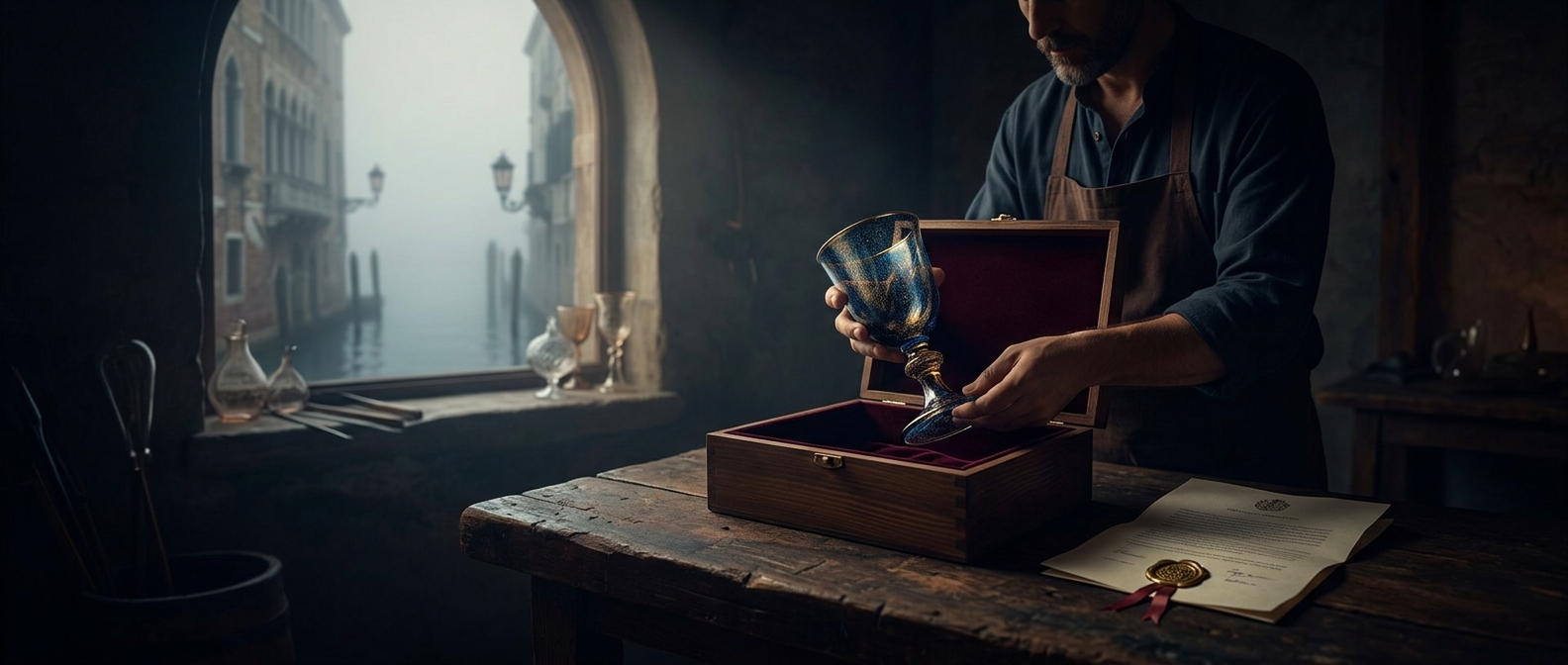
A certificate of authenticity gives the buyer something to check beyond appearance. Glass can be shaped and decorated in ways that evoke Murano, so visual resemblance alone may not establish a piece’s origin. The document links the object to a seller or maker willing to stand behind that claim.
What the paper can—and cannot—do
The certificate is useful as a record accompanying the purchase, especially if the buyer later needs to establish what the item was sold as. Its value depends on who issued it and whether that issuer can be trusted; a piece of paper is not proof simply because it looks official.
For travelers buying glass in Venice, the practical consequence is simple: ask for the certificate before paying and keep it with the piece. If the object is later given as a gift or resold, the paperwork preserves the seller’s claim of Murano origin instead of leaving that claim to the glass’s appearance alone.