A cell’s fate is built through a chain of signals
Specialization is usually a gradual change in what a cell does, not a sudden switch in its shape. A stem cell receives cues from its surroundings—such as neighboring cells and chemical messengers. Those cues activate proteins inside the cell that regulate genes, making some genetic instructions more active and others less so.
As this pattern of gene activity shifts, the cell begins producing the proteins needed for a particular job. A developing blood cell, for example, must acquire the machinery for making and carrying oxygen; a nerve cell needs structures that let it send signals. The DNA remains largely the same, but different portions are put to work.
Commitment narrows the options
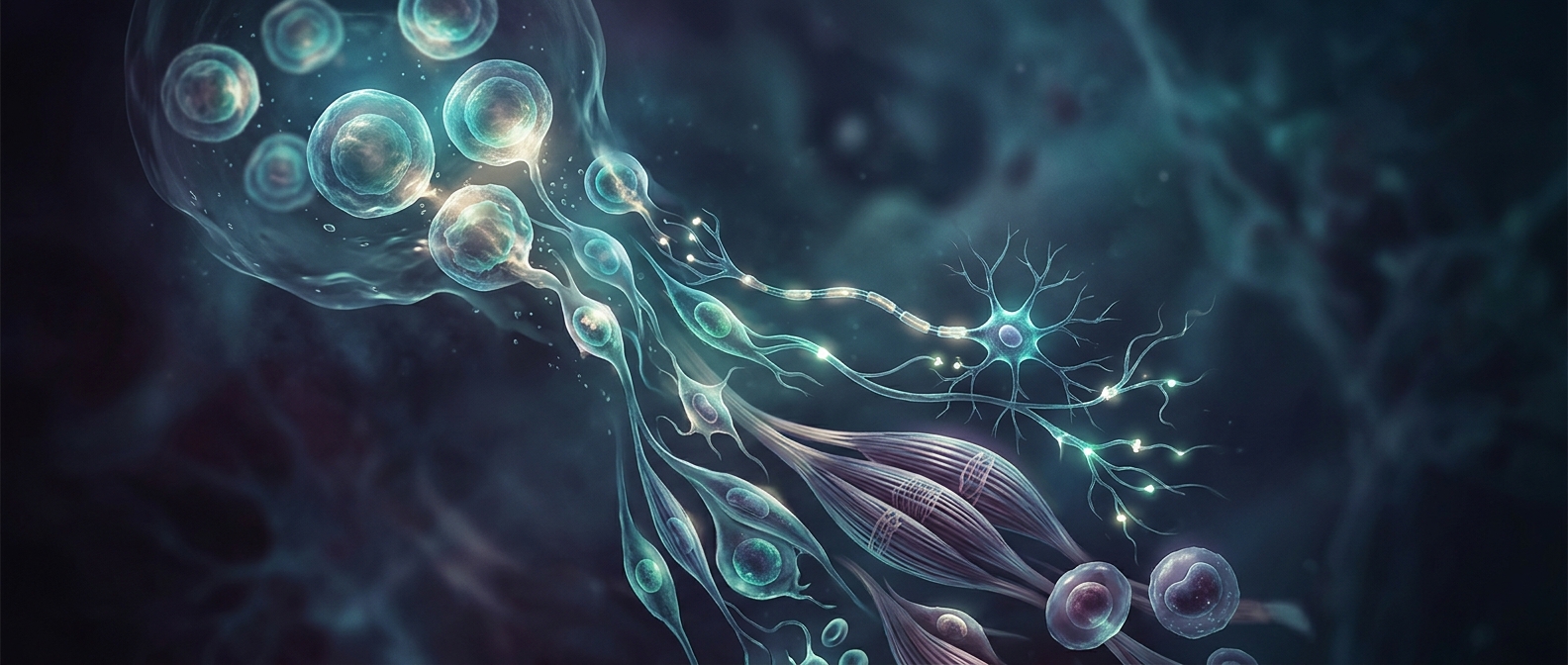
Many cells pass through intermediate stages before becoming fully specialized. At first, a cell may still have several possible paths; later, its gene activity and internal machinery make some paths increasingly unlikely. This process is called differentiation. It can involve cell divisions, with daughter cells continuing along a developing lineage.
Stem cells are valuable because they can both produce specialized descendants and, in some circumstances, make more stem cells. But their potential is not unlimited: the possible outcomes depend on the kind of stem cell and the signals it encounters. Mature cells usually have an even narrower range of possible roles.
That gradual narrowing matters in medicine. Directing stem cells toward a desired cell type requires more than issuing a single command: researchers must guide the sequence of signals well enough to produce cells with the right identity and function. A cell that looks specialized is not necessarily ready to do the job.