How icy bodies could deliver water
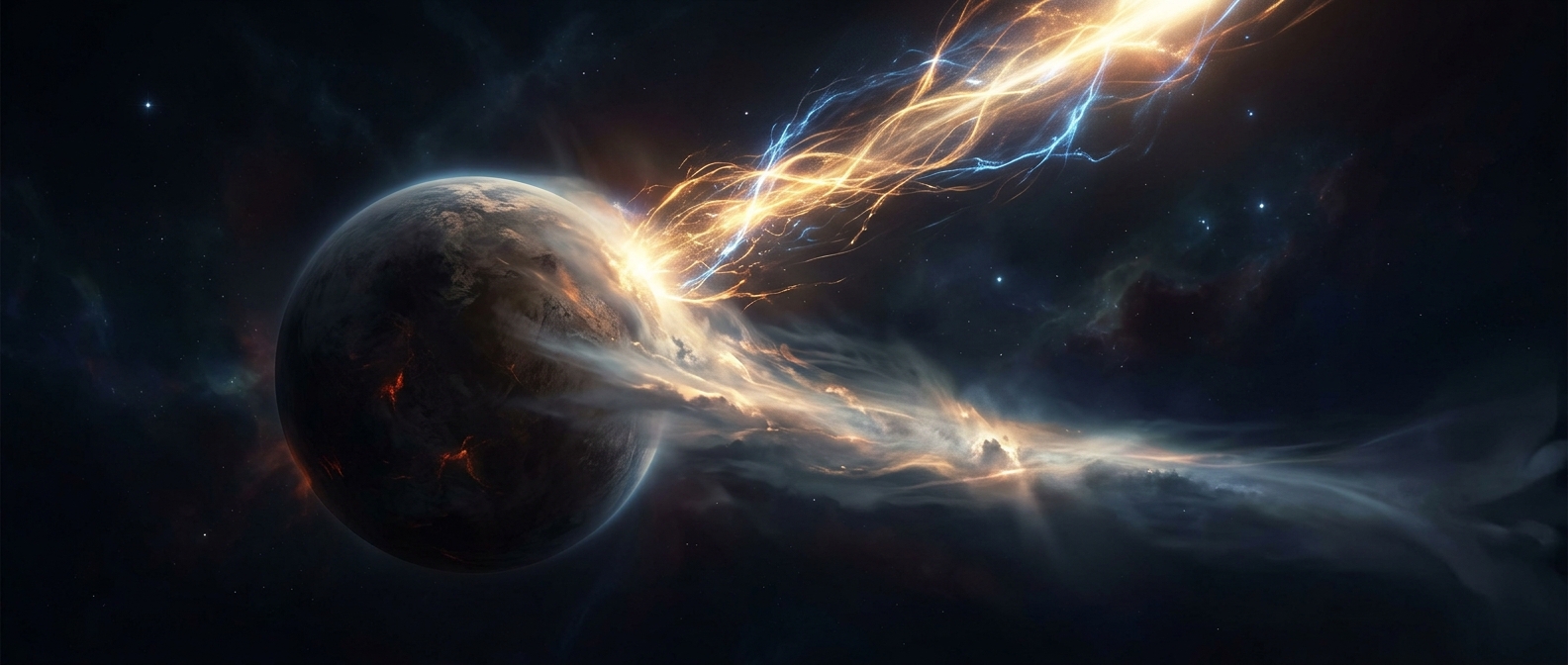
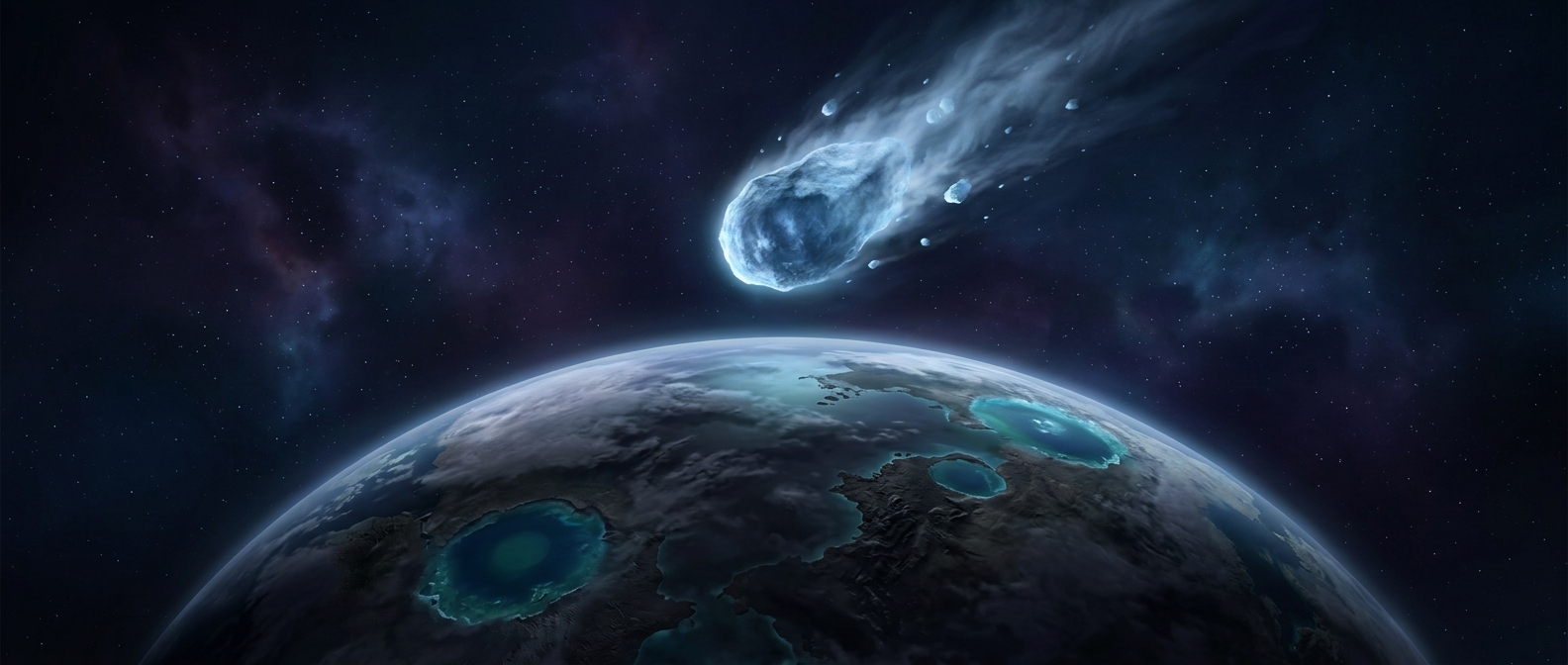
Early Earth was repeatedly struck by objects left over from the planet-building process. Some carried water locked up as ice. When an icy body hit, the collision could vaporize its ice; as the planet cooled, some of that vapor could condense and join the water at the surface. The delivery was not guaranteed: a fast, energetic impact could send much of the water back into space, while some could remain in the atmosphere or become trapped in rocks.
A chemical clue in the ice
Hydrogen occurs in slightly different forms, including ordinary hydrogen and a heavier form called deuterium. Their proportion in water—the hydrogen-isotope ratio—can serve as a kind of chemical fingerprint. Measurements of some comets have found ratios similar to that of Earth’s water, making those comets plausible contributors. Other comets do not match as well, so the comparison does not point to every comet as a source.
A delivery route, not a single shipment
Earth’s oceans were likely assembled from more than one source, and matching isotope ratios alone cannot prove where any particular water molecule came from. But the comparison helps scientists test which kinds of objects could have supplied water and survived the journey to the young planet. If comets contributed, their ice was not simply dumped onto Earth intact: it passed through a violent impact, and only the water that remained bound to the planet became part of its later oceans—and, eventually, the water in a drinking glass.