A fixed line makes every throw comparable
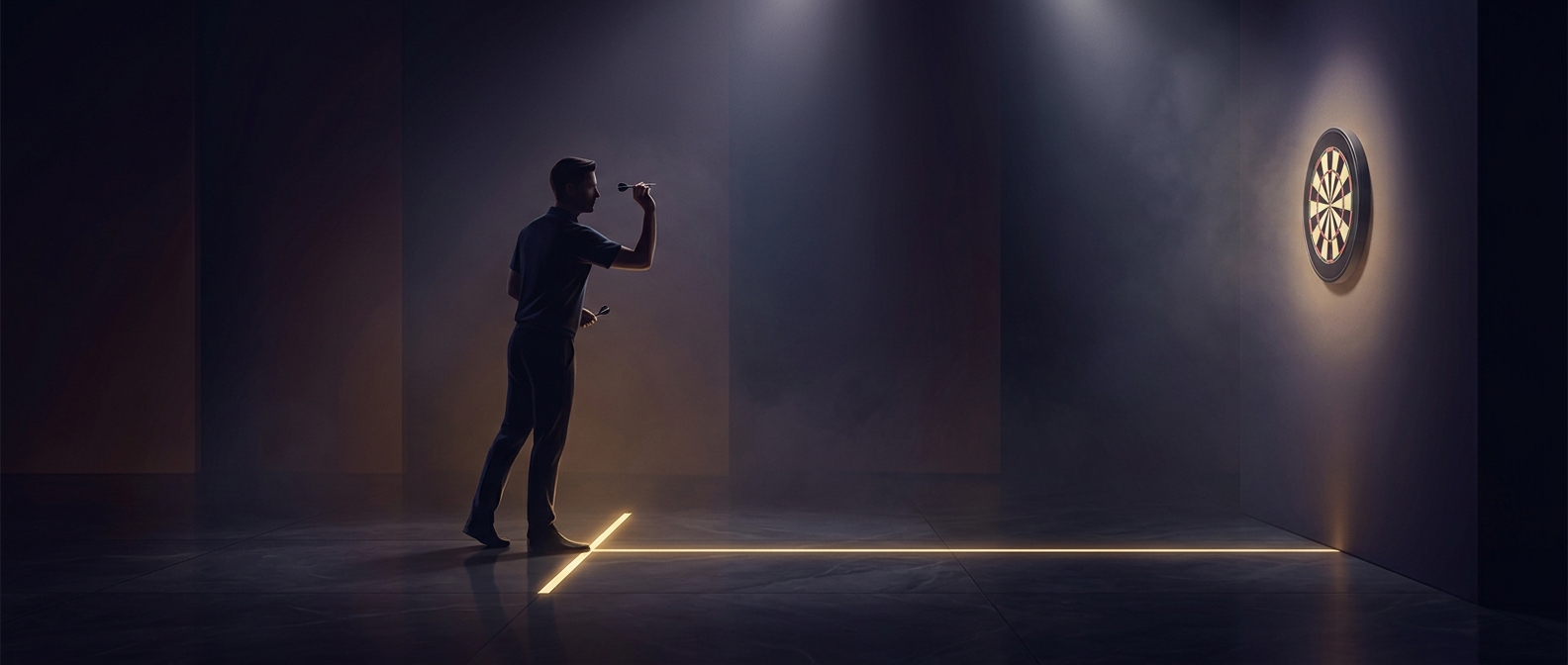
The oche—the marked line a player throws from—turns a casual toss into a repeatable test of aim. Set at the regulation distance from the board’s front surface, it gives players the same starting point whether they are practicing at home or competing elsewhere. The distance is measured from the board, not from the wall behind it, so a board mounted with more space behind it does not change the throwing distance.
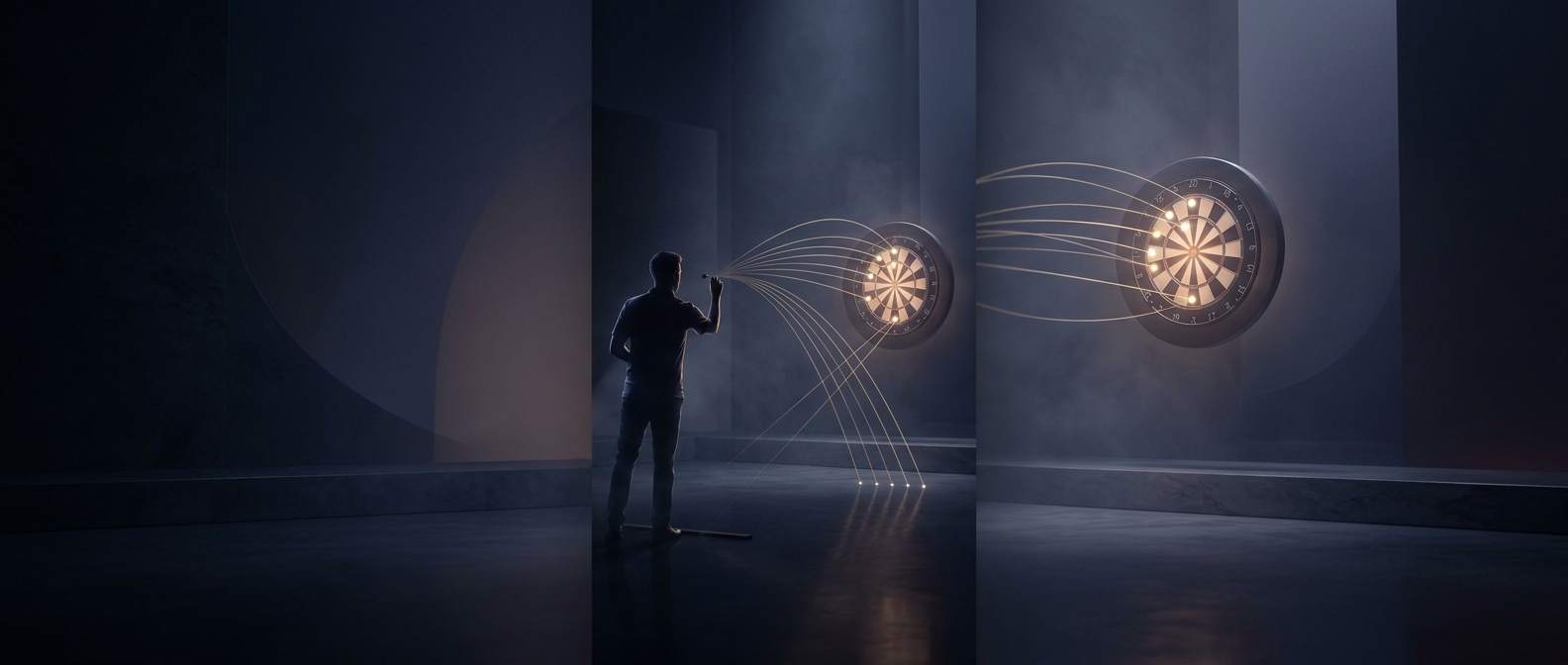
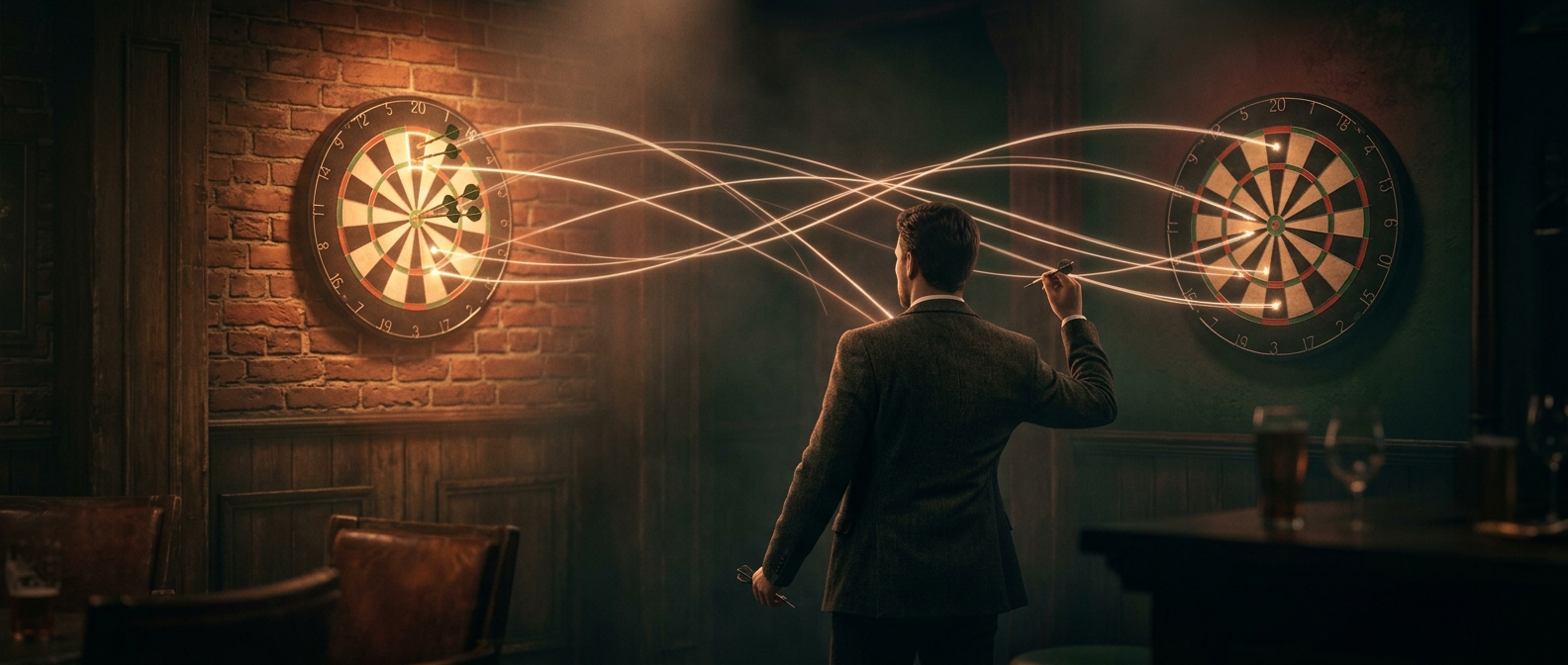
That consistency matters because even a small change in where a player stands changes the angle and length of the throw. A player closer to the board has a different task from one farther away; comparing their scores would be less meaningful. The line removes that variable and leaves players to manage the same combination of distance, target size, and hand control.
Why players must stay behind it
The oche is also a boundary during the throw. A player may lean forward, but cannot step over the line; otherwise, the throw comes from closer than the agreed distance. In organized play, crossing it can make the throw invalid under the applicable rules.
The rule makes the line more than a measuring mark: it is part of the playing field. At home, placing it carefully helps ensure that a practice setup builds habits that carry over to a standard board. A few inches of misplaced tape can quietly make the game easier—or harder—without changing the target at all.