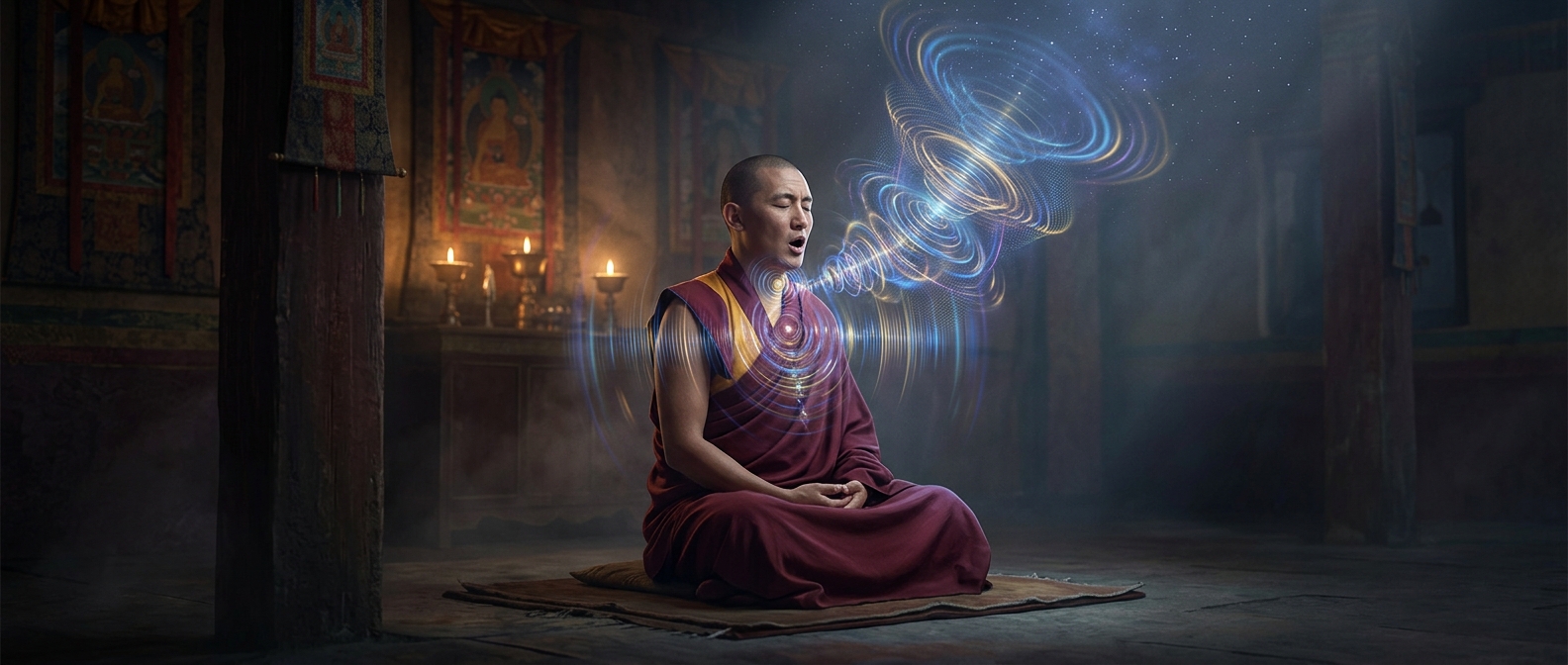
What “Hu” means in the practice
In traditions that use the chant, Hu is treated as a sacred name for the divine. Repeating it is not meant as a verbal formula that forces a supernatural change. It is a devotional act: the sound gives the mind a steady focus, while the person’s attention is directed toward spiritual experience.
Practitioners may describe that experience as the soul moving beyond ordinary awareness. “Cosmic planes” refers to levels of reality in their spiritual worldview, not to physical places that can be charted or reached by bodily travel. The journey is understood through religious experience and belief.
Why a single syllable can matter
A short chant is easy to repeat without constructing a prayer sentence. Its rhythm can hold attention when thoughts wander, and its simplicity makes the practice accessible without elaborate ceremony. In this framework, the sound is a focus for devotion—not a password whose effect is independent of the person using it.
Descriptions of spiritual travel therefore explain what adherents believe the practice can open them to; they are not evidence that chanting produces a measurable trip between worlds. The striking idea is that a voice can serve as a spiritual instrument: one syllable becomes a way to turn attention inward and interpret what follows as contact with a larger reality.