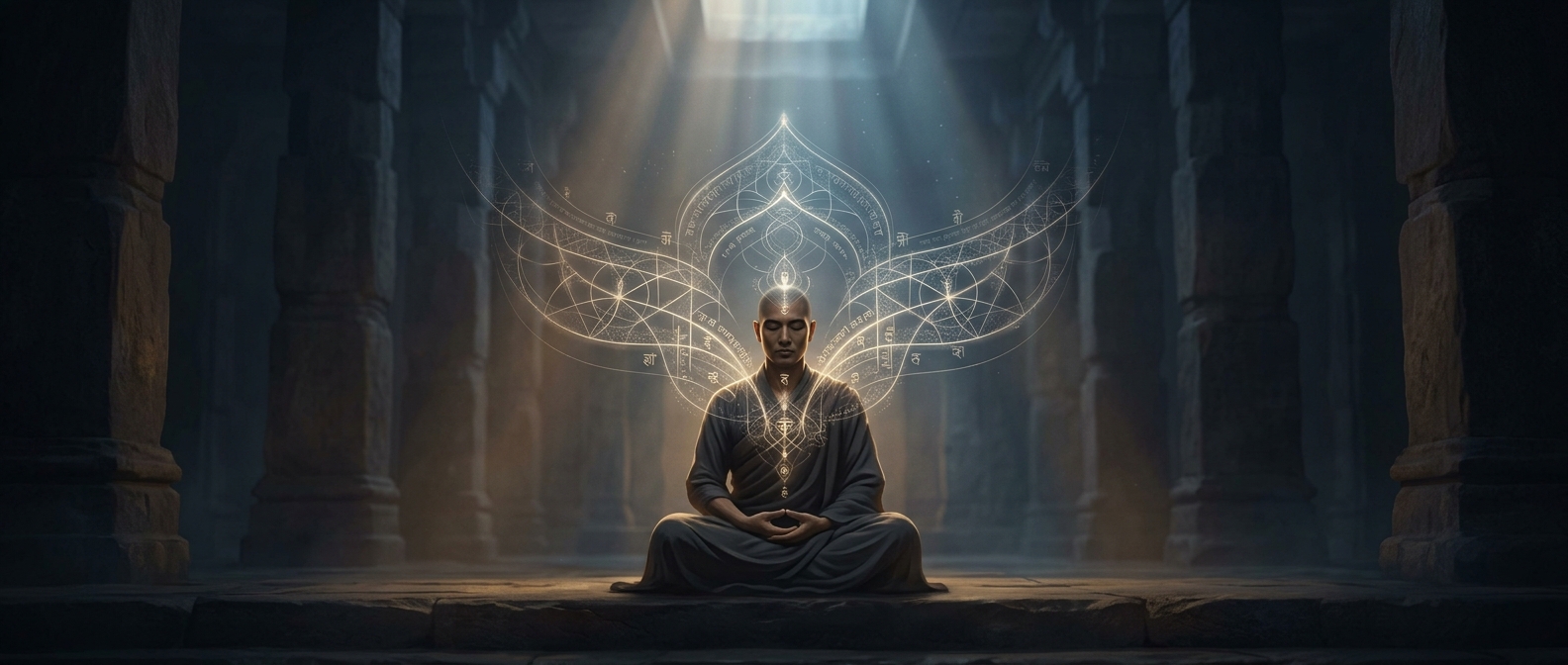
How a mantra gives thought something to hold
A mantra is more than a sentence repeated for emphasis. In Sanskrit, the word is commonly explained through manas, meaning “mind,” and the suffix -tra, meaning an instrument or means. The image is of a tool for working with attention: instead of letting thoughts jump freely from one subject to another, a practitioner returns to a chosen sound or phrase.
Repetition shapes the practice
That return is the practical mechanism. Saying a mantra aloud, whispering it, or repeating it silently gives the mind a steady task. Its rhythm can also coordinate with breathing, making it easier to notice when attention has wandered and to bring it back. The aim is not necessarily to analyze the words; in some practices, the sound itself matters, while in others the phrase’s meaning guides reflection.
Mantras have different roles across religious and contemplative traditions, so the Sanskrit word’s roots do not explain every use. But they capture a lasting idea: a repeated phrase can serve not merely as something to say, but as a deliberate way to direct the mind.