Why 108 Repetitions Can Feel Like a Threshold
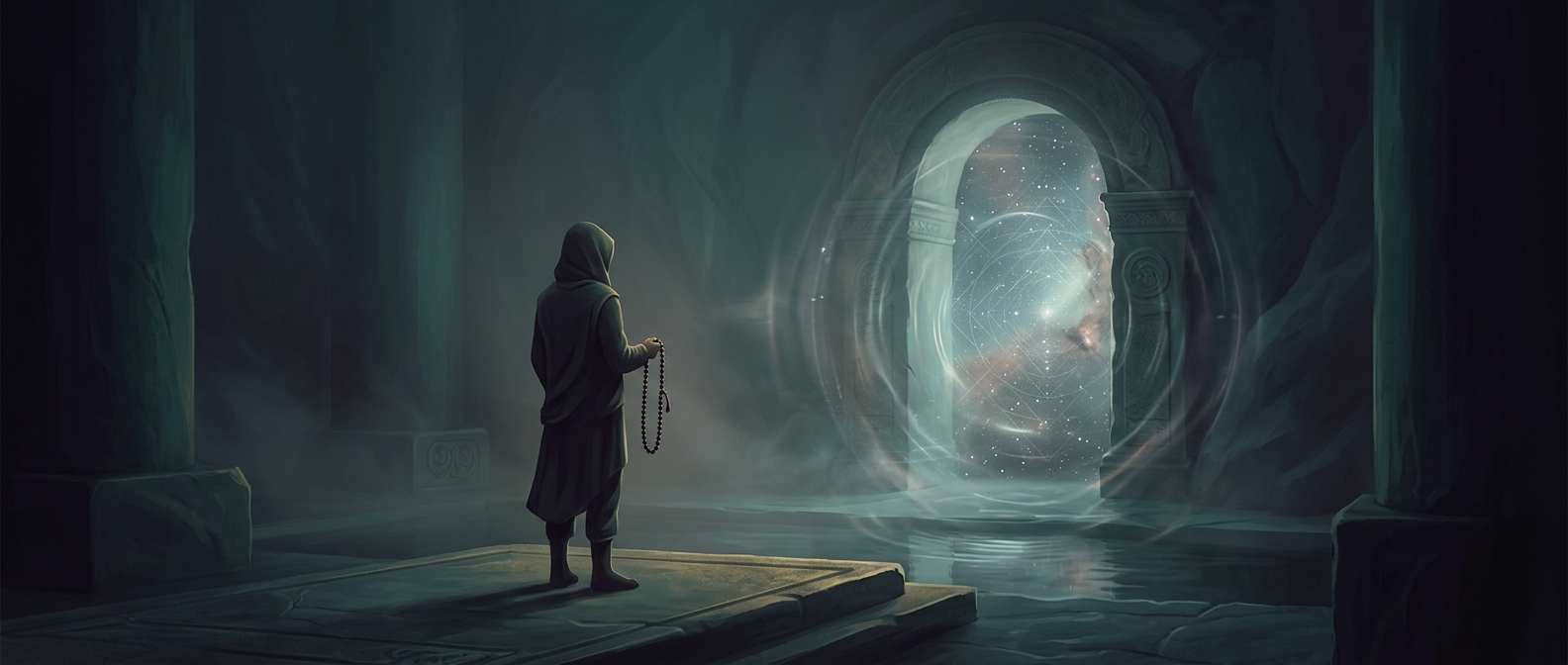
In some Hindu and Buddhist practices, repeating a mantra—a sacred word or phrase—is a form of meditation called japa. Practitioners may repeat it 108 times, often using a string of beads to keep count. The number is treated as spiritually meaningful, though its explanations vary across traditions and teachers; it is not a universal rule.
A Count That Shapes the Practice
A fixed number gives the mind a simple task: return to the phrase, mark the next repetition, and begin again. Beads make the count tangible, so a practitioner can stay with the practice without repeatedly checking a clock or doing arithmetic. Reaching the last bead can provide a clear sense of completion, while the repeated words and steady rhythm help sustain attention.
What “New Realms” Can Mean
For practitioners, 108 repetitions may mark more than finishing a set. The act can be understood as devotion, discipline, or a way of turning attention inward. In that sense, “new realms” describes a shift in experience or spiritual understanding—not a guaranteed, literal destination. The number gives the practice a memorable boundary; what unfolds within it depends on the person and the tradition.