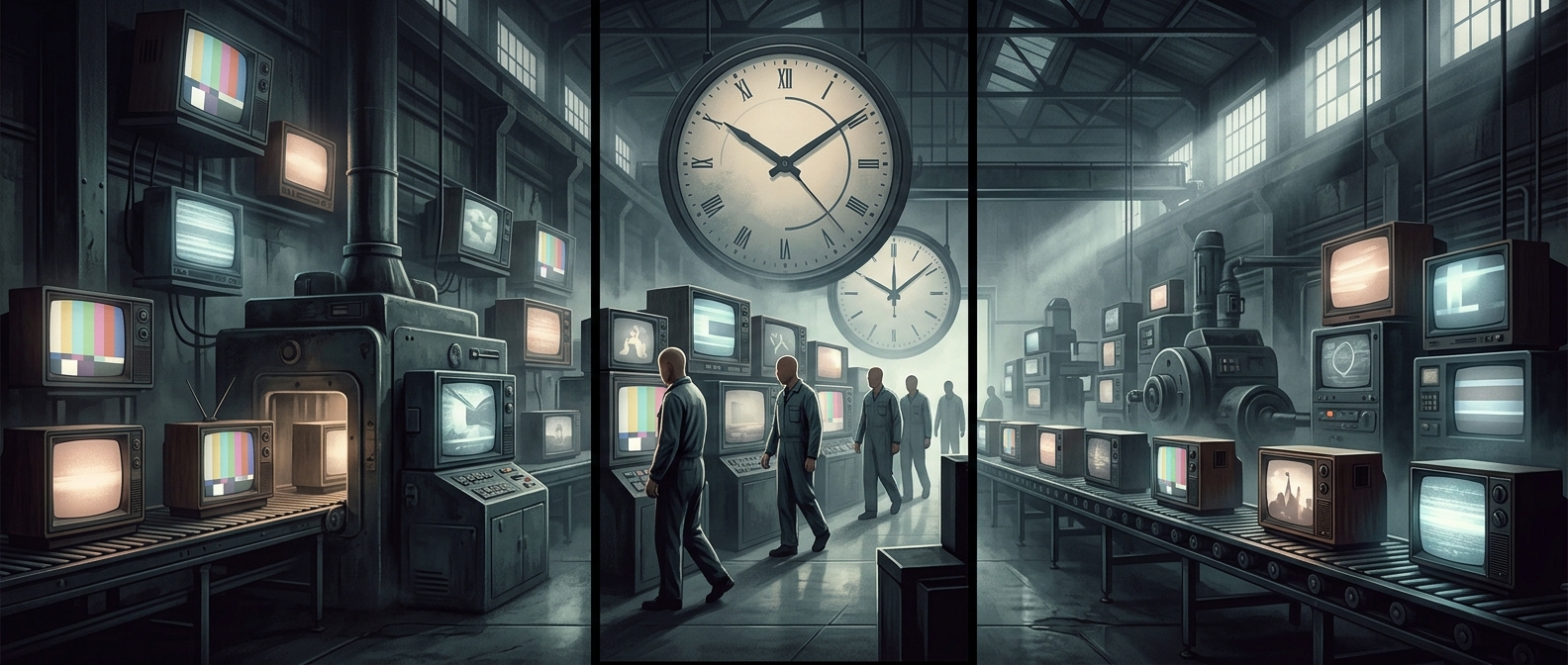
One program, several local evenings
A national network has viewers spread across clocks, but many people still expect evening entertainment at a familiar local hour. If a show begins at 8 p.m. on the East Coast, airing it at that same instant would put it at 5 p.m. on the West Coast. Instead, the network can send the same program westward later, so it arrives during the western evening.
That later showing is often called a tape delay—a term that comes from recording a broadcast and playing it back later, even though modern systems can schedule the delay digitally. The key is that the network is not making a second program; it is shifting the timing of the first one.
Why repeating can be simpler
A network could build separate schedules for each time zone, but that means coordinating more feeds and deciding what occupies every slot. Repeating a block keeps the schedule aligned without requiring a fresh lineup for western viewers. It also gives the network another chance to reach an audience with the same episode, rather than leaving those hours to different programming.
This approach is especially useful when a program is prerecorded or when a network can hold a live broadcast before sending it onward. Live events are trickier: a delay can make results or surprises less immediate, while airing them live means some viewers see them at inconvenient hours. The schedule is therefore a compromise between one national production and several local evenings—with the same show arriving at different times depending on where a viewer lives.