Why Emergency Lights Need a 90-Minute Backup
When a building loses power, ordinary lights can go dark at the moment people most need to see stairs, exits, and changes in floor level. Emergency lights use a backup power supply so those routes remain visible for at least 90 minutes after a failure. The time is a safety margin: evacuation may take longer than expected if people are unfamiliar with the building, move slowly, or encounter congestion.
What Happens When the Power Fails
The backup may be built into individual lights or supplied by a central battery system. In either arrangement, the key is the handoff: when normal power stops, the emergency supply must take over without requiring someone to find a switch or start a generator. The lights are intended to guide people out, not necessarily to keep every room lit as brightly as it is during normal operation.
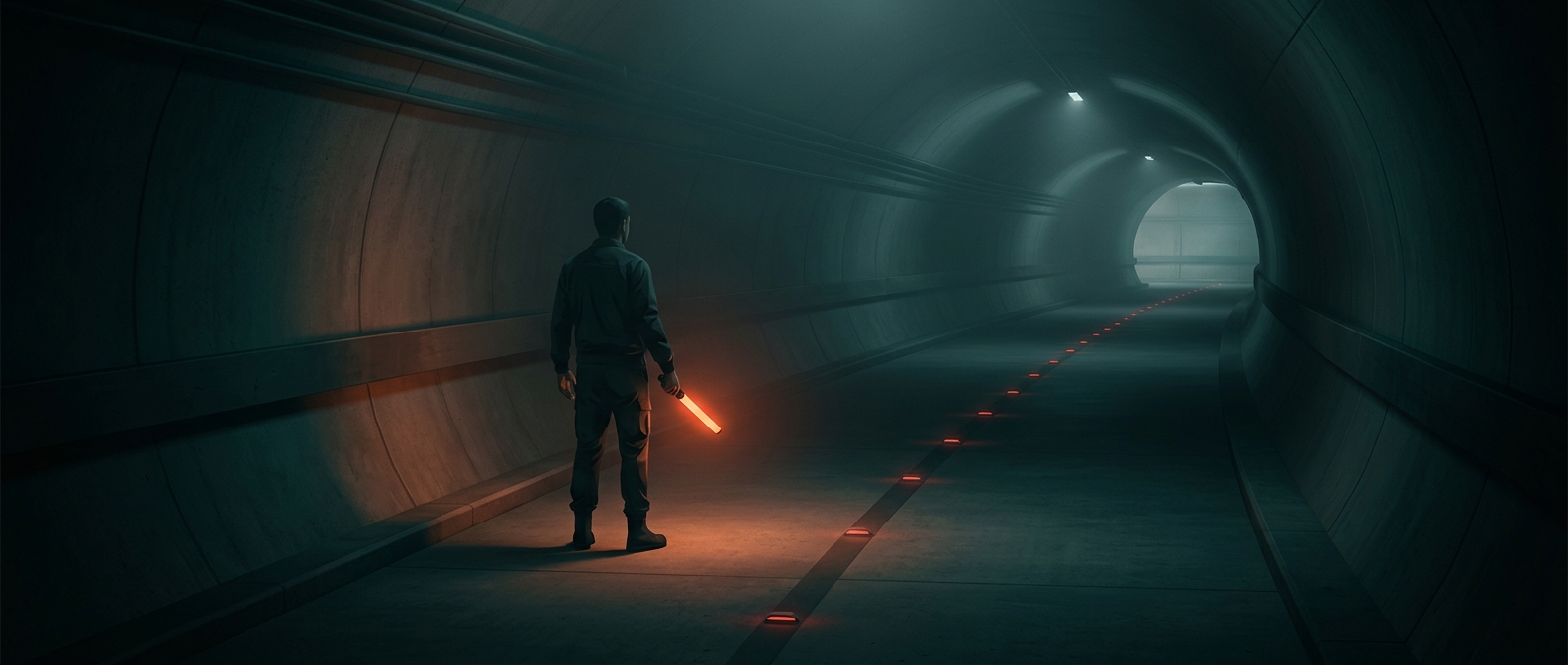
That limited purpose shapes the design. Emergency lighting focuses on the paths people need to follow, while its battery capacity must last through the required period rather than just the first few minutes of confusion. Ninety minutes turns a brief backup into a sustained route out of the building—especially important when a prompt, orderly evacuation cannot be assumed.