Why Stadium Concrete Keeps Gaining Strength After Opening
Concrete does not harden simply by drying out. Water reacts with cement in a process called hydration, creating a mineral-like structure that binds sand and stone together. That reaction begins soon after the mix is poured and can continue for years, so the concrete may gradually gain strength long after a stadium welcomes its first crowd.
A Slow Reaction Inside the Stands
The pace depends on the mix, temperature, and how much moisture remains available. Builders cover or otherwise protect fresh concrete to limit rapid water loss and temperature swings; if it dries too quickly, it can crack before it develops its intended strength. In thick sections, heat from hydration can also build up, making temperature control important.
Concrete’s strength is commonly assessed at an early benchmark, often 28 days. That does not mean hydration stops then: later gains can continue, usually more slowly. The exact pattern varies, and the phrase “curing for years” describes ongoing change—not a stadium that remains unfinished or unsafe until the process ends.
What That Means for a Stadium
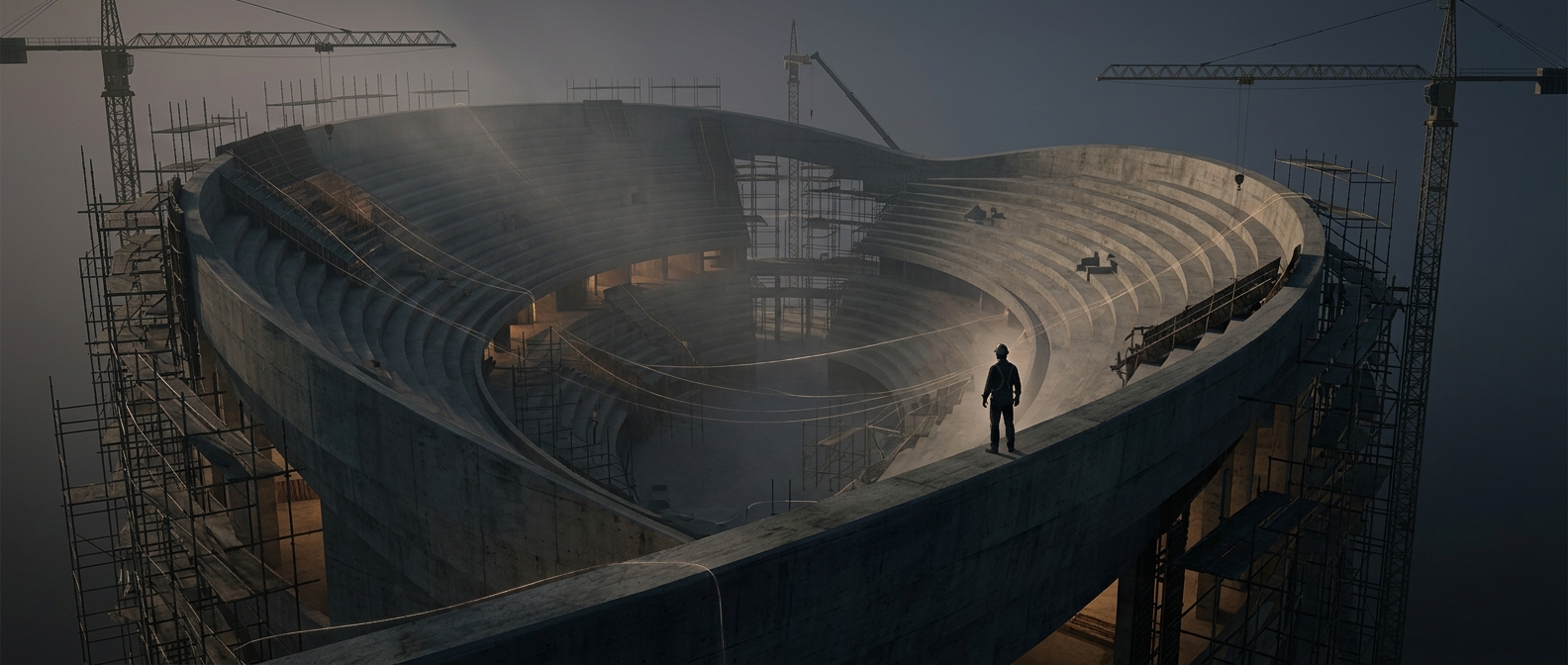
Designers account for concrete’s expected properties when they plan columns, ramps, and seating supports. The structure is evaluated and allowed to carry loads as it reaches the required strength; it does not have to wait years for every last bit of potential strength to develop. After opening, the concrete’s slow internal reaction is a reminder that a stadium is not quite static: even its massive, apparently finished supports continue changing at a microscopic scale.