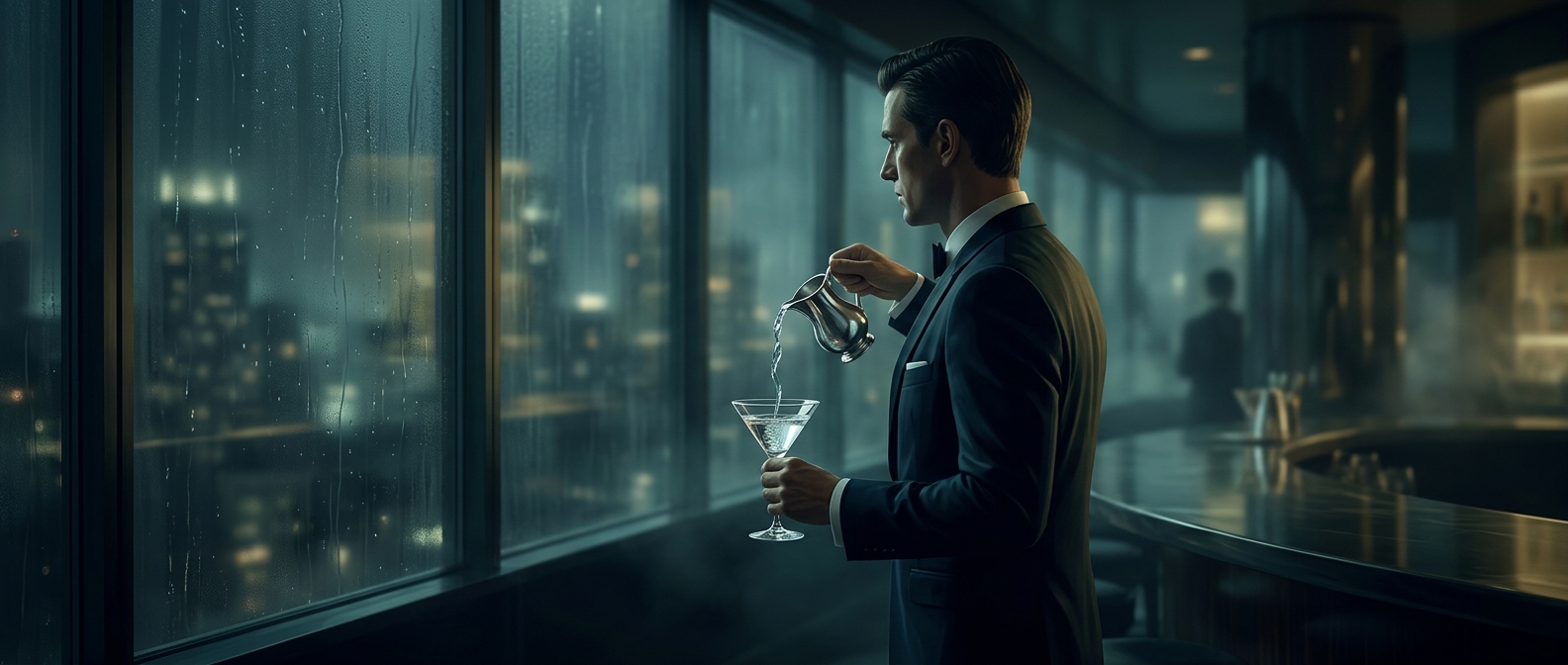
Why shaking adds more water to a martini
Ice does not just chill a cocktail; it also melts into it. Shaking rapidly tosses the ice against the shaker, chipping some pieces into smaller fragments. Those fragments expose more surface area to the drink, while the vigorous motion continually brings warmer liquid into contact with cold ice. Together, those effects usually make a shaken martini melt more quickly than one stirred for a comparable time.
The added water is part of the drink, not an accident to be removed. It softens the alcohol’s sharpness and helps the flavors come together. But because shaking tends to add more meltwater, a shaken martini will generally taste less concentrated than a stirred one.
The difference goes beyond dilution
Shaking also whips air into the cocktail and can leave tiny ice crystals suspended in it. That gives the drink a cloudier appearance and a livelier, sometimes slightly frothy texture. Stirring is gentler: it cools and dilutes the mixture while keeping it clearer and smoother.
The result depends on practical details such as the ice, the amount of liquid, and how long the drink is mixed, so the techniques do not produce a fixed amount of dilution. Still, the contrast is easy to understand at the glass: shaking tends to trade clarity and a more concentrated taste for a colder, airier drink with more meltwater.