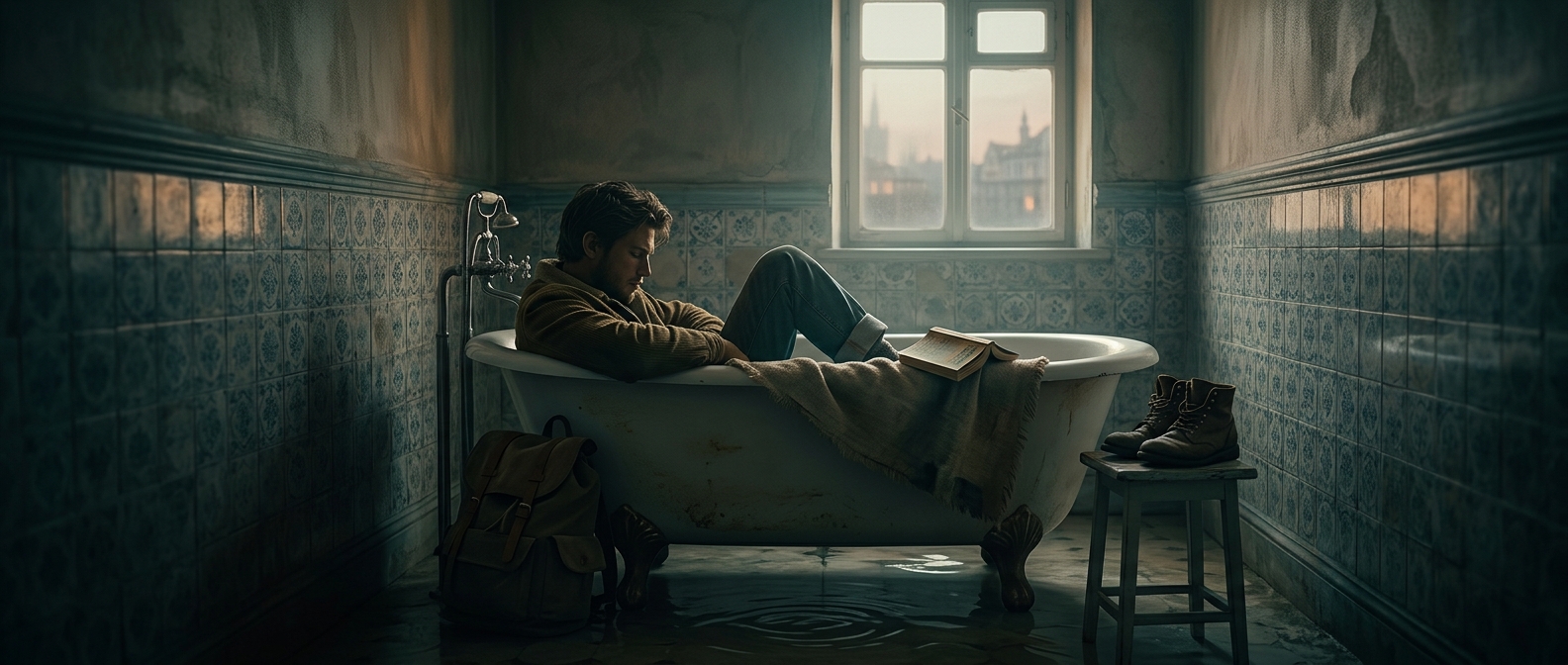
A bed was the luxury; a place to sleep was the goal
Arthur Frommer’s advice reflected a basic arithmetic of budget travel: conventional hotel rooms could consume too much of a traveler’s limited cash. Cheap pensions—small, often family-run lodging houses—offered a way to spend less, especially if guests accepted shared facilities instead of a private bathroom.
The bathtub suggestion took that bargain to its most literal extreme. When a hostel had no space, a traveler might pay for a tub as a place to sleep. It was not comfortable lodging so much as a way to turn an otherwise unused corner of a building into an overnight stop.
The guide made tradeoffs part of the itinerary
Europe on 5 Dollars a Day treated travel as a series of choices: spend less on the room, tolerate fewer comforts, and keep more money for being on the road. That approach made European travel seem possible to readers who could not afford the standard hotel experience. Its advice was memorable because it made the exchange tangible: privacy and comfort could be surrendered, one night at a time, in return for a cheaper trip.
The bathtub was an extreme example, not the whole method. But it captured the guide’s practical premise: a traveler did not always need a proper hotel bed to keep moving through Europe.