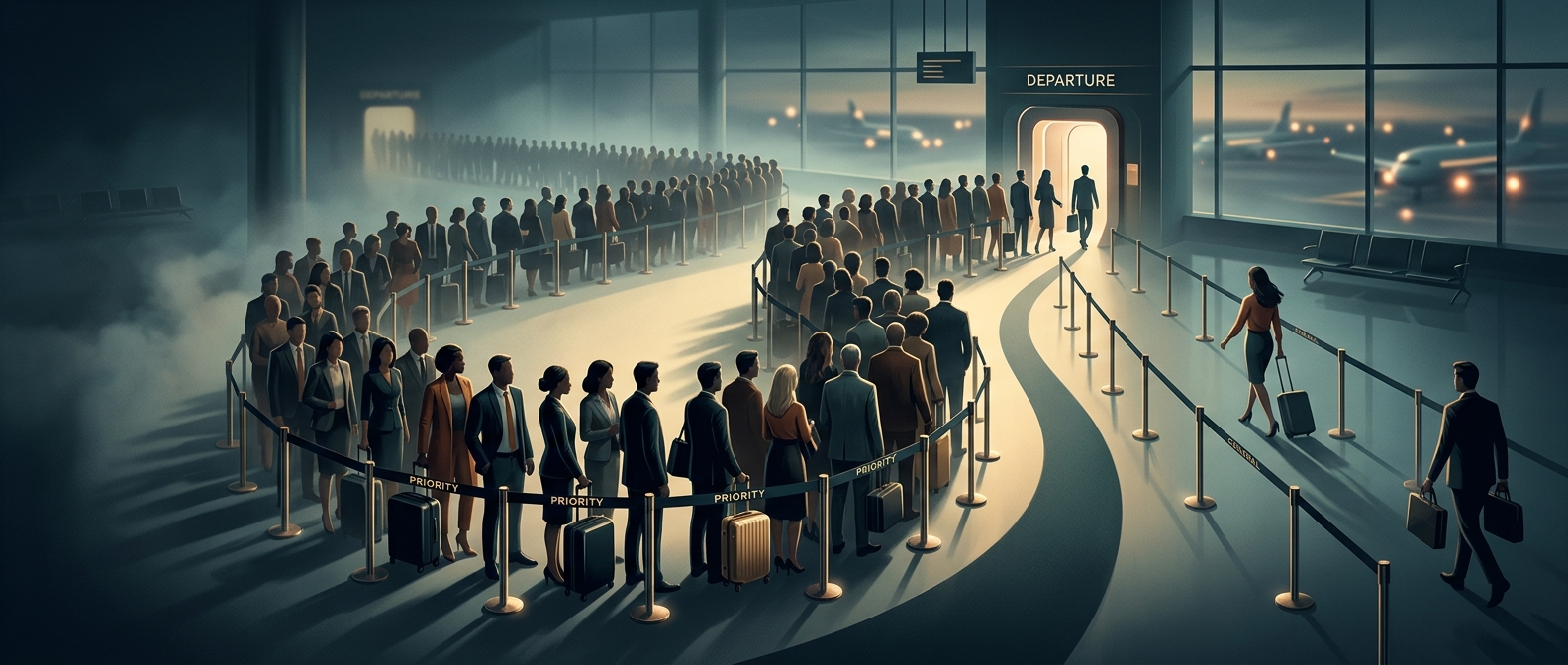
A shortcut with a limited number of places
Priority boarding sounds like a way to avoid waiting, but it does not create a separate route onto the plane. Passengers still pass through the same gate scanners and into the same narrow aisle. The airline is selling an earlier place in the boarding order—not extra capacity at the gate.
That makes priority a relatively easy add-on to sell. An airline can offer it to passengers who want more time to settle in or a better chance of finding overhead-bin space, without changing the aircraft or adding another boarding lane. But each additional sale adds another person to the early group.
When the early group becomes its own queue
The gate has to process people at a finite pace. If many passengers arrive for the priority call at once, the line can grow even though they will board before the standard group. The queue reflects how many people are trying to use the early window, not necessarily how slowly the airline is boarding overall.
There is also a practical limit to how much earlier anyone can get on. The aircraft must be ready, and passengers still have to walk aboard and stow their belongings. If the priority group is large, its members may spend much of the waiting time standing together rather than moving quickly toward their seats.
The tradeoff is that priority is valuable only while relatively few people have it. Selling more passes brings in extra revenue, but it can dilute the experience that made the upgrade appealing. The result is an odd kind of shortcut: a line that may be longer than the one it was meant to bypass.