Mjolnir turns strength into a character test
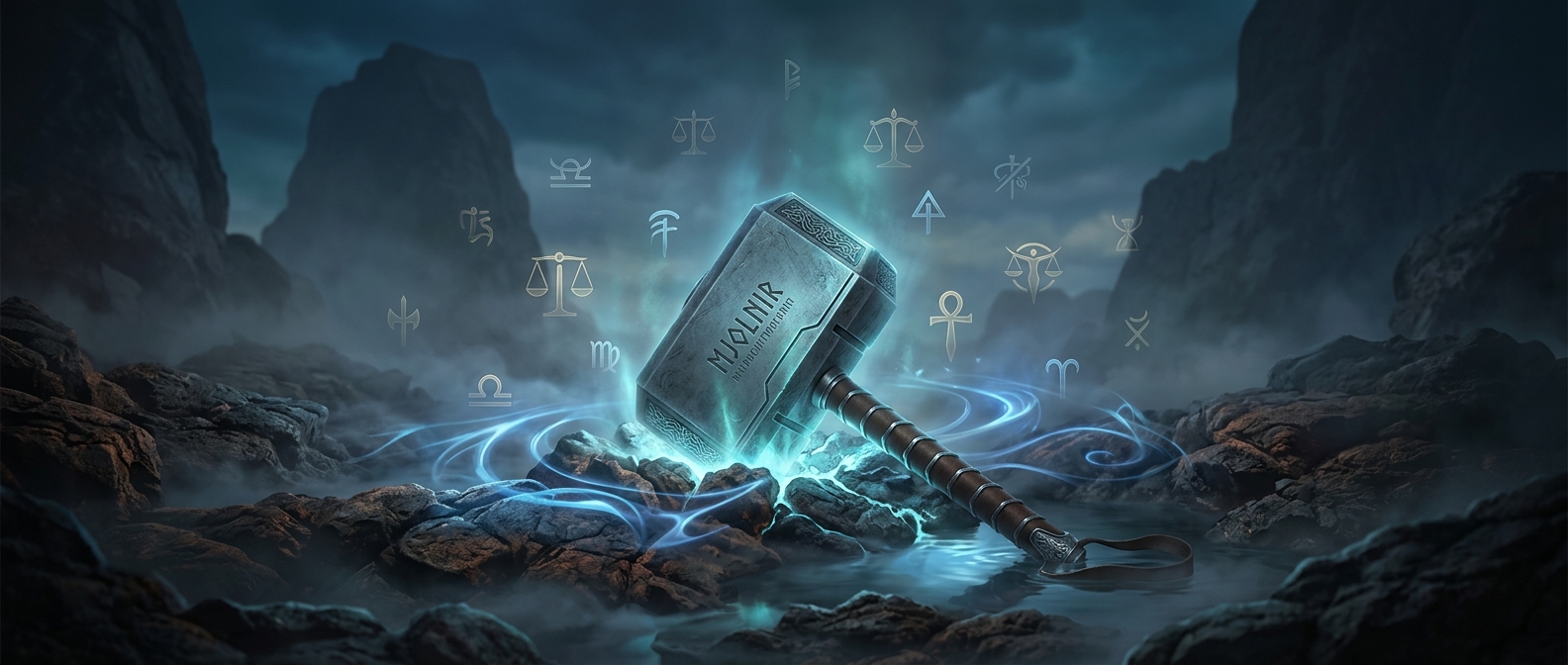
A normal weapon answers a physical question: can someone lift it? Mjolnir’s enchantment adds a different condition. In Marvel stories, brute force cannot overcome the restriction; the hammer responds to worthiness instead. That makes lifting it less like winning a contest of strength and more like passing a judgment whose rules are deliberately moral rather than mechanical.
Worthiness is shown through choices
The stories do not treat worthiness as a simple checklist or a permanent score. It is conveyed through character: a person’s courage, restraint, humility, and willingness to accept responsibility can matter more than raw power. Because the standard is not reducible to a single heroic deed, a character may surprise others—or even themselves—by being unable to lift the hammer.
That uncertainty gives the enchantment dramatic force. A powerful rival can be stopped without a stronger opponent appearing, while a seemingly less formidable character can prove capable of wielding it. The question shifts from “Who can overpower whom?” to “What kind of person is ready for this power?”
The hammer makes responsibility visible
For a superhero story, Mjolnir is both a weapon and a verdict. Its weight cannot be measured only in metal: the enchantment turns an invisible quality into a visible consequence. When someone cannot lift it, the failure can expose a gap between having power and being fit to use it. When someone can, the moment signals not just strength, but a readiness the story has chosen to recognize.