Why the Sun’s rider appears so unguarded
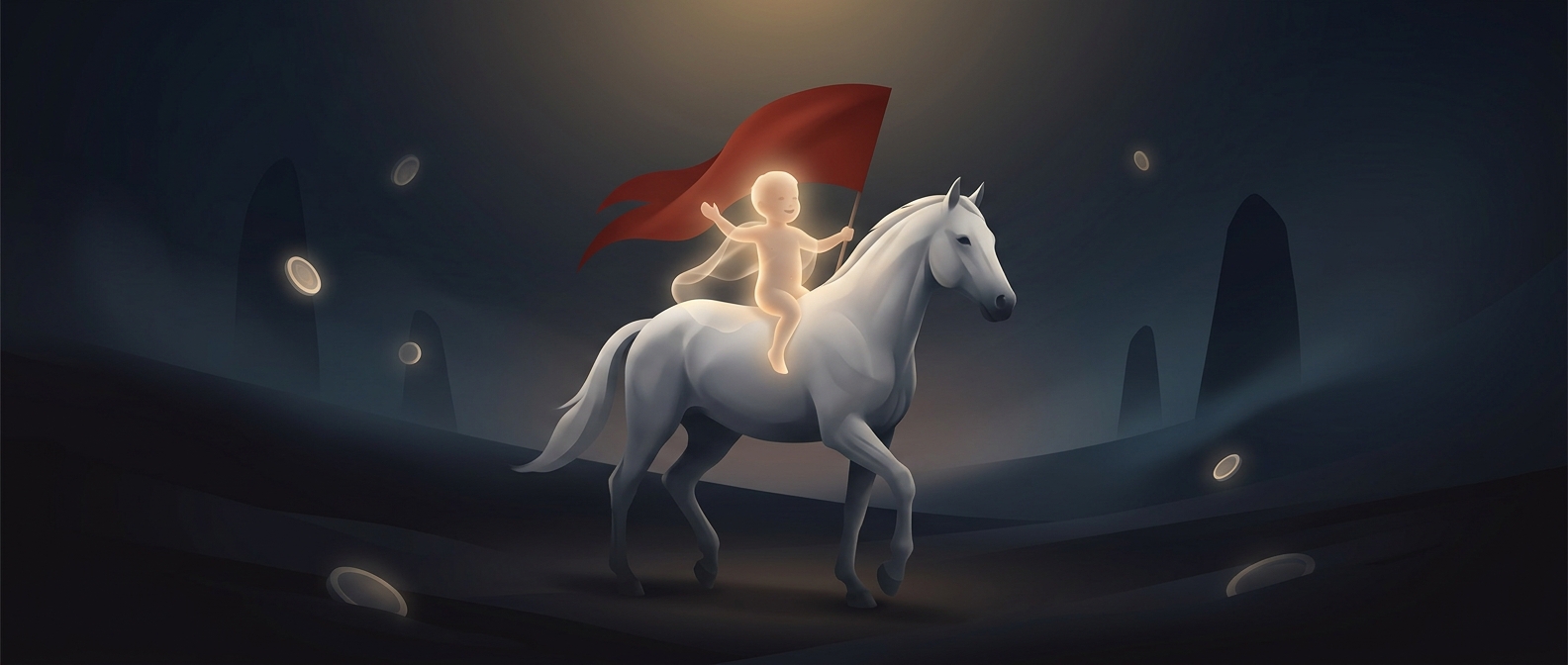
In tarot, the nineteenth card of the Major Arcana is commonly called the Sun. Its child rider is usually read through the card’s central contrast: nothing in the scene suggests concealment or elaborate protection. The child is exposed, and the horse carries them without a saddle. In symbolic readings, that can suggest meeting life directly—without the armor of status, caution, or self-consciousness.
That openness is not necessarily meant to imply recklessness. The white horse gives the image a sense of strength and forward motion, while the young rider suggests freshness rather than hard-won sophistication. Together, they make confidence look less like control and more like trust: the rider can enjoy the journey because the scene feels safe and clear.
What “success” means in a reading
The card’s bright, uncomplicated mood helps explain its traditional association with joy and success. In a tarot reading, success here often means that something can be seen plainly: a person understands where they stand, receives recognition, or gets to take pleasure in a result. The image’s lack of a saddle reinforces ease, not a promise that every practical obstacle has disappeared.
That distinction matters. The Sun is generally an encouraging symbol, but its imagery points to a quality of experience—openness, energy, and confidence—rather than guaranteeing a particular outcome. Its memorable child is not celebrating from behind a wall of ceremony; the scene makes happiness look vivid precisely because there is so little between the rider and the day.