A wheel that can be read more than one way
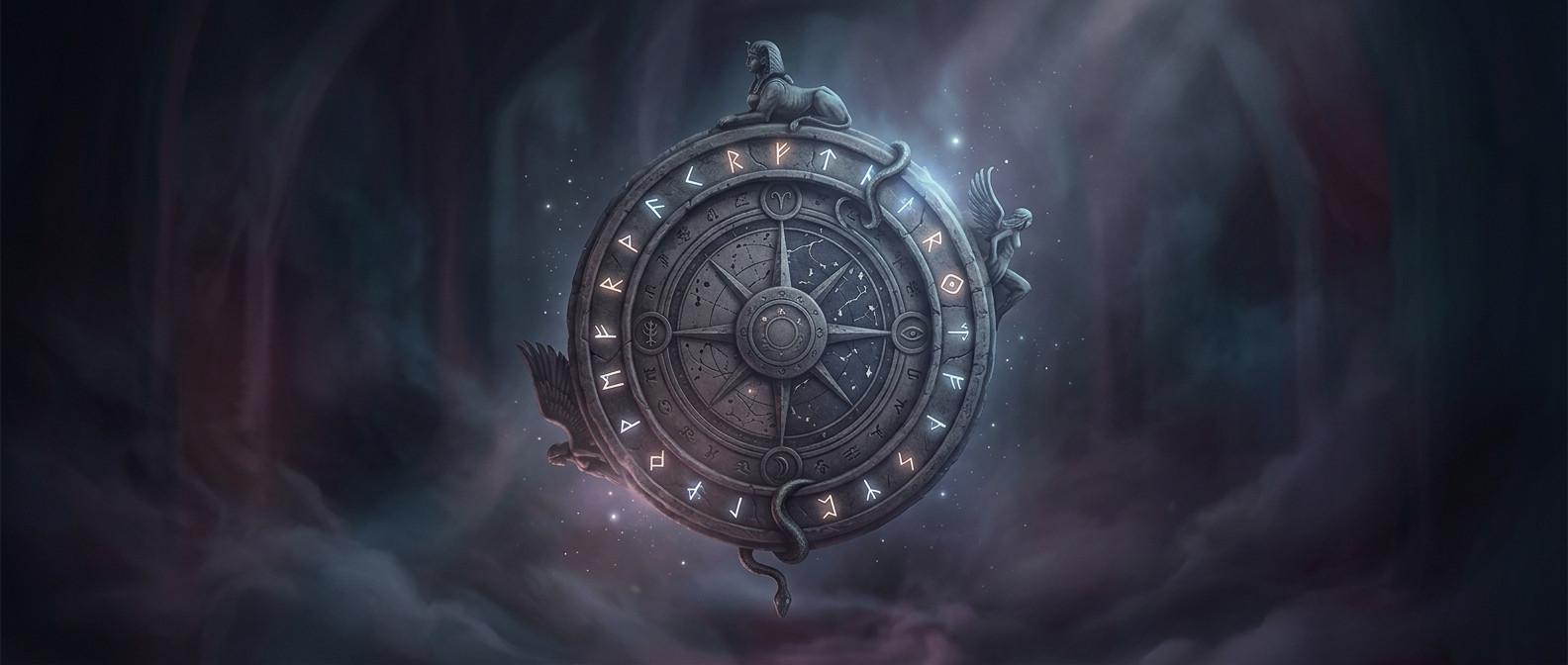
The edge letters are a small piece of the card’s larger visual idea: a wheel turns, and its position changes. Read in a different order, TARO can become ROTA, the Latin word for “wheel.” That makes the lettering feel less like a label and more like part of the image’s machinery: the word itself seems to rotate.
Occult readers have also rearranged the letters into other suggestive forms, including TORA and ORAT. These readings are wordplay, not a single fixed code with one agreed translation. Their appeal lies in making the wheel seem to carry several meanings at once—fortune, teaching, speech, and change.
Why the wordplay suits the card
In tarot, the Wheel of Fortune is commonly associated with turning points and changing circumstances. The wheel does not stay in one position, and a person caught on it cannot dictate every turn. The lettering echoes that uncertainty: even the name appears capable of shifting as it circles the rim.
That is why the detail matters beyond decoration. It lets the card’s central image operate on two levels at once: the wheel turns in the picture, while its letters turn in the reader’s mind. A tiny rearrangement becomes a fitting reminder that what seems fixed may look different from another position.