An obituary designed to wound
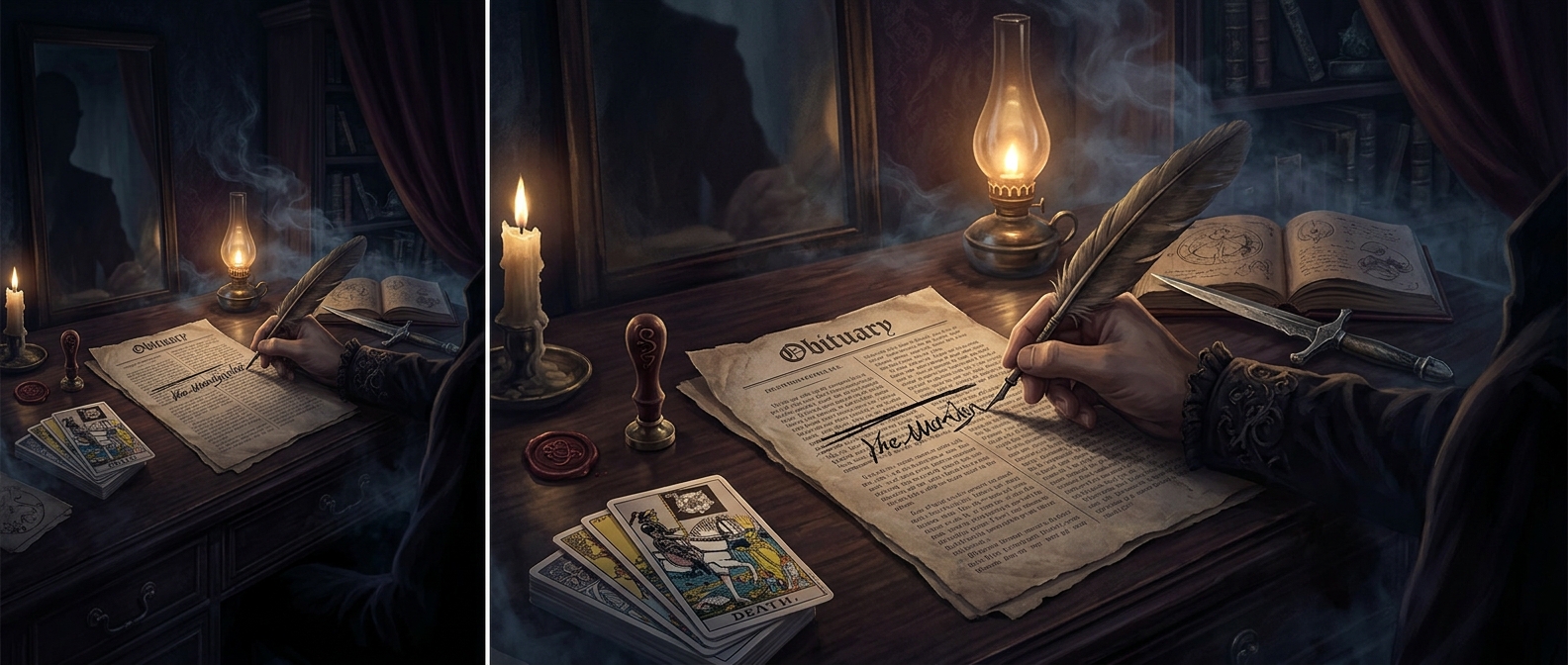
An obituary normally turns a person’s life into a respectful public record. Crowley used that familiar form for the opposite purpose: he wrote as though Arthur Edward Waite had died, though Waite was alive, and made the notice an elaborate insult. The joke depended on readers recognizing the breach of etiquette. A false death announcement was not just a private sneer; printed in an occult magazine, it made the sneer part of a public performance.
Two occultists, one very different style
Waite was a writer and occult thinker who helped create the tarot deck now commonly called the Rider-Waite deck. Crowley, another prominent figure in the same broad occult world, regarded him as pompous and dull. Their disagreement was therefore more than a clash of ideas: Crowley was attacking Waite’s manner and public persona, using the solemn language of remembrance to sharpen the mockery.
That choice gave the insult its edge. A conventional review could be answered as criticism; a mock obituary made Waite’s supposed death—and the absurdity of announcing it—part of the punchline. Its detail made the fiction more pointed, not more credible.
Print turned a personal grudge into a spectacle
Occult magazines offered a place where writers could shape reputations as well as discuss esoteric subjects. By publishing the fake notice there, Crowley transformed irritation into a piece of literary theater. The episode is a reminder that even figures associated with hidden knowledge and spiritual seriousness used ordinary tools of public rivalry: wit, print, and a carefully chosen insult. Waite’s tarot work endured; Crowley’s obituary is remembered as evidence of how far their personal antagonism could go.