Why the Death Card Points to an Ending
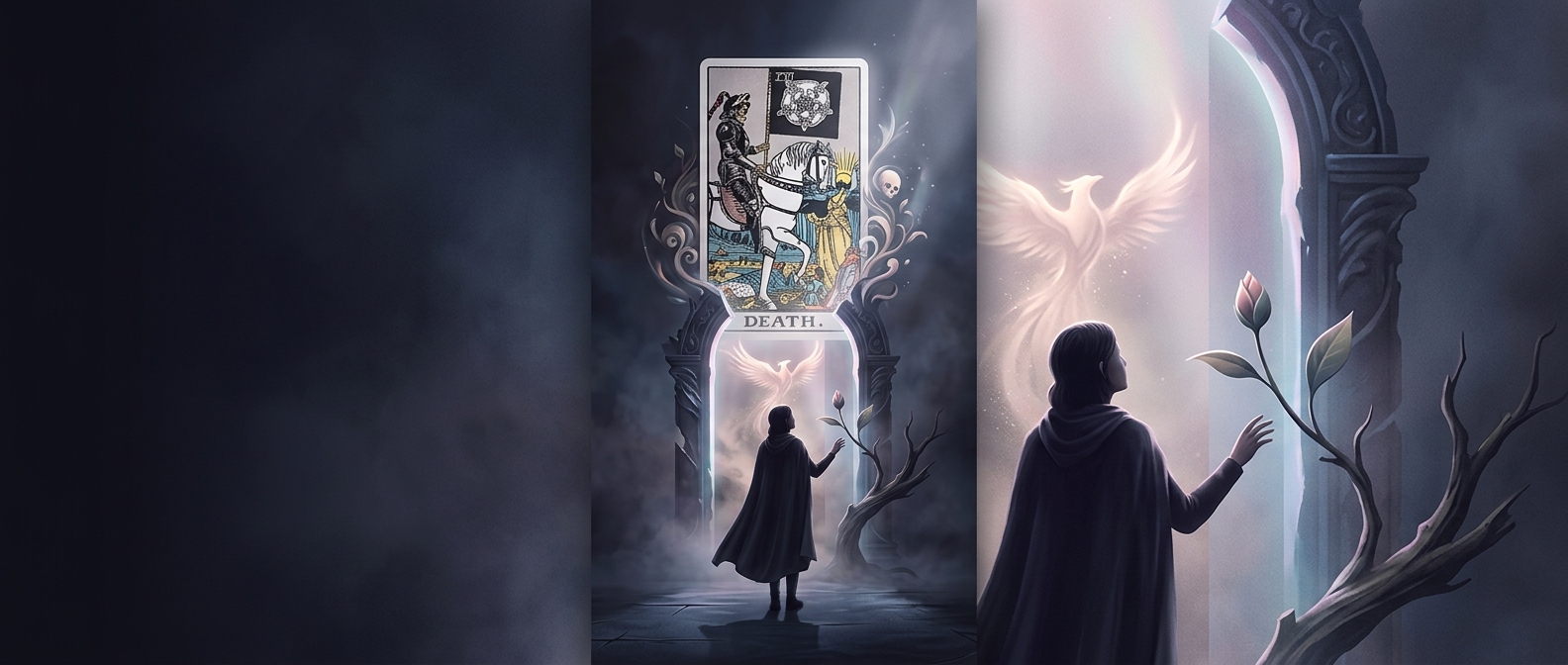
In a tarot reading, the Death card is generally read as a symbol of transformation: something has run its course, and what follows may require letting it go. The image can be unsettling, but its force is often about closure and the change that closure makes possible, not a forecast of physical death.
That meaning follows a familiar pattern in symbolic storytelling. An ending clears away an old role, routine, relationship, or way of thinking; the difficult part is that a person may have to release it before the next stage feels secure. The card can therefore suggest a transition that is necessary but not necessarily easy.
A Prompt, Not a Fixed Prediction
Tarot readers interpret a card in relation to the question, its position in a spread, and the cards around it. The Death card might point to a habit that needs to end in one reading and a larger life transition in another. It does not name exactly what must change, or guarantee that a particular event will happen.
That openness is part of how the card is used: its dramatic name and imagery make an abstract idea—an ending that changes what comes next—hard to overlook. In practical terms, a reading may invite someone to ask what they are holding onto after it has stopped serving them.