Why the Rider-Waite-Smith deck tells a story on every card
Before the Rider-Waite-Smith tarot appeared in 1909, many decks left most of the Minor Arcana—the 56 cards outside the 22-card Major Arcana—as repeating suit symbols. A card might show several cups or swords, but little else to suggest a scene. Arthur Edward Waite wanted those cards to carry visual meaning, too. He commissioned artist Pamela Colman Smith to give every card an illustrated setting, not just the trumps, as the Major Arcana cards are also called.
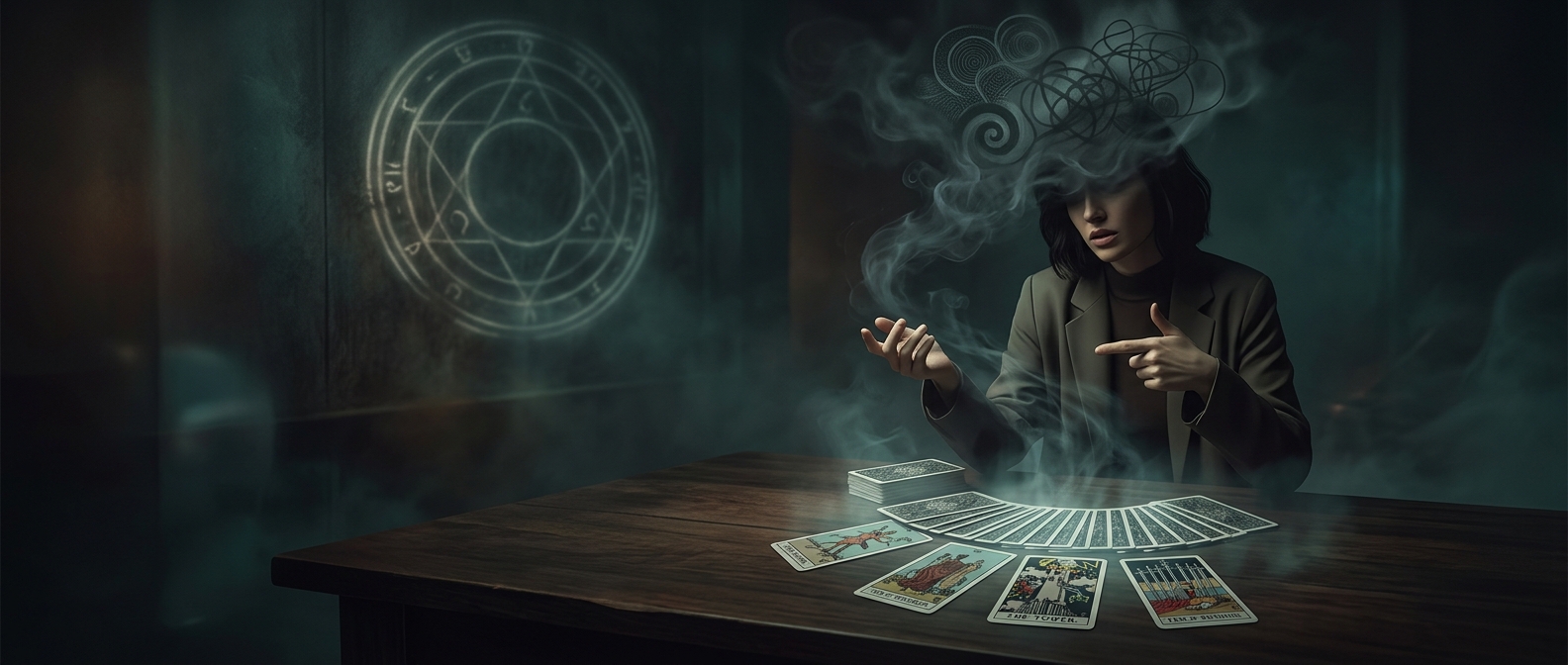
That changed how a reader could approach a draw. Instead of counting objects and relying mainly on memorized meanings, a reader could look at people, gestures, and situations: someone offering a cup, turning away, or facing a difficult choice. The image did not dictate one fixed interpretation, but it gave the reader a concrete starting point for connecting a card to a question.
A scene could carry two kinds of meaning
Waite and Smith were connected to the Hermetic Order of the Golden Dawn, a group that studied occult traditions and systems of symbolic correspondences. In that framework, tarot suits and cards could be linked with ideas from astrology and Kabbalah, a Jewish mystical tradition. The deck’s colorful scenes made the cards accessible at a glance, while details within them could also reward readers familiar with those esoteric associations.
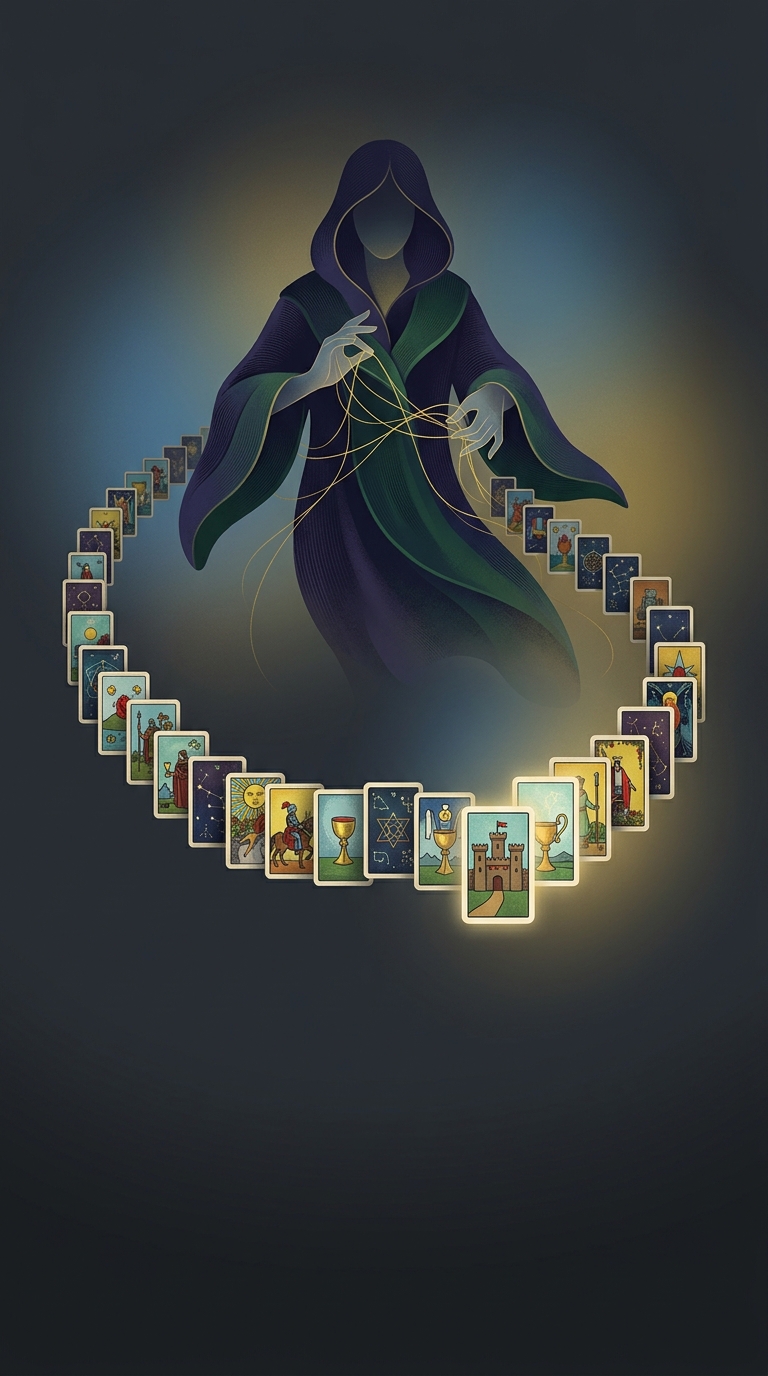
The symbols were not simply a secret code with one answer for every picture. A card’s meaning depended on the system a reader brought to it, as well as its place in a reading. The deck joined an immediately readable scene to a more layered symbolic structure.
The lasting design choice
Smith’s illustrated Minor Arcana gave later tarot artists a model for making every card pictorial and interpretive. The practical consequence is visible whenever a reader can begin with what a figure is doing or where a scene is headed—even before consulting a guidebook.