How children learn an action by watching
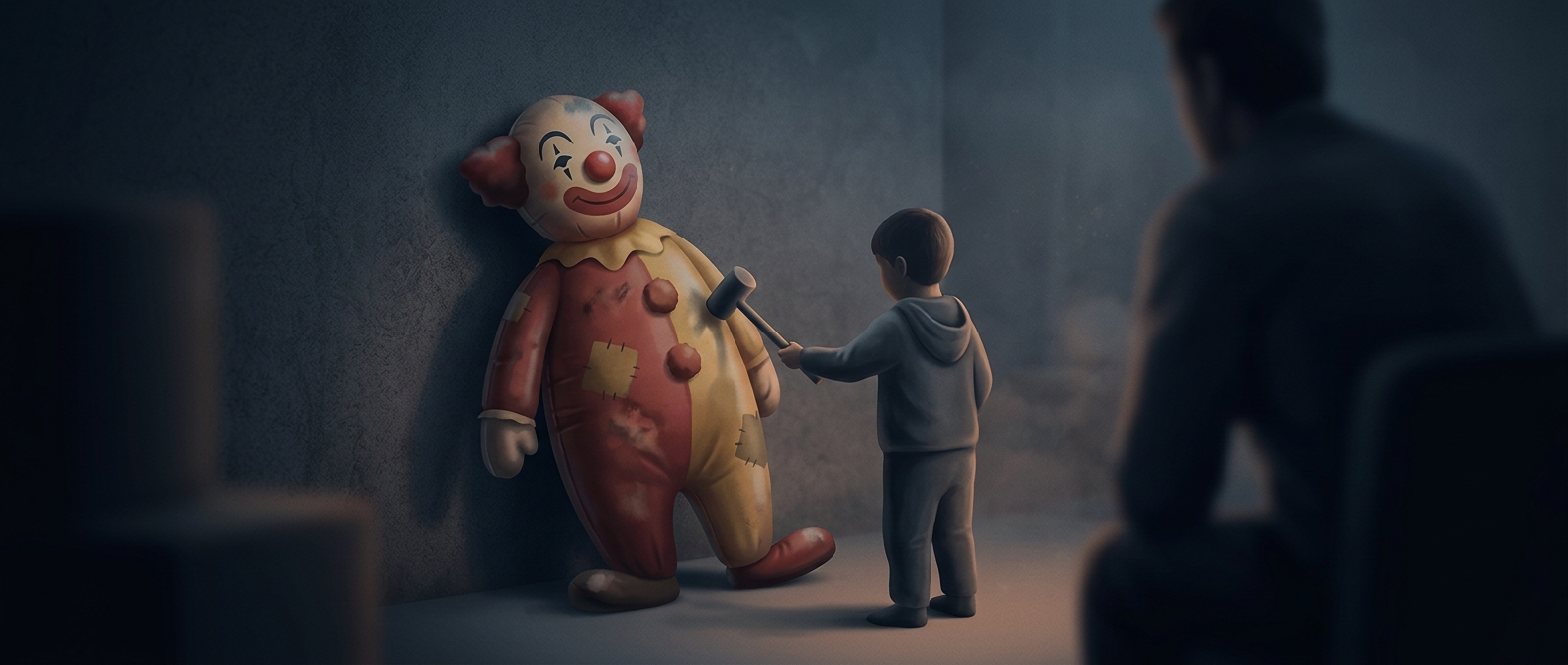
In the Bobo doll experiment, children saw an adult behave aggressively toward an inflatable toy, then had an opportunity to play with it themselves. Some repeated specific actions they had watched, including striking the doll with a mallet. The important clue was not simply that the children became excited or rough: they reproduced details of the adult’s behavior.
That points to observational learning—acquiring a behavior by watching someone else, rather than only by trying it and receiving a reward or punishment. A child can notice an action, remember it, and later try it when a suitable opportunity appears. The adult serves as a model; the child does not need to be directly taught how to perform each move.
Why the model mattered
Children are especially attentive to people who seem important or credible to them, such as adults around them. Watching also gives them information about what actions are possible in a situation. In the experiment, the adult’s behavior provided a ready-made script for interacting with the toy.
Copying is not automatic, and one observed act does not establish how a child will behave in every setting. Whether a learned action is repeated can depend on the situation and on what the child expects to happen. But the experiment helped show why explanations of behavior cannot look only at direct rewards: people may first learn what to do simply by seeing someone else do it.
That makes the finding relevant beyond a laboratory toy. A child who watches an adult handle conflict with threats or force may acquire those responses as options—before anyone has rewarded the child for using them.