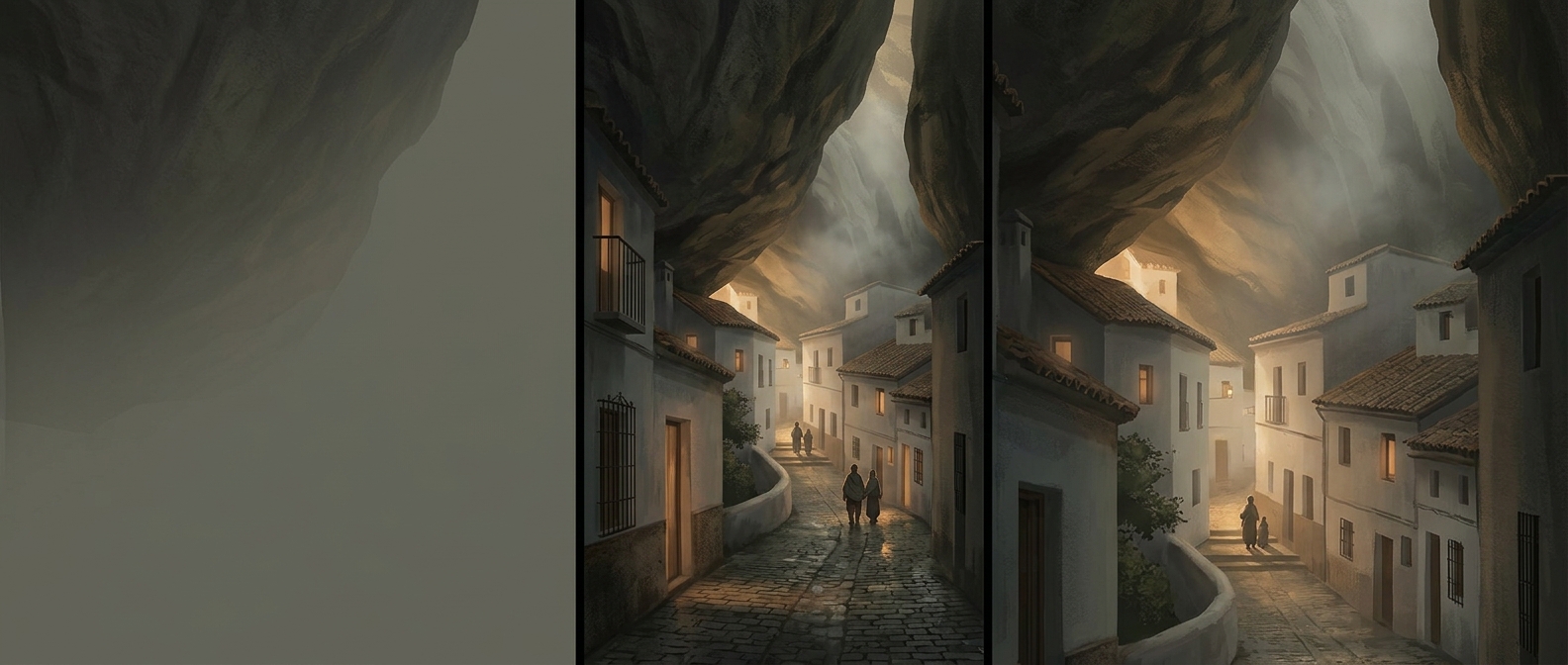
A cliff face turned into a settlement
Vardzia was not simply a row of caves. Builders cut rooms into the volcanic rock of southern Georgia and joined them with narrow passages, stairways and tunnels. The result was a settlement concealed within a cliff above the Mtkvari River, with spaces for worship, work and daily life arranged inside the mountain rather than along ordinary streets.
The rock itself served as both building material and shelter. Instead of raising walls and roofs from the ground up, workers removed stone until chambers emerged. Doorways and openings connected the interior to the outside, while the surrounding cliff offered protection from weather and attack.
A monastery with a wider purpose
The complex took shape in the 12th century, beginning under King George III and expanding during the reign of his daughter, Queen Tamar. Its monastery was central, but Vardzia also included rooms used by lay residents and facilities such as storage spaces and water channels. It was a place where religious life and practical needs shared the same carved network.
That combination mattered in a frontier region where safety could not be taken for granted. A community tucked into a cliff could retreat behind stone and use the mountain’s interior for shelter. Vardzia’s design made the landscape part of its defenses, without separating the monastery from the people and resources needed to sustain it.
Why the hidden rooms are visible today
Vardzia was never wholly sealed inside the mountain: its chambers opened onto the cliff face. A major earthquake in 1283 caused sections of that outer rock to collapse, exposing rooms that had once been more concealed and damaging parts of the complex. The exposed façade helps explain the site’s striking appearance now: from outside, it looks like a honeycomb, while inside, passages still link spaces cut deep into the stone.
Walking through Vardzia means following the architecture’s original logic—moving between rooms by routes shaped by the mountain, not by a modern street plan. The cliff is not just the backdrop; it is the structure that made this unusual community possible.