Tirana’s Concrete Past, Reworked in Public
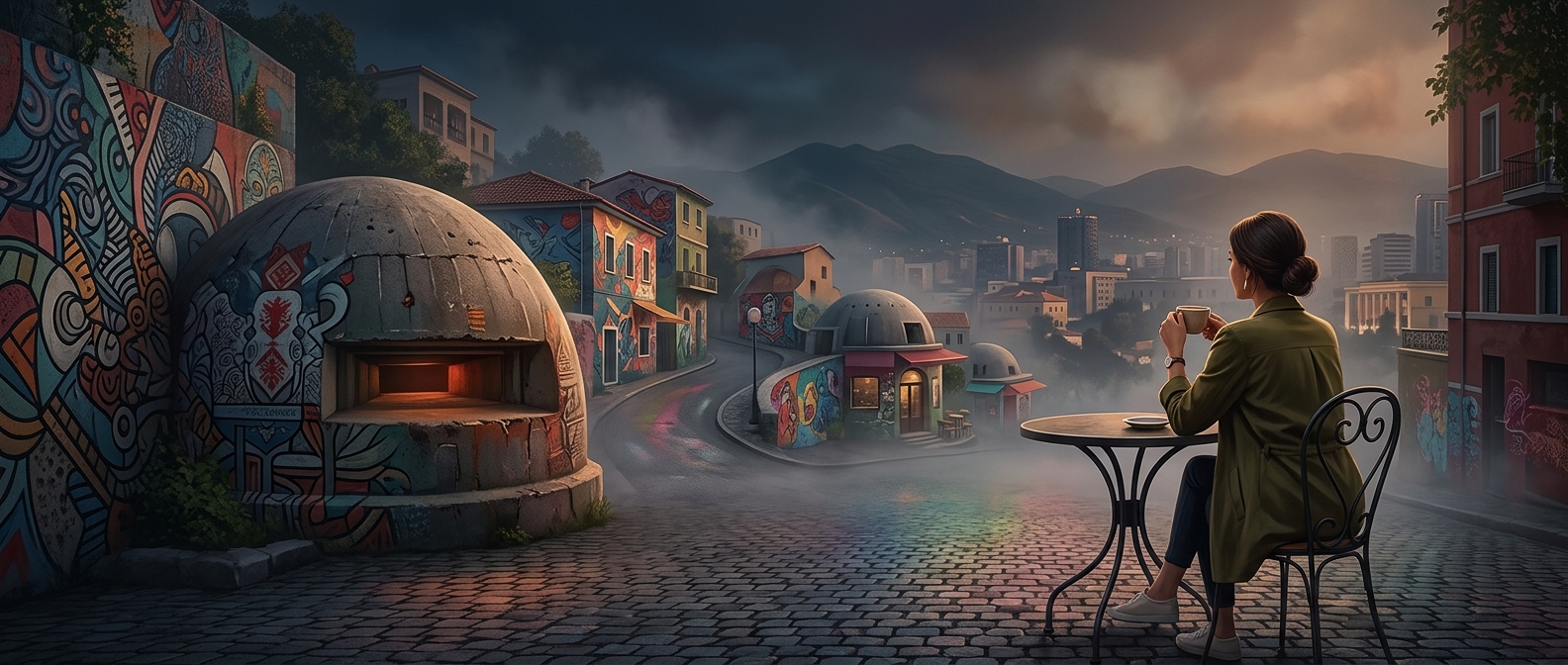
Albania’s communist government built bunkers during the Cold War as protection against a feared invasion. Their thick concrete shells were meant to endure attack; scattered across the country, they outlasted the political system that put them there. In Tirana, these structures are not simply erased. Some have been adapted for new uses, while others remain visible reminders of a period when the state prepared for conflict that never came.
That survival changes the city’s streetscape. A bunker can interrupt an ordinary walk or sit near the flow of daily life, making history feel less like a display behind glass and more like part of the neighborhood. Its blunt, defensive form also throws the city’s newer colors into relief.
Color and Café Life as Signs of Change
Tirana’s murals and brightly painted buildings belong to a different chapter: efforts to make public space feel more open and inviting after decades of tightly controlled rule. Paint cannot erase the past, but it can change how a street is experienced. Alongside cafés and busy sidewalks, vivid façades make the city feel oriented toward gathering and everyday life rather than vigilance.
The contrast is not a neat before-and-after. Old concrete and new color share the same urban space, and cafés give that space a present-tense purpose: people meet, linger, and make use of streets once shaped by a very different political mood. In Tirana, reinvention is visible not because the past has disappeared, but because the city has learned to live around it.