The neighborhood becomes the workday
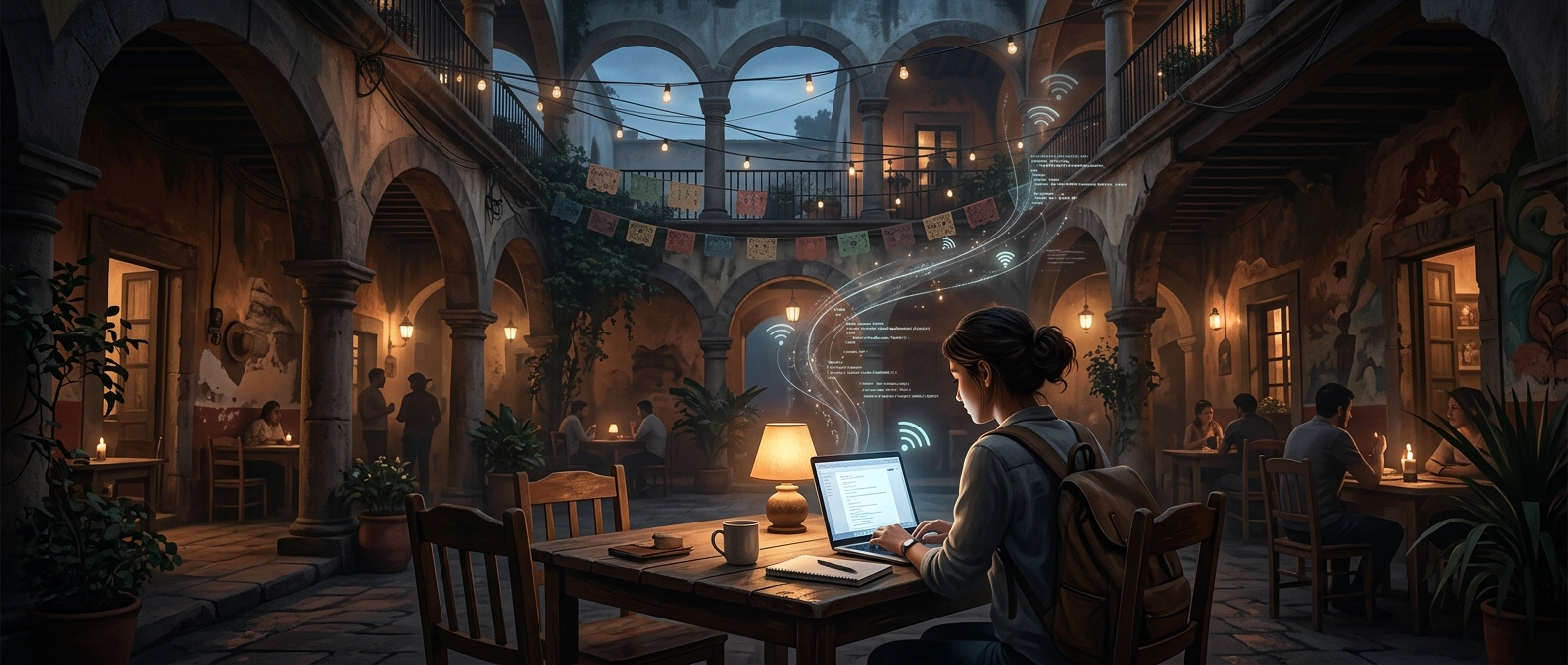
In Mexico City, remote work can happen inside the same neighborhood where people eat, shop, and meet friends—not in a separate office district. That matters because a day at a café can lead naturally into errands or lunch nearby, while a plaza or street mural offers a change of scene without requiring a planned excursion.
The draw is this close layering of ordinary city life. Historic neighborhoods often mix homes, small businesses, food spots, and public gathering places within a walkable area. For a remote worker, that turns the surroundings into part of the routine: work at a table, step outside, and encounter the neighborhood as it is being used by residents.
A café is still a shared space
Reliable Wi-Fi makes a café usable as a temporary workplace, but it does not make the room an office. Customers share tables, noise, and staff attention. A considerate remote worker buys something, keeps calls from disrupting the room, and recognizes that a busy café may not be a place to occupy for hours.
That distinction helps explain why the setting can feel different from a purpose-built coworking space. The café offers a window into local rhythms, but those rhythms are not arranged around a visitor’s work schedule. A plaza may be lively precisely because people are gathering for their own reasons, not providing scenery for someone’s laptop.
The appeal—and the tradeoff
Mexico City’s nomad appeal is therefore more than a strong connection on a laptop: it is the possibility of fitting work into a neighborhood rather than retreating from it. The tradeoff is that remote workers must adapt to shared public life. The most memorable office view may be a mural or a taco stand—but the place remains part of someone else’s everyday city, too.