Where the Artwork Meets the Mediterranean
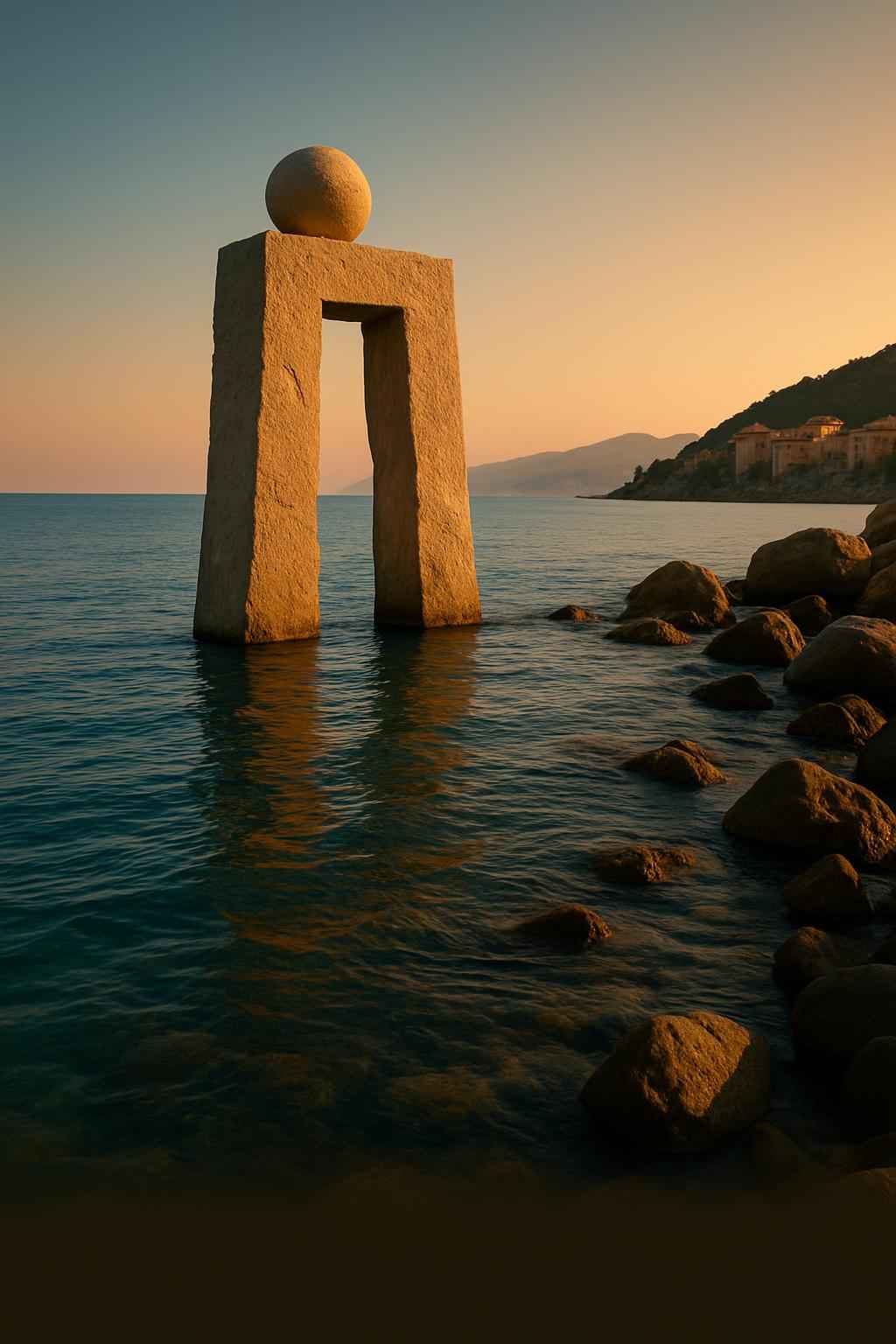
Castel di Tusa sits on Sicily’s northern shore, where the land drops toward the Tyrrhenian Sea. Its art is not confined to a gallery: sculptures are set into the coastal landscape, and some can be seen beneath the water. That changes the visit from looking at a work against a neutral wall to encountering it amid shifting light, waves, and seabed.
The village is associated with Fiumara d’Arte, an open-air contemporary art project whose works are spread across this part of Sicily. The name refers to the area’s waterways and landscape; the installations are not all in one park or all underwater. Castel di Tusa is the coastal point where the project’s relationship with the sea becomes especially tangible.
A Sculpture Changes with the Water
A submerged work is partly hidden by design and by circumstance. From shore, the surface can conceal it; while snorkeling, a visitor may see its form emerge through moving water. Sunlight, visibility, and the sea’s motion alter what is legible from moment to moment. The viewer has to approach the work differently—sometimes by entering the water rather than simply walking up to it.
That setting also makes the sea part of the artwork’s conditions. Saltwater and weather affect materials over time, while the coastline itself supplies the changing frame. The result is less like a permanent exhibition room than an encounter shaped by place: the same sculpture can look different from land, from the surface, and below it. That is the distinctive pleasure of Castel di Tusa’s alternative museum—the shoreline is not just scenery around the art; it is part of how the art is seen.