How a volcanic island learned to live with the wind
Pantelleria is not simply a piece of Sicily that happens to be far south. It rises from the Sicily Channel, where volcanic activity built a rugged landscape of dark rock, steep slopes, and small, sheltered patches of cultivable ground. The island’s exposed position brings persistent winds, so its scenery reflects a practical contest with the elements as much as a dramatic natural setting.
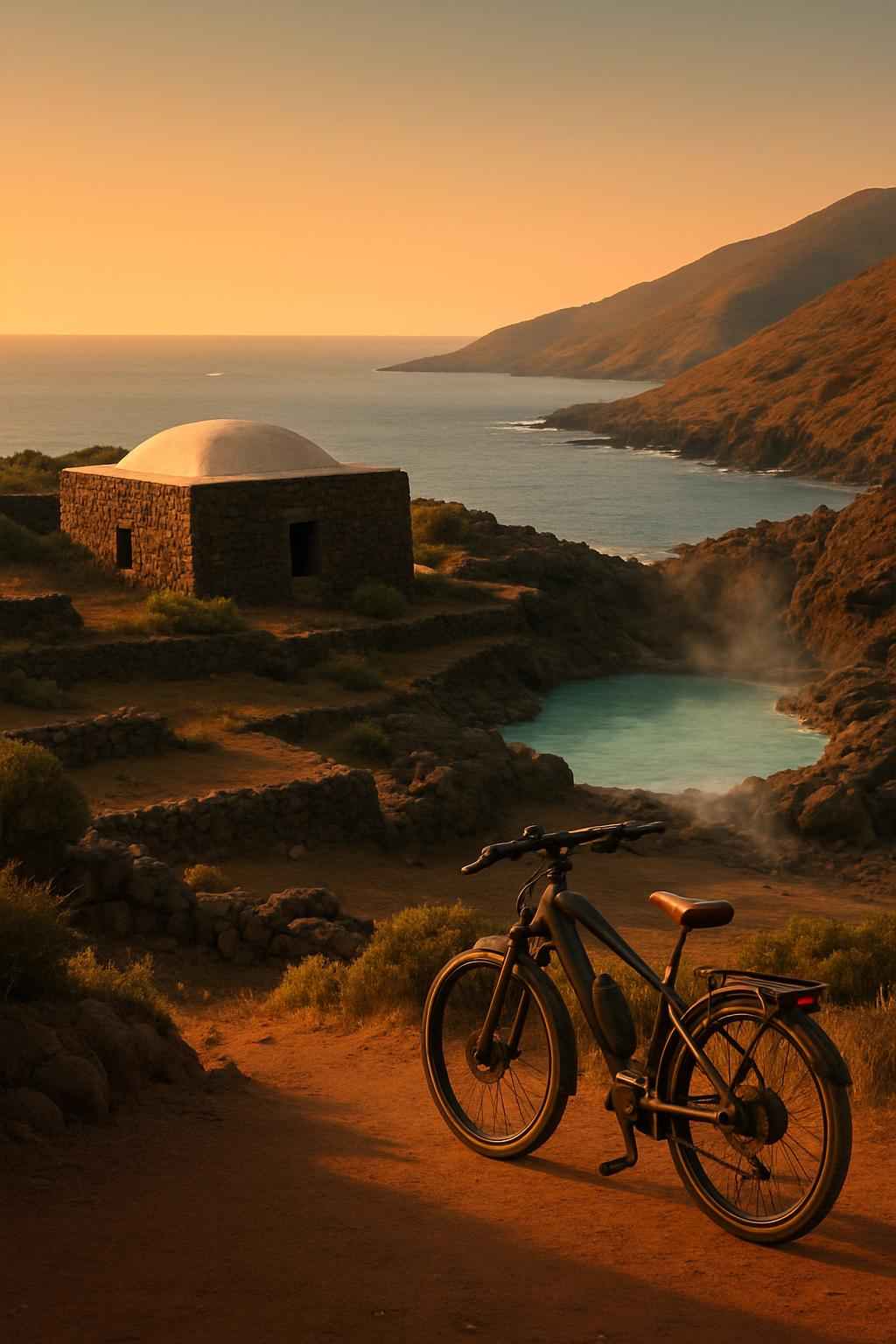
That contest is visible in the dammusi, the island’s traditional stone houses. Their thick walls help moderate heat, while rounded roofs direct rainwater toward cisterns—an important adaptation on an island where freshwater is limited. Stone walls also divide fields and shield plants from wind, turning rough terrain into a patchwork of workable plots.
Why capers suit the landscape
Caper bushes thrive in the island’s dry, sunny conditions and can grow in cracks in stone walls. Their cultivation fits a landscape where broad, easy-to-irrigate fields are scarce. The walls are not just picturesque boundaries: they shelter crops, hold soil in place, and make farming possible on uneven ground.
The result is an island whose architecture and agriculture share the same logic: work with the terrain rather than trying to erase it. A stone house, a protected garden, and a caper plant rooted in a wall all show how life here has been shaped by limited water, steep ground, and wind. On Pantelleria, the landscape is not a backdrop to local life; it is part of the island’s infrastructure.