Why Birds Become an Airport Hazard
Airports can look like open countryside to wildlife: broad grass strips offer places to feed and rest, while nearby water or waste can attract birds. The same clear space that keeps aircraft paths unobstructed can therefore draw animals close to runways.
A bird strike is a collision between an aircraft and wildlife. A bird that is sucked into a jet engine can damage its fan blades or disrupt the airflow the engine needs to produce thrust. The danger is greatest when an aircraft is close to the ground, where pilots have little time or altitude to respond.
Keeping Birds Moving
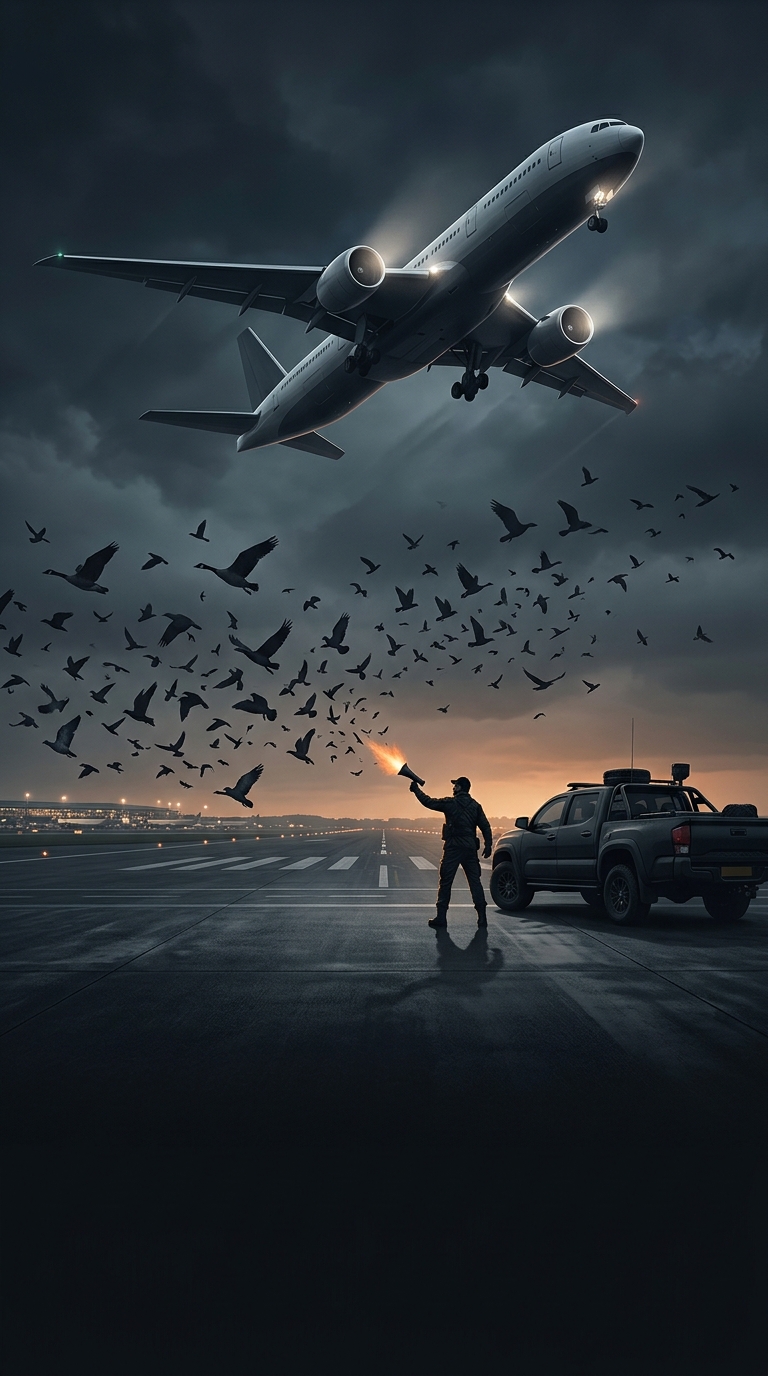
Wildlife teams do more than chase birds after they appear. They watch for activity around runways and use deterrents to make particular areas feel unsafe or unsuitable. The aim is to move birds away from aircraft operations—not to clear every bird from the surrounding landscape.
That job is a contest of attention. Birds may return when a disturbance stops, or learn to ignore a method they encounter repeatedly. Teams therefore have to vary their response and stay alert to where wildlife gathers, rather than treating any one scare tactic as a permanent fix.
A Small Intervention, Timed to Aircraft
The work matters because a brief encounter on the ground can become an aviation problem within seconds once a plane accelerates for takeoff. By detecting and dispersing birds before an aircraft reaches the runway, airport teams help keep wildlife and flight operations apart at the moment when there is least room to recover.