A waterfall designed to make a layover feel like a visit
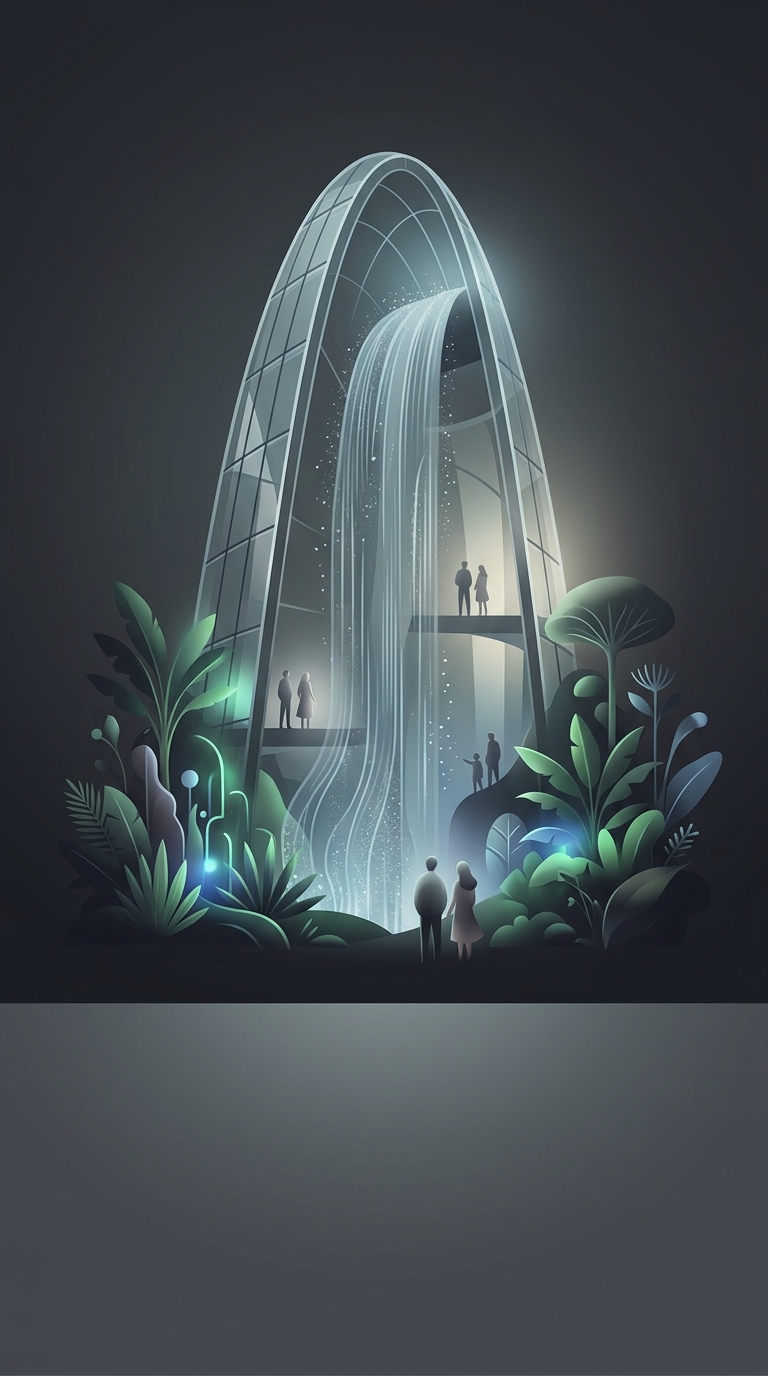
The lush centerpiece at Changi is not simply decoration for passengers waiting to board. Jewel, the glass-roofed complex around the Rain Vortex, was designed to make the airport itself a place people might choose to visit. Shops, restaurants and public spaces sit around the indoor garden, so the waterfall draws people into a destination rather than merely giving them something to look at on the way to a gate.
That serves a practical purpose: an airport competes for travelers’ attention as well as flights. A memorable public attraction can encourage visitors to arrive early, stay during a long connection, or make a separate trip to the complex. The greenery also gives Singapore’s “City in a Garden” identity a vivid, walk-through expression for residents and visitors.
The spectacle has an operating system
The Rain Vortex is part of a carefully engineered indoor environment, not a waterfall fed by a hidden natural spring. Rain falling on Jewel’s roof is collected and directed into the feature; the water then circulates through a built system. The roof and surrounding structure also have to admit daylight while controlling heat and sheltering the indoor landscape.
That combination is the point: a striking natural image made possible by building systems, and placed where it can shape how people use the airport. The waterfall turns transit time into a reason to stop—and gives Changi a landmark travelers can remember beyond their departure gate.