How the Rain Vortex keeps flowing indoors
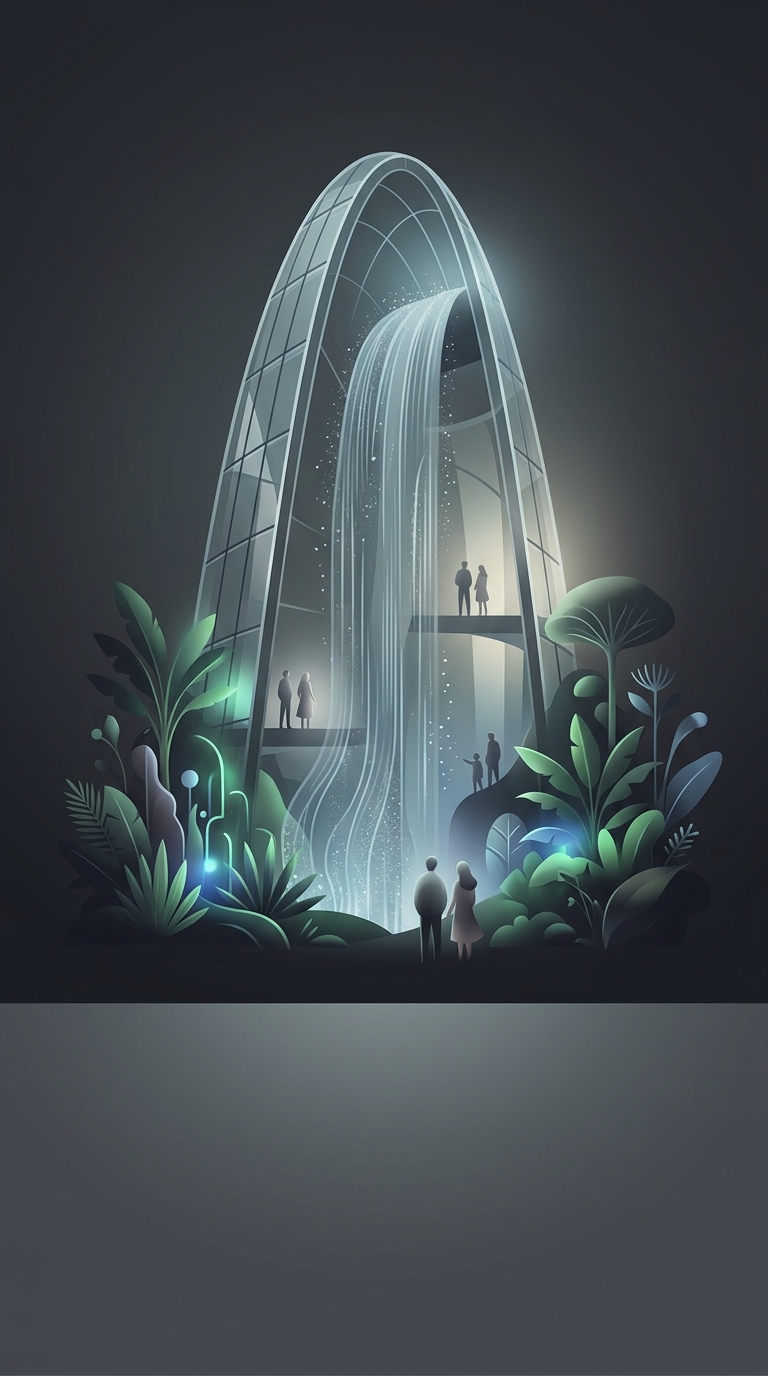
The Rain Vortex is more than water poured from a great height: it is part of Jewel Changi Airport’s system for handling rain beneath a glass roof. When rain falls on the roof, its shape directs water toward the central opening, where it drops through the building. The waterfall makes that drainage route visible on a dramatic scale.
At the bottom, the water is collected and circulated back into the system. Pumps lift it again, so gravity can pull it down through the center of the building. In other words, the cascade’s downward rush is real, but keeping it going depends on an engineered loop—not on a continuously replenished supply of fresh water.
A waterfall inside a working greenhouse
Jewel’s roof encloses a landscaped indoor space, so the feature had to do more than look impressive. The central opening gives rain a route through the roof while setting the waterfall within the building’s planted interior. That makes the Rain Vortex part of the place’s architecture and water management, rather than a decoration added after the fact.
The result changes how visitors experience an airport: a system built to move water becomes a landmark they can watch from inside. During rain, the roof’s drainage and the waterfall’s central path meet in the same striking sight—a reminder that even an indoor natural spectacle depends on carefully managed infrastructure.