Why a Baked Pie and Its Filling Can Split at Security
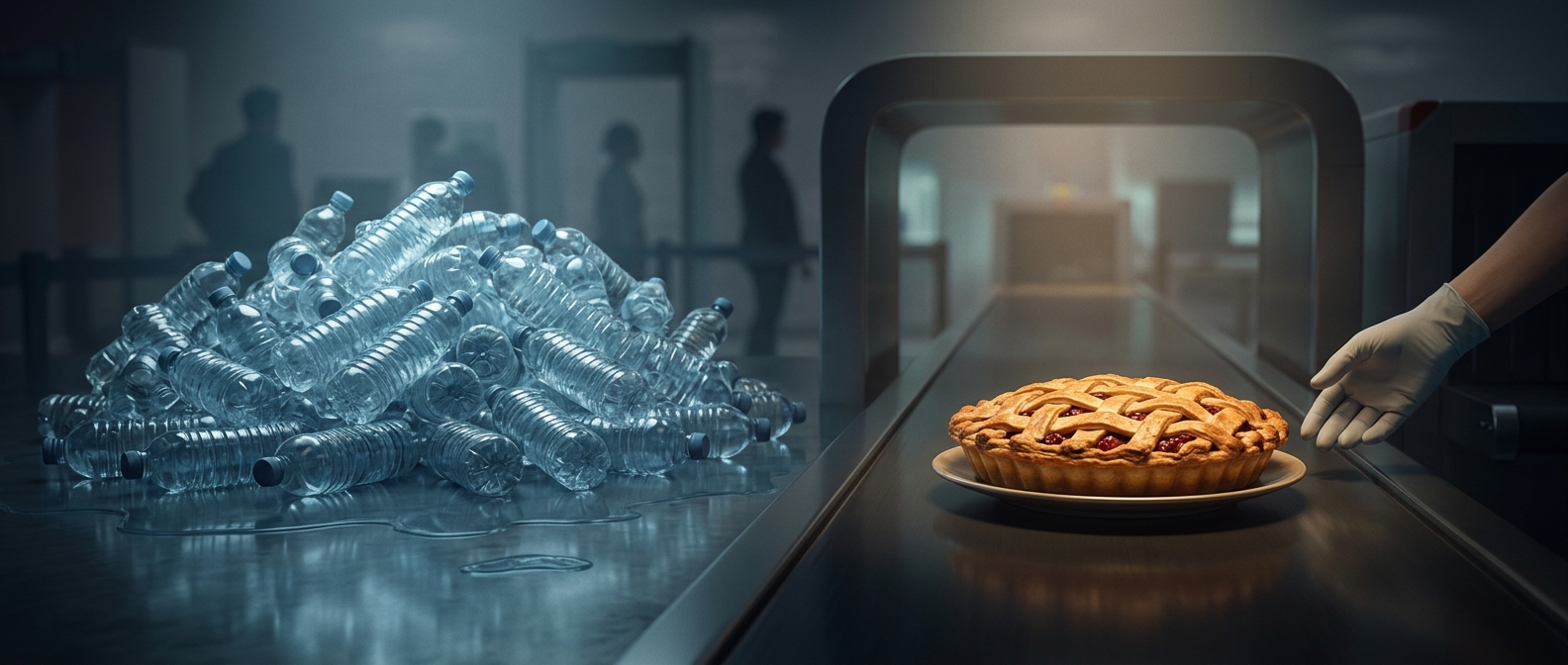
At the checkpoint, the relevant question is how an item behaves when handled—not whether it contains moisture. A baked pie holds its shape as one solid item. A jar of loose filling can flow, be scooped, or spread, so screeners treat it like a liquid, gel, or paste for carry-on screening.
That distinction reflects how the quantity rule works: it limits many pourable or spreadable substances in carry-on bags, rather than banning foods with a particular ingredient. A dessert can contain fruit, syrup, or custard and still be treated differently depending on whether it has been baked into a firm whole or packed separately in a container.
The Form of the Food Is the Practical Test
A whole pie may still need additional screening, and a particularly soft or unusual item can prompt a closer look. But the basic contrast is easy to remember: a pie that keeps its shape is generally assessed as solid food; filling that moves or spreads is more likely to fall under the liquids-and-gels limit.
For travelers, that can change how much dessert makes it into the cabin. Bringing the filling inside the baked pie may avoid the same quantity restriction that applies to a separate jar—because the checkpoint is assessing the food’s physical form, not its recipe.