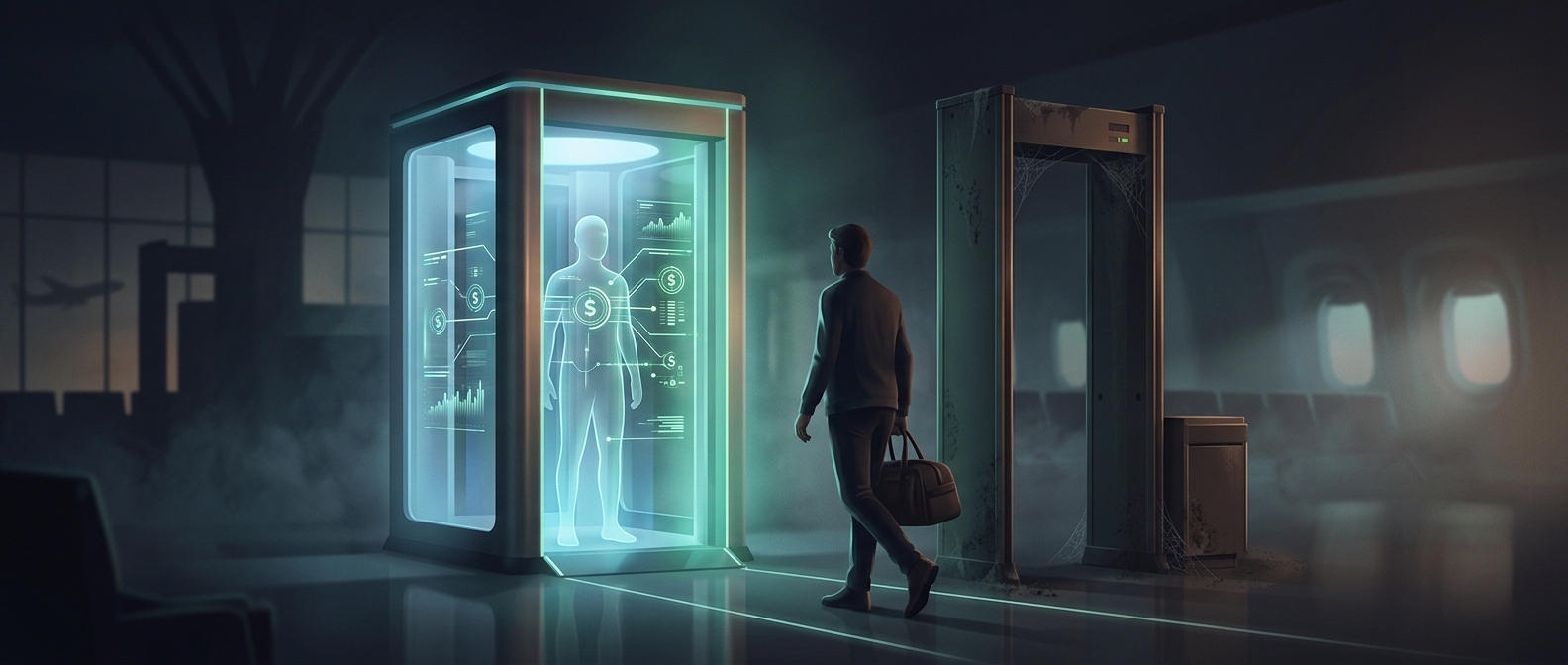
How a Scanner Turns a Body Into an Alarm
A millimeter-wave scanner sends low-energy radio waves toward a person and measures the signals that bounce back. Clothing is largely transparent to these waves, while objects or unusual contours beneath it can change the reflected pattern. Software maps those differences onto a body outline and marks areas for a closer look; it does not identify an object as a weapon by itself.
That distinction helps explain why a harmless patch of sweat can become a security issue. Moisture can affect how radio waves reflect, so a scanner may flag a region that needs checking even when there is no dangerous object there. The alarm is a prompt for human screening, not a verdict.
Why a Small Flag Can Slow a Whole Line
When a scanner marks an area, the traveler may need an additional check before moving on. One alarm takes only a moment to resolve, but repeated alarms can turn a fast-moving queue into a stop-and-start process. The machine’s value is therefore measured not just in what it detects, but in how often it sends ordinary travelers for extra screening.
The Business Behind the Checkpoint
Buying the scanner is only part of the expense. Airports and security agencies also have to install the equipment, keep it operating, update its software, and assign staff to respond to alarms. Those continuing needs help explain how airport screening became a billion-dollar market: the product is not simply a machine, but a recurring system of hardware, upkeep, and labor.
At the checkpoint, the tradeoff is visible in miniature: a device meant to spot something hidden can also make sweat, clothing, or an awkward posture the reason everyone behind a traveler waits.