Why the limit is about container size
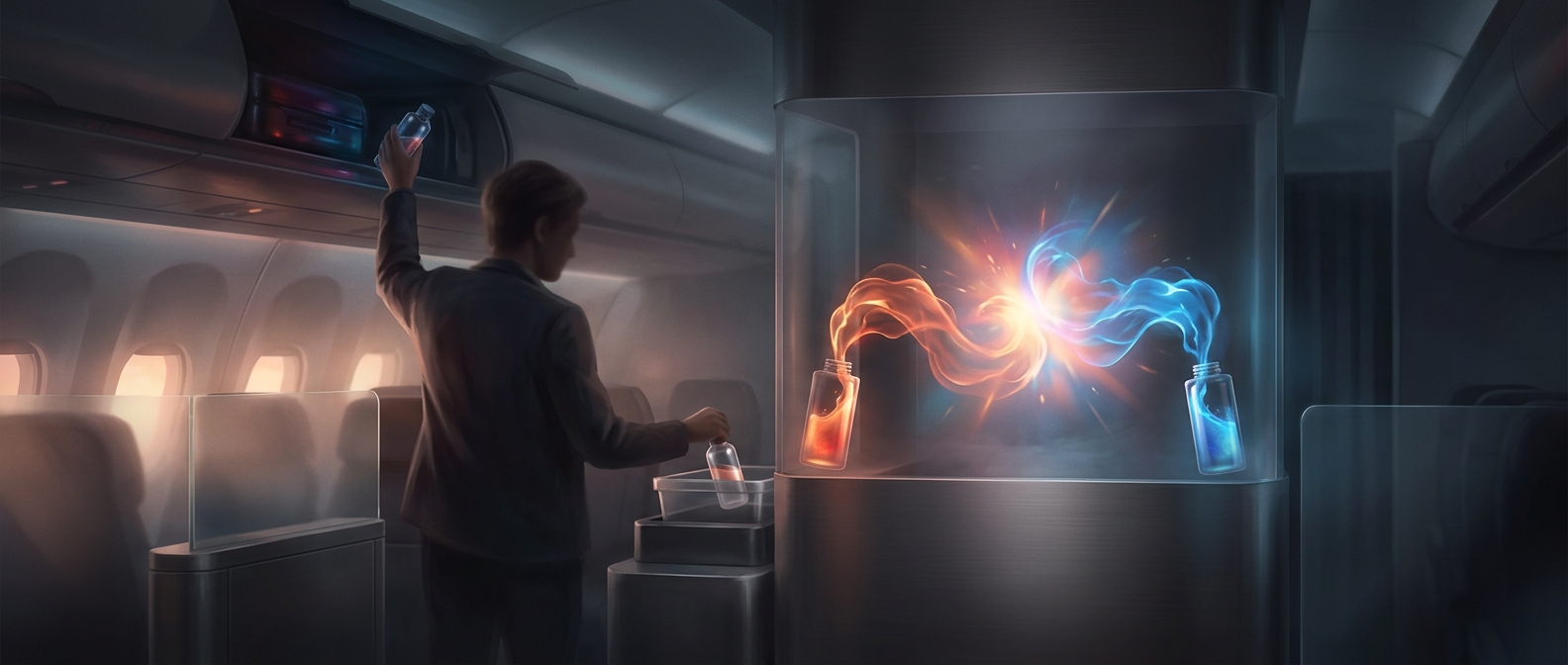
The 100-milliliter limit grew out of a thwarted plot involving liquid explosives. The concern was not that ordinary drinks are dangerous, but that certain chemicals can be relatively harmless on their own and hazardous when combined in sufficient quantities. A larger amount of liquid could provide more material for a device, so restricting how much passengers can bring into the cabin reduces the potential scale of that threat.
The rule generally applies to the capacity of each container, not just how much liquid is left inside it. A half-empty bottle that holds more than 100 milliliters can still exceed the limit: the container’s size is easy to check, while its contents may be harder to assess quickly.
A practical security tradeoff
Airport screening has to handle thousands of items, including liquids in opaque or unfamiliar packaging. Limiting container size gives security staff a simple, consistent threshold rather than requiring them to determine the exact composition of every bottle. It also restricts the quantity a passenger could carry through the checkpoint in any one container.
That makes the limit a preventive measure, not proof that every small container is harmless. The rule is one layer in a broader screening process, designed to make a liquid-based attack harder to carry out while keeping checks workable at busy airports. Its everyday consequence is concrete: a large drink bottle may have to stay behind, even when it contains nothing more dangerous than water.