Airport carpet is doing more than covering the floor
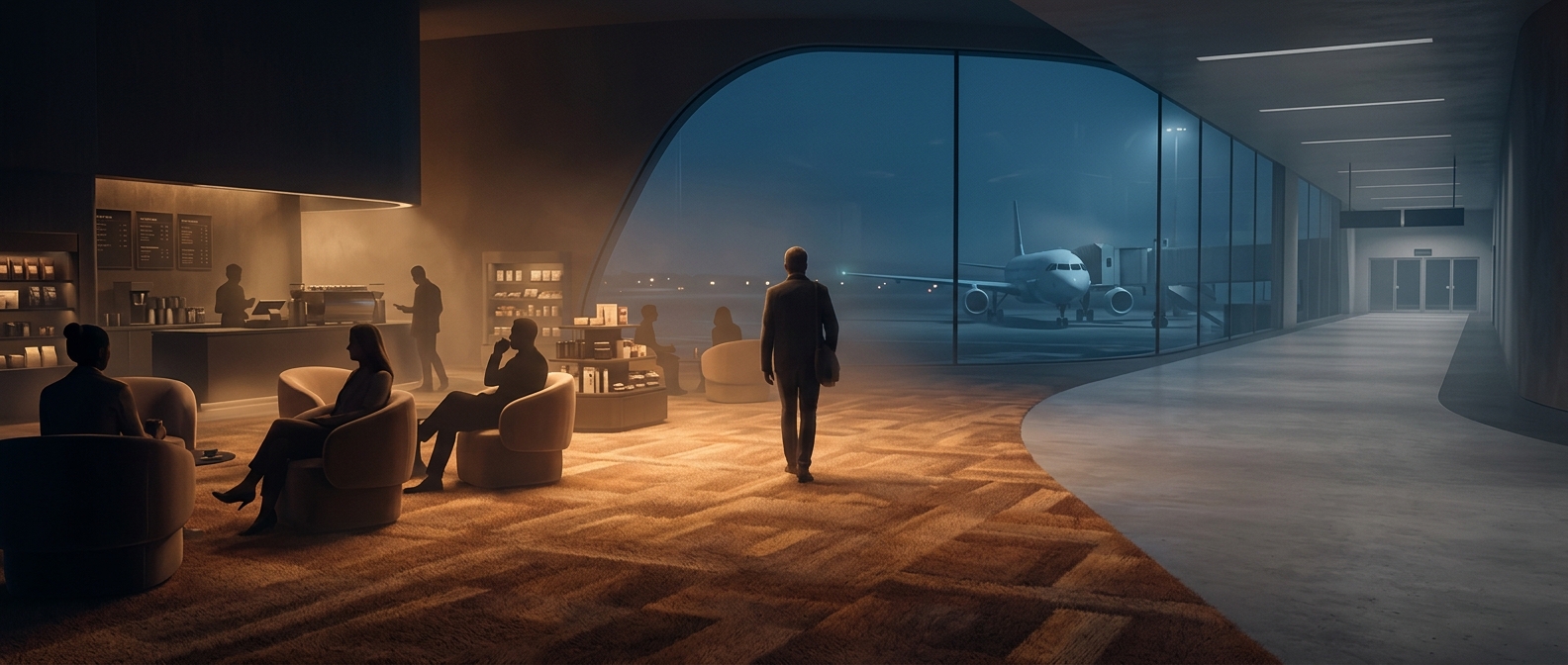
A gate area is a noisy place: rolling suitcases rattle, announcements echo, and crowds talk over one another. Carpet absorbs some of that sound, making the space less harsh than a large expanse of hard flooring. It also gives passengers a softer place to stand or sit while they wait.
The busy patterns have a practical side, too. In a terminal, thousands of shoes and bags cross the same floor every day. Mottled colors and intricate designs make small marks and everyday wear less conspicuous than they would be on a plain, light-colored surface. That can help the floor look presentable between cleanings; it does not make the carpet immune to dirt.
A tradeoff between comfort and easy movement
Carpet is not ideal for every part of an airport. A suitcase rolls more easily on a smooth floor, and hard surfaces can be simpler to clean. Terminals therefore use different flooring in different zones: carpet may suit waiting areas, while corridors and other heavily trafficked routes often have hard flooring.
Where carpet is used, commercial-grade material and replaceable sections can make upkeep more manageable. If one area is badly worn or stained, it may be possible to replace that section rather than the entire floor. The patterns can look chaotic, but they help a sprawling public space absorb sound and conceal the inevitable scuffs of daily travel—while passengers pay for that comfort with a little extra effort pulling their bags.