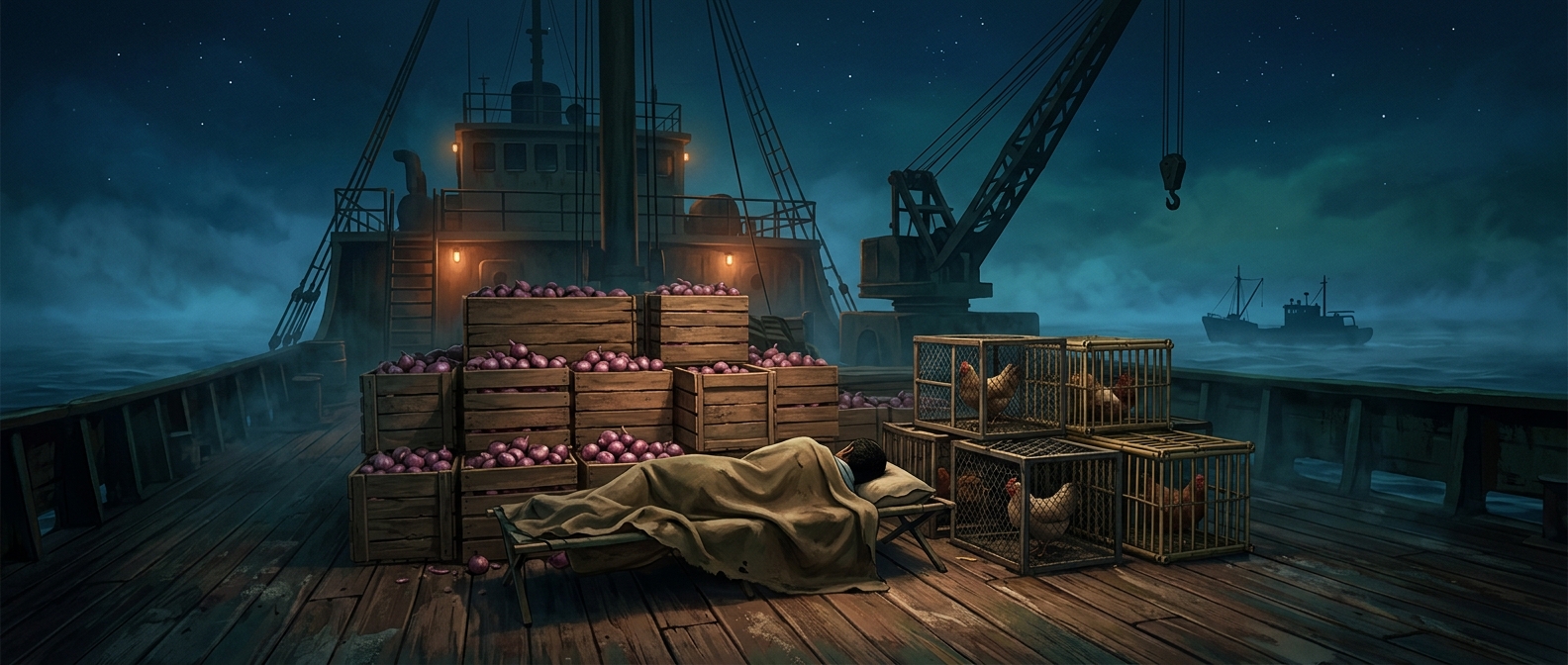
Why a mailboat carries more than mail
In the Bahamas, a boat serving the outer islands can function less like a conventional passenger ferry and more like a small, floating supply line. It connects settlements separated by open water to larger centers where goods arrive, change hands, and are loaded for the next leg. Mail is part of that network, but so are the materials and provisions that island residents need.
That mixed purpose shapes the trip. Space aboard is valuable, and cargo has to be arranged so it can be reached and unloaded at the right stops. A route may serve several settlements, each with its own delivery. The boat is not simply carrying a load to one destination; it is carrying a sequence of deliveries across an island chain.
The route shapes the ride
A passenger on such a vessel travels within that working system. Freight takes up deck space and sets practical limits on where people can sit or sleep. Comfort is therefore not the organizing principle of the journey: the boat’s usefulness depends on moving people and essential goods together, even when that means a rougher, less private ride than a dedicated passenger ferry would offer.
The arrangement also makes the boat’s arrival consequential. For a settlement with few alternatives, a single vessel can bring not only travelers but the supplies needed for construction, cooking, and daily life. Its crowded deck is a visible record of how remote communities stay connected.