From cocoon to thread in Margilan
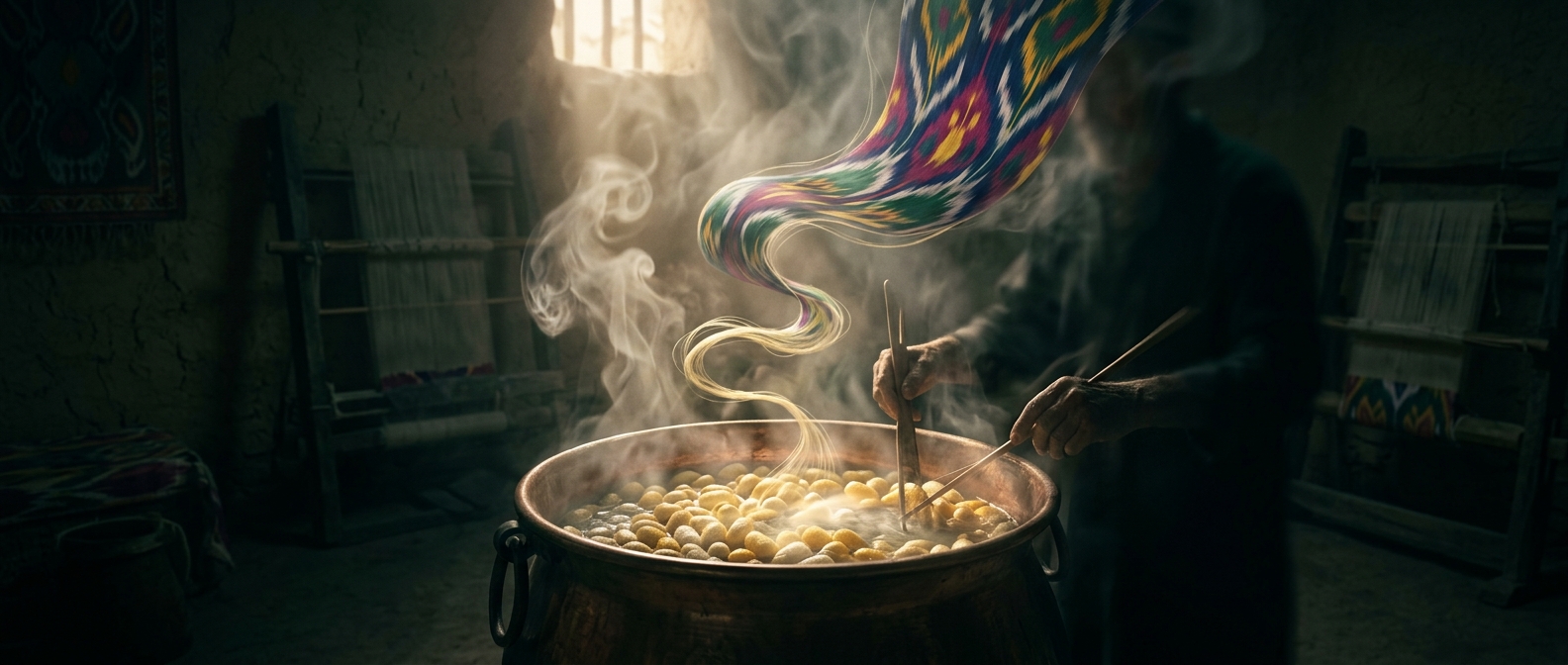
A silkworm cocoon is made from one long, fine filament coated with a natural gum called sericin. Hot water softens that coating, allowing a worker to find the filament’s end and reel it off as silk thread. The work calls for careful hands: pull too hard and the delicate strand can break; handle it gently and it can be wound into a continuous thread for later use.
The pattern is dyed before the cloth exists
Ikat is a way of making patterns by dyeing yarn before weaving it. In Margilan’s silk ikat, sections of the threads are tightly bound so dye cannot reach them. The bindings are moved or replaced between dye baths, building up areas of different color along the yarn. When the dyed threads are stretched on a loom, their colored sections must line up to form the intended design.
That alignment is the crucial trick. The weaver is not painting a finished cloth: the pattern has to be planned across threads that may shift slightly as they are arranged and woven. The resulting edges often look softly blurred, a hallmark of ikat rather than a flaw. The design takes shape through the precise placement of color in the yarn itself.
Why the result carries the labor
The process links two demanding stages: carefully reeling fragile silk from cocoons, then binding, dyeing, and arranging the threads so separate colored fragments become a coherent pattern. A small mismatch can disturb the design across the cloth. In Margilan, the vivid surface is therefore not simply decoration added at the end; it is the visible record of work done thread by thread before the loom can turn yarn into fabric.