Why a Bell’s Voice Seemed Powerful Enough to Reach a Storm
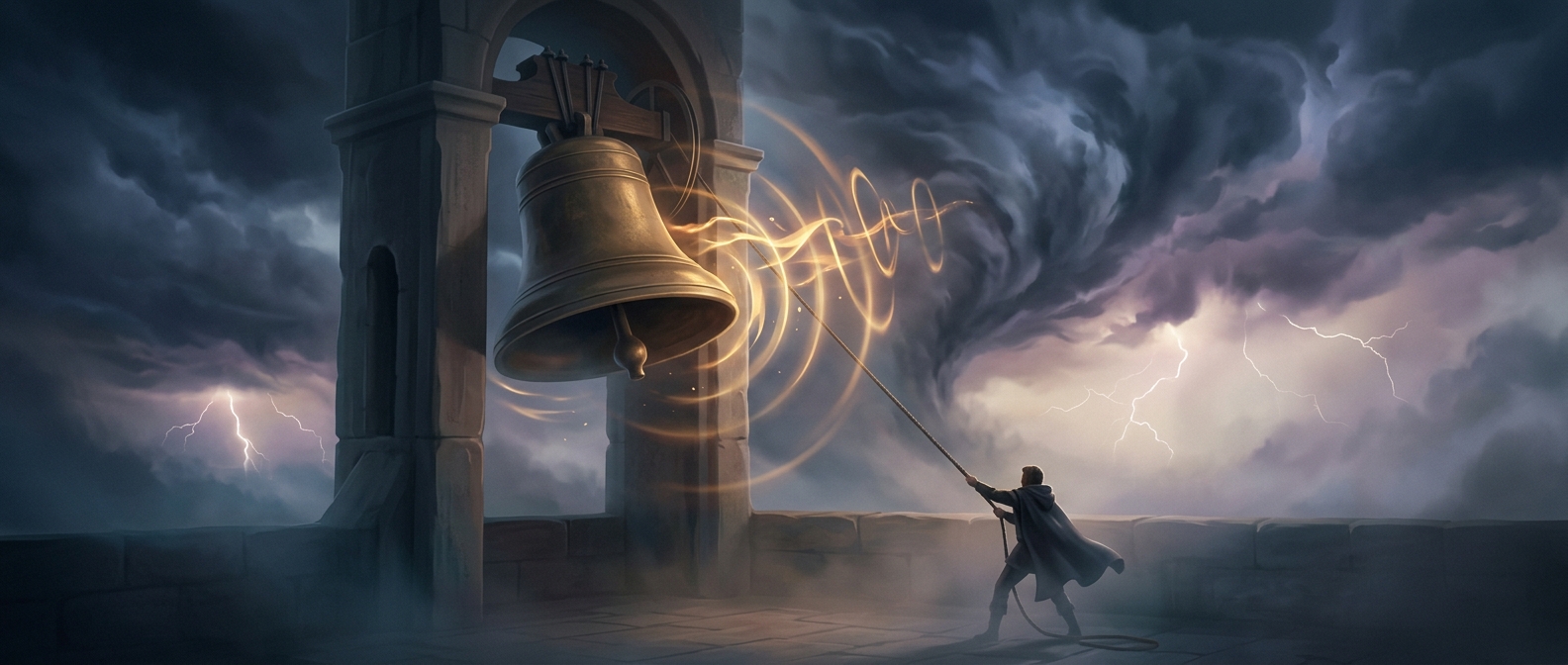
A thunderstorm arrives with sound before it can be understood: thunder rolls overhead, while wind and rain make the landscape feel suddenly unsettled. In communities that rang heavy bronze bells against storms, the bell offered a loud, deliberate response to that threatening noise. Its sound carried across the surrounding area, turning fear into a public act meant to protect people and places.
The belief treated sound as an active force, not merely a signal. If a bell’s peal could summon attention or mark an important moment, it might also be imagined as strong enough to scatter the clouds. The ringing did not change the weather; sound waves cannot push a storm system apart. But the ritual gave a community something visible and audible to do while waiting for danger to pass.
A Ritual With a Physical Risk
The bell’s reach depended on its height and open surroundings, which could make a tower seem like a natural place from which to confront a storm. Yet a bell tower also put the ringer high above the ground during dangerous weather. The striking image is the contrast: people answered thunder by sending an even more commanding sound into the sky, though the storm itself remained beyond the bell’s power.