How a Fire Builds Its Own Vortex
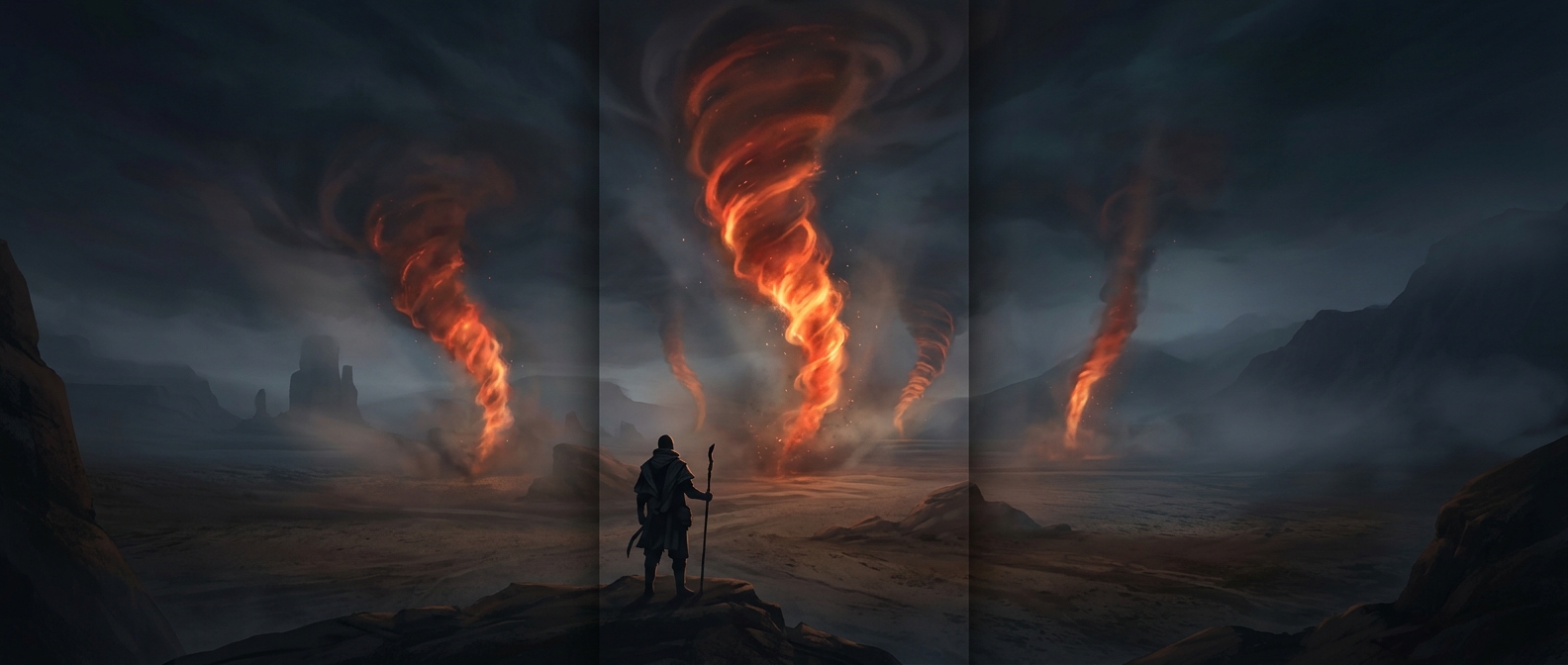
A fire whirl forms when intense heating sends air rushing upward while surrounding air flows inward to replace it. If that incoming air is already turning—or is deflected into a circular path by terrain, trees, or structures—the rising flow can tighten the rotation into a vortex. As air moves closer to the center, its spin can increase, much as a skater spins faster when pulling their arms inward.
The result is a rotating column that draws in hot gases, flame, and sometimes burning debris. The fire supplies the upward pull; the surrounding airflow helps organize it into a concentrated whirl. A fire does not automatically create one: the right combination of heat and organized rotation is needed.
Why the Whirl Can Spread Danger
A fire whirl is not simply a tornado made of flame. Its strength and motion depend on the fire and local winds, and it may weaken when that flow changes. But while it lasts, the concentrated circulation can loft embers and carry them beyond the main fire, where they may ignite new spots. Its moving, turbulent air can also make flames behave unpredictably near the ground.
That is why a whirl’s danger is not limited to the burning column itself. By transporting hot material ahead of the fire, it can help a blaze spread in ways that ordinary flames along a steady front cannot.