Why a low sun can reveal a rainbow
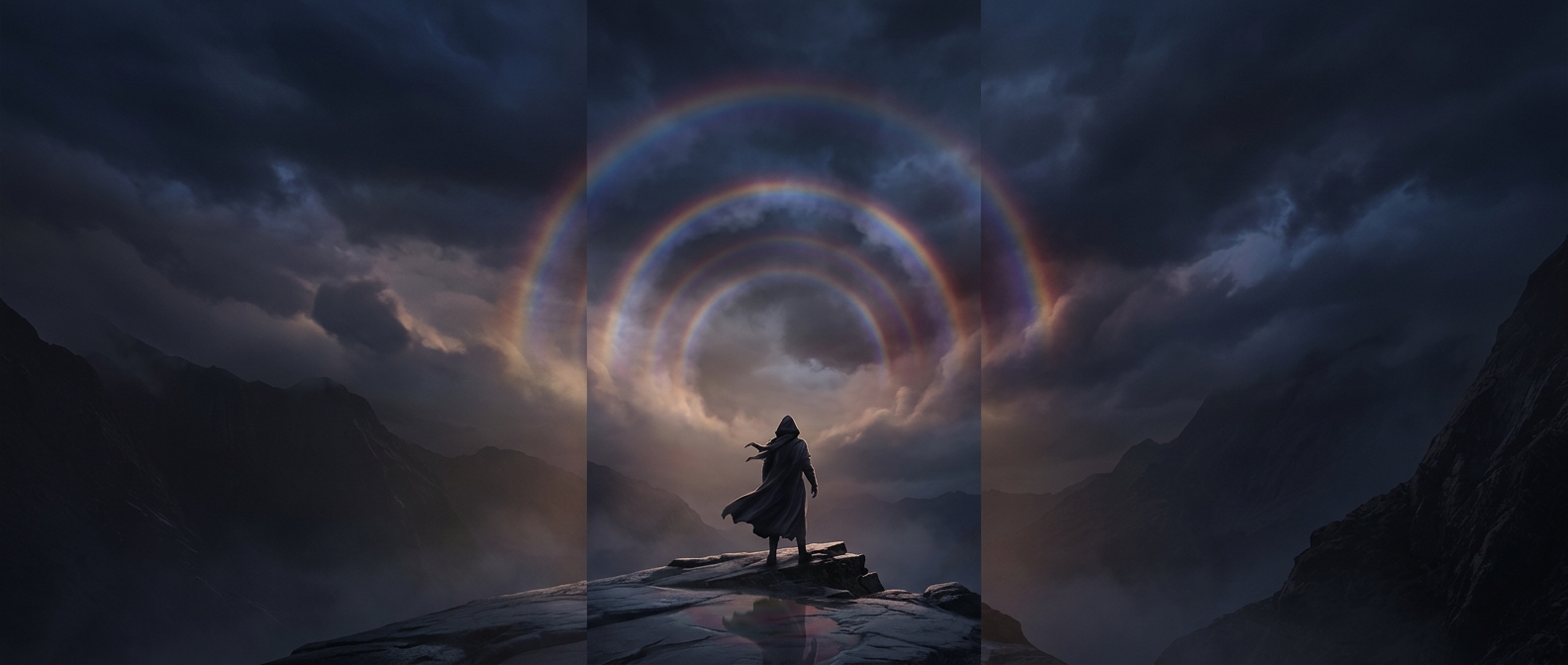
A rainbow appears when sunlight reaches raindrops in the part of the sky opposite the Sun. As light enters each drop, it bends and separates into colors; it then reflects off the inside of the drop and bends again as it leaves. The many drops send different colors toward your eyes from slightly different directions, forming a curved band.
The geometry matters as much as the rain. In the evening, the Sun sits low, so the rainbow’s arc can rise above the horizon while a shower occupies the sky ahead of you. To see one, keep the Sun behind you and look toward the rain. Move, and the arrangement changes: the rainbow you see is made by different droplets from the one another observer sees.
Why the colors may look faint
A rainbow is not a solid object hanging in the sky; it is an optical pattern produced by sunlight, water droplets, and your viewing position. Thick clouds can dim the incoming light, while heavy rain and distant haze can make the colors less distinct. When the Sun briefly shines beneath a cloud or at the edge of a shower, the contrast may improve enough for the arc to stand out.
That fleeting alignment is the practical reason these bands can be easy to miss: the rain may be in place, but the light has to reach it from just the right direction.