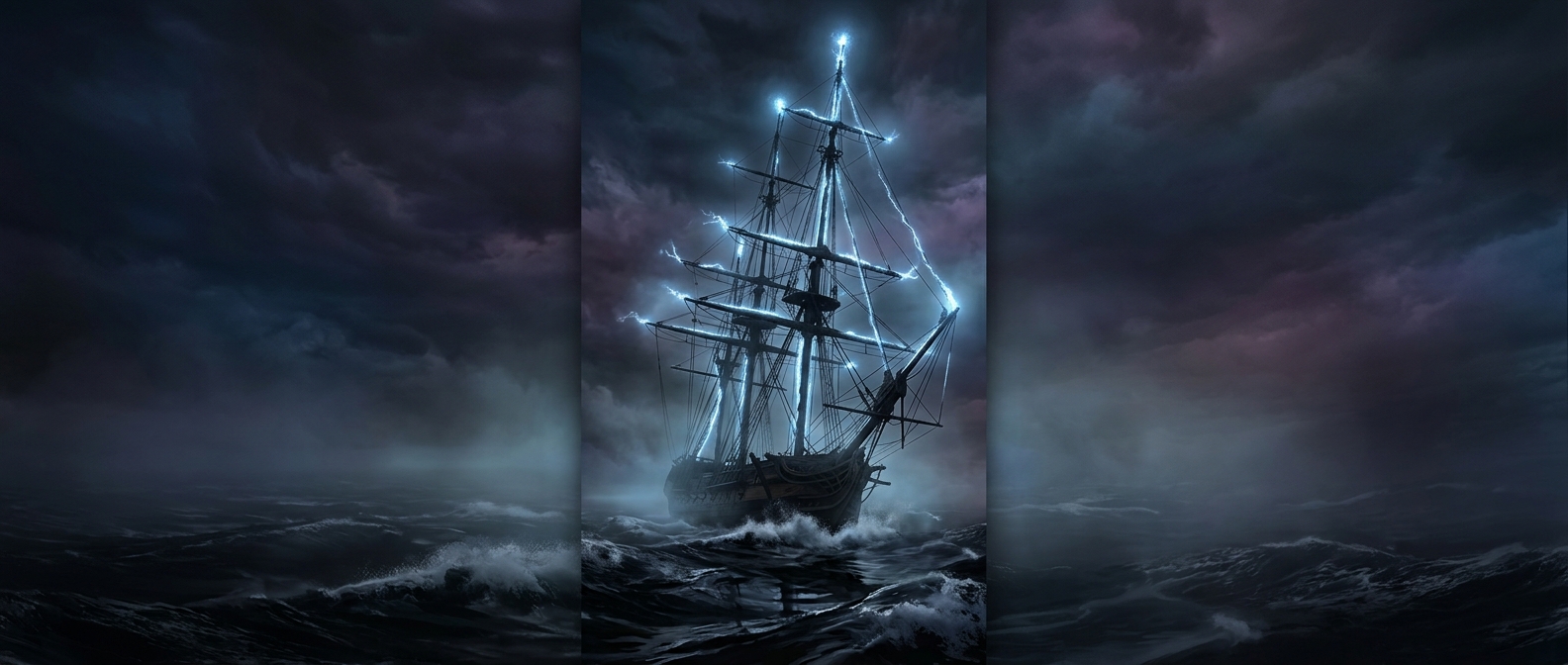
Why a Ship’s Mast Can Glow in a Storm
A mast is not generating fire. In a storm’s powerful electric field, charge gathers especially strongly around exposed, narrow points such as mast tips and rigging. When the field becomes intense enough, it can strip electrons from nearby air molecules. The resulting charged particles collide with other molecules, making the air glow in a process called corona discharge.
A Quiet Electrical Discharge, Not a Lightning Bolt
The glow is often blue or violet because energized air molecules release light at those colors. Unlike a lightning strike, corona discharge is a relatively continuous, localized leakage of electricity into the air. It may also produce a faint hiss or a sharp, ozone-like smell, though wind and rain can make those signs difficult to notice.
The same effect can appear on other pointed objects, including church spires and aircraft. A mast’s height and exposed position make it a conspicuous place for the glow to form, but the light itself does not mean the vessel is burning.
Why Sailors Named It St. Elmo’s Fire
For centuries, sailors reported the eerie light on ships during turbulent weather. They associated it with St. Elmo, the patron saint of sailors, and the name endured. The glow could be read as a reassuring sign amid a dangerous storm; its physical cause, however, is electrical.
St. Elmo’s fire is a visible clue that the air around the vessel is under strong electrical stress. It is striking to see, but it is not a guarantee that lightning will—or will not—strike.