A valley becomes a natural observing station
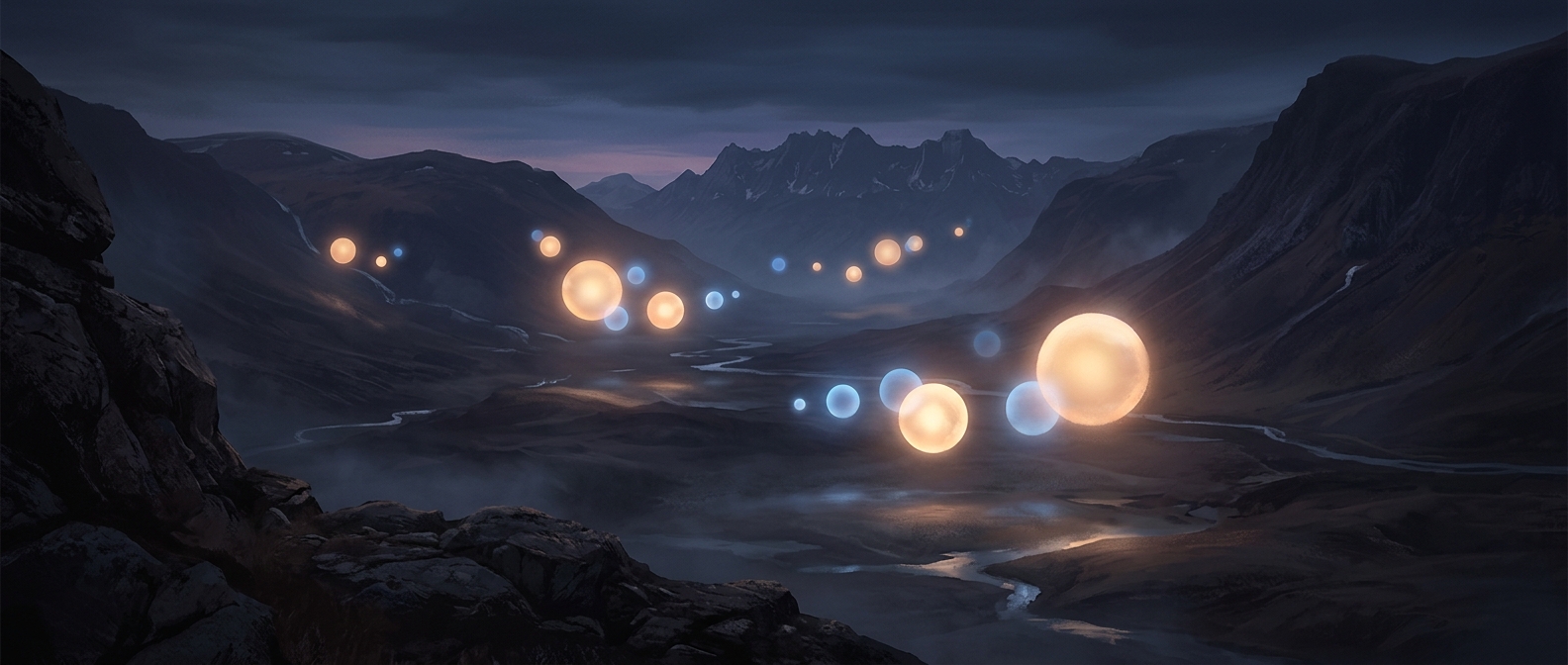
Hessdalen is a sparsely populated valley in central Norway. Its lights became a sustained subject of investigation because observers reported them repeatedly in one place, rather than as a single unusual sighting. That pattern gave researchers a practical advantage: they could return, set up instruments, and try to record an event as it happened.
Some investigations used cameras and other monitoring equipment to capture and compare the lights. This matters because a bright point in the sky can be hard to judge by eye: distance, size, and motion are difficult to estimate without nearby landmarks or multiple measurements. A recorded appearance can provide evidence about what the light did, even when it does not reveal what produced it.
Observation is not the same as an explanation
The reports are not all identical, and a luminous shape can have more than one cause. A distant aircraft, a reflection, or an atmospheric effect may look very different once its position and movement are measured. Researchers therefore need to distinguish between an unusual appearance and an unusual physical process.
The central difficulty is that documenting a light does not automatically identify its source. A camera may show where a bright spot appeared and how it changed, while leaving open whether it came from an object, the atmosphere, or another process. Proposed explanations have not settled the question.
That gap is why Hessdalen remains intriguing: a recurring spectacle has prompted real attempts at measurement, but the observations have not yet yielded a confirmed account of what powers the lights.