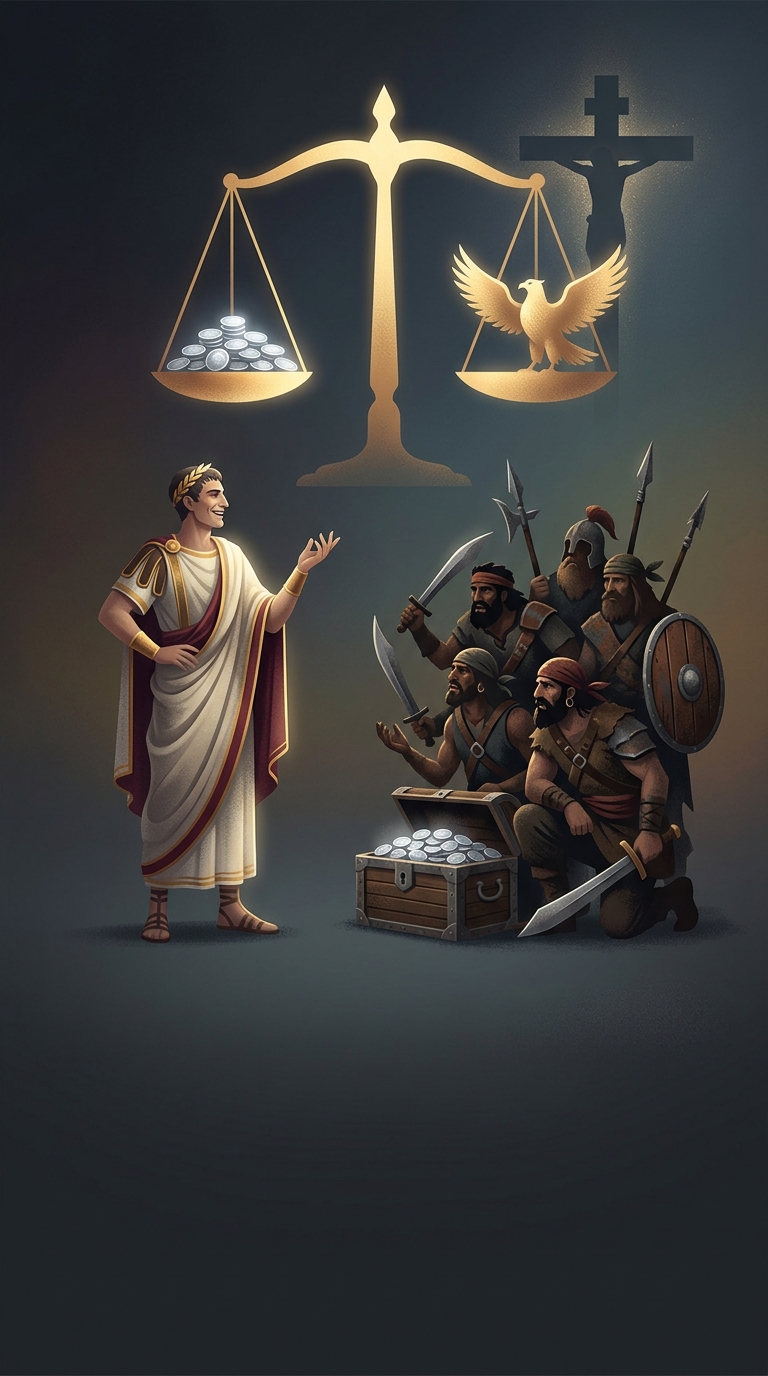
A ransom was a price—and an insult
Piracy in the eastern Mediterranean was not just robbery at sea. Captives could be held until relatives or political allies paid for their release, making ransom a source of income. A talent was an ancient unit used to measure valuable goods, including silver; twenty talents represented a substantial payment, not a small fee.
The story’s striking detail is Caesar’s reaction to the price. Rather than treating the demand as a purely practical negotiation, he reportedly took it as a judgment of his importance. He told the pirates he was worth more and raised the ransom they should seek. The exchange turned captivity into a contest over status as well as money.
Release did not end the transaction
Once free, Caesar did not simply return to ordinary life. He assembled ships, pursued the pirates, and captured them. In the logic of the episode, paying the ransom had bought his release, but it had not settled the matter: the captors remained a threat—and, to Caesar, an affront that called for a response.
That response carried its own costs. Finding ships and pursuing a group at sea required resources and exposed Caesar to danger. Yet capturing the pirates transformed him from a customer in their ransom business into the person deciding their fate. The account says he had them executed.
The tale lasts because its economic bargain reverses so sharply: the pirates set a price for Caesar’s return, and he came back with enough force to make them pay for having taken him.