Why One Bridge Hand Becomes an Open Book
A bridge contract is a promise to win a specified number of tricks, using one suit as trump or playing without a trump suit. Once the opening lead is made, the declarer’s partner places their cards face up on the table. That exposed hand is called dummy; the player is named for the role, not for a lack of skill.
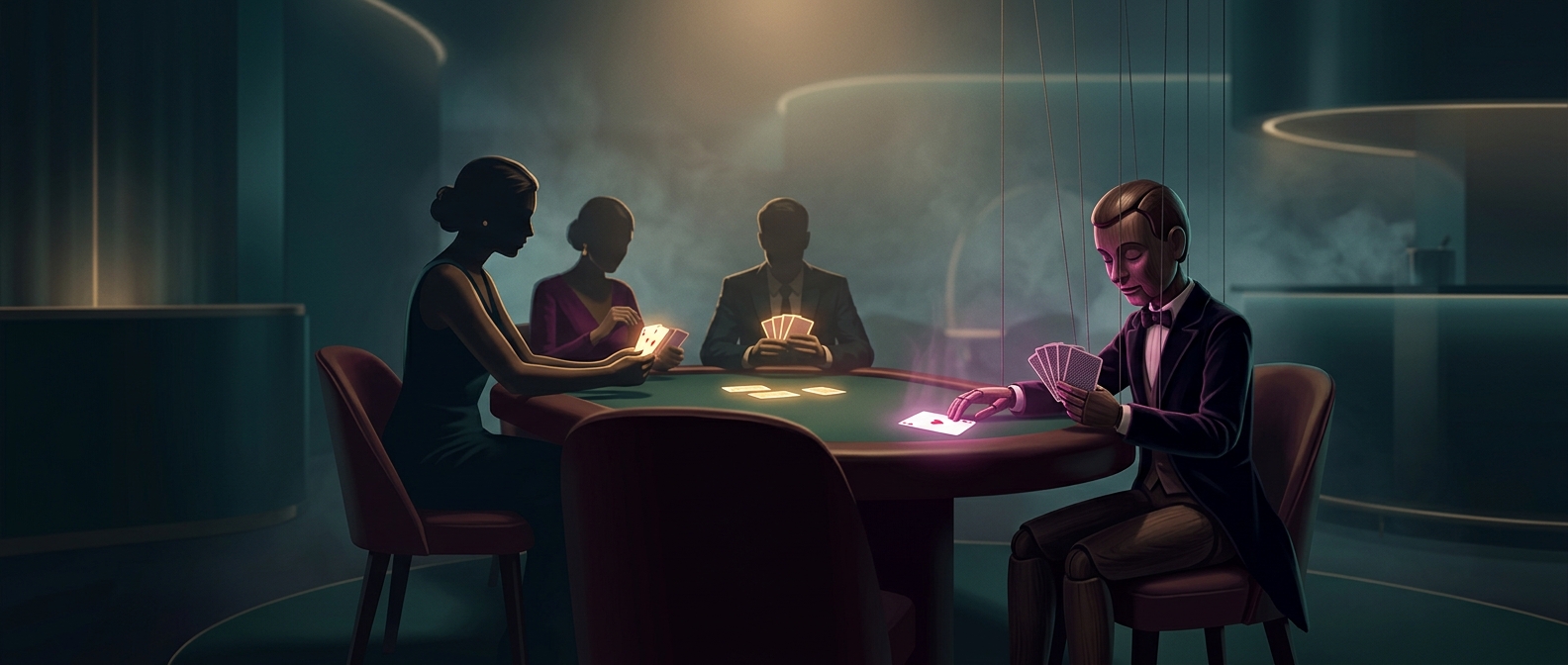
The declarer then chooses cards from both their own hand and dummy’s. Dummy still physically plays the chosen card when it is that hand’s turn, but cannot suggest a play or take part in the decisions. The other two players, the defenders, continue to choose from their own hidden cards.
What the Open Hand Changes
Dummy’s cards are visible to everyone, not just the declarer. The declarer must therefore plan with complete knowledge of two hands while the defenders can also see one of them. The challenge is not simply to find the best card: the defenders’ hidden cards and their choices still determine whether the contract can be made.
This arrangement turns partnership bidding into a practical test. The bids have helped the declarer judge what the two hands can accomplish; now the declarer must coordinate them, choosing the order of plays and managing entries—the cards that let one hand take the lead so it can use its remaining winners. Dummy’s silence is what makes the exposed hand a tool for the declarer rather than a second decision-maker.