In Briscola Chiamata, the Cards Do the Talking
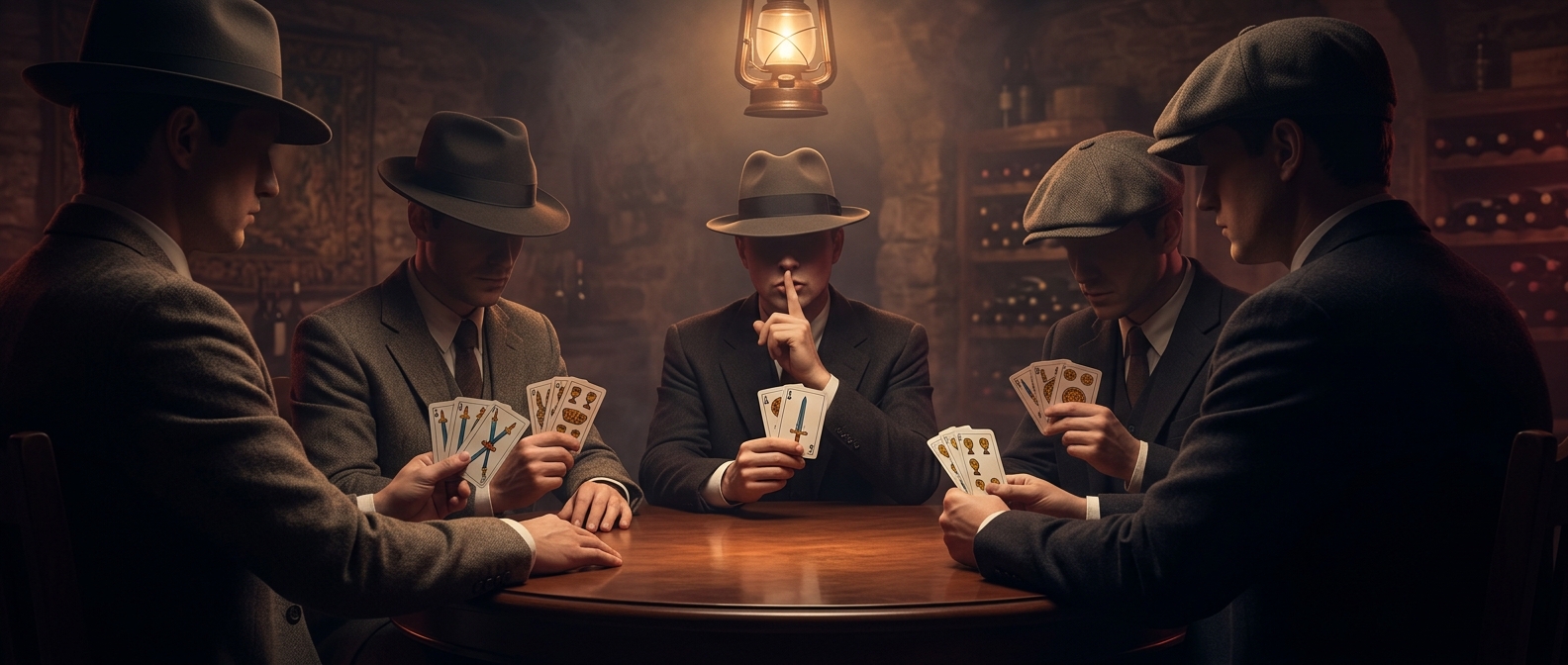
Briscola Chiamata is a partnership card game built around a peculiar constraint: players cannot discuss their plans during play. Instead, bids and card choices carry information. The silence is not just etiquette; it is part of the game’s strategy.
A Partner Is Chosen Before Play
Unlike a fixed-team game, Briscola Chiamata begins with players competing to predict how many points they can win. The highest bidder names a card, and whoever holds it becomes that bidder’s hidden partner. The other players form the opposing side, often without knowing exactly who is aligned with whom.
That hidden partnership makes ordinary conversation especially revealing—and therefore forbidden. Players must infer loyalties from the opening bid and from which cards appear on the table.
Playing a Card Is a Message
The game uses the Italian trump-taking system of Briscola: some cards outrank others, and the trump suit can beat cards in the suit led. Choosing when to spend a powerful card can signal confidence, protect a partner’s lead, or expose that a player may be working against the bidder.
But the signals are constrained. A player cannot simply announce a plan, and a card’s meaning depends on what has already been played and what others can still hold. The hidden partner must read the same clues while avoiding moves that help the opposing team.
Silence Creates the Tension
Because teams are partly concealed, a seemingly helpful play can be ambiguous: is it a deliberate signal, a tactical mistake, or an attempt to mislead? The bidder must coordinate with a partner who may not yet be obvious, while opponents watch for the moment that reveals the alliance.
The result is a partnership game in which communication is real but indirect. Every card both changes the score and adds evidence about who is playing with whom.