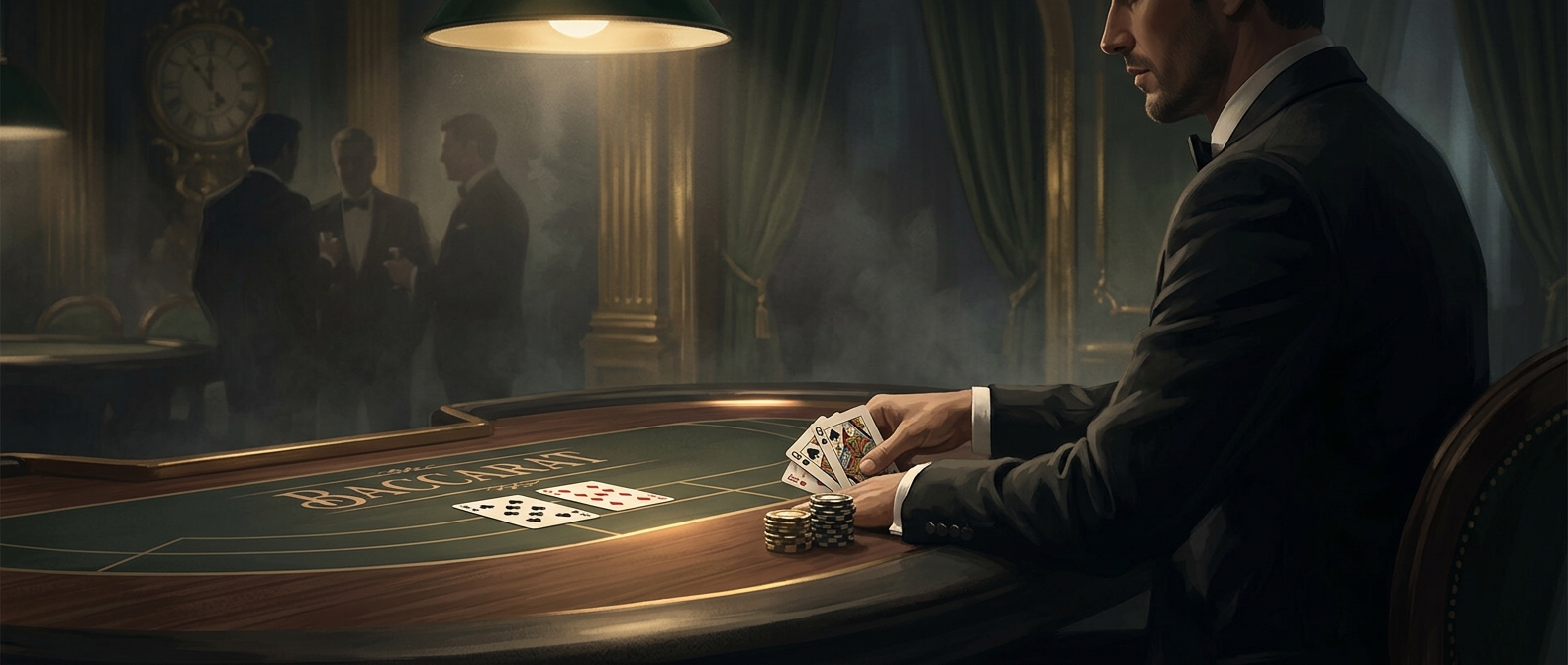
Bond’s card table changed with the audience
In Ian Fleming’s fiction, baccarat helped make Bond feel like a man at ease in an old-fashioned European casino. The game’s appeal was not just its air of formality: it gave Fleming a setting for high stakes, controlled manners and close attention to an opponent. In Casino Royale, the game is chemin de fer, a baccarat variant in which players take turns acting as the banker and make limited decisions about whether to draw another card.
Why poker plays differently on screen
Baccarat’s rules constrain what players can do once the cards are dealt. In the common casino version, players bet on whether the player hand, banker hand or a tie will win; the drawing rules are largely fixed. That can make a hand feel tense, but it offers fewer visible choices for a film to turn into a contest of personalities.
Poker puts those choices in the foreground. Players can fold, call or raise, and a wager can be a genuine attempt to win—or a bluff meant to make someone else fold. Viewers can watch Bond and his opponents test each other through bets, pauses and reactions, even when they cannot see anyone’s cards. The game itself supplies a readable drama of risk and nerve.
A different kind of duel
The shift from baccarat to poker therefore changes more than the props on the table. Baccarat presents Bond as a polished participant in a ritualized world of chance; poker makes his judgments and capacity to mislead part of the spectacle. The modern films could keep the casino showdown while giving the audience a more immediate way to follow the duel: each raise becomes a decision the camera can make feel consequential.