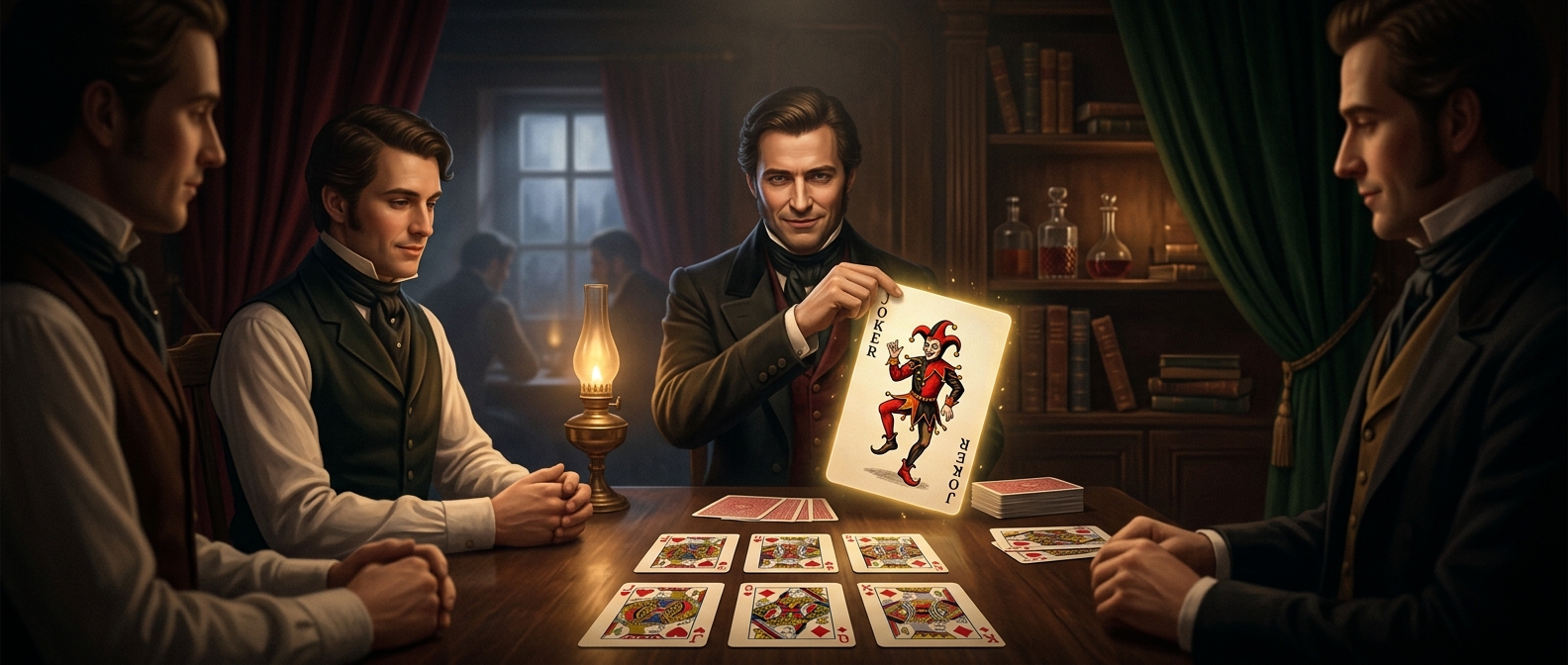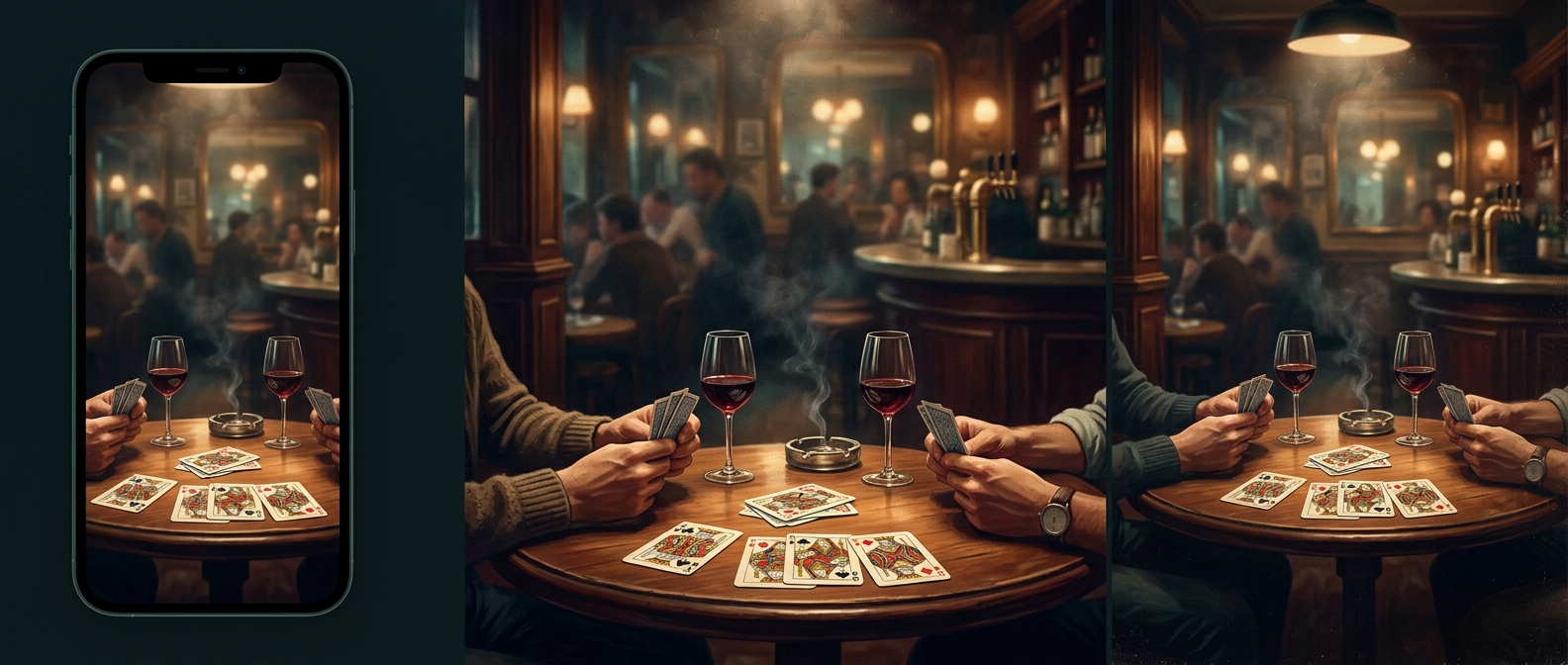
A partnership game played one card at a time
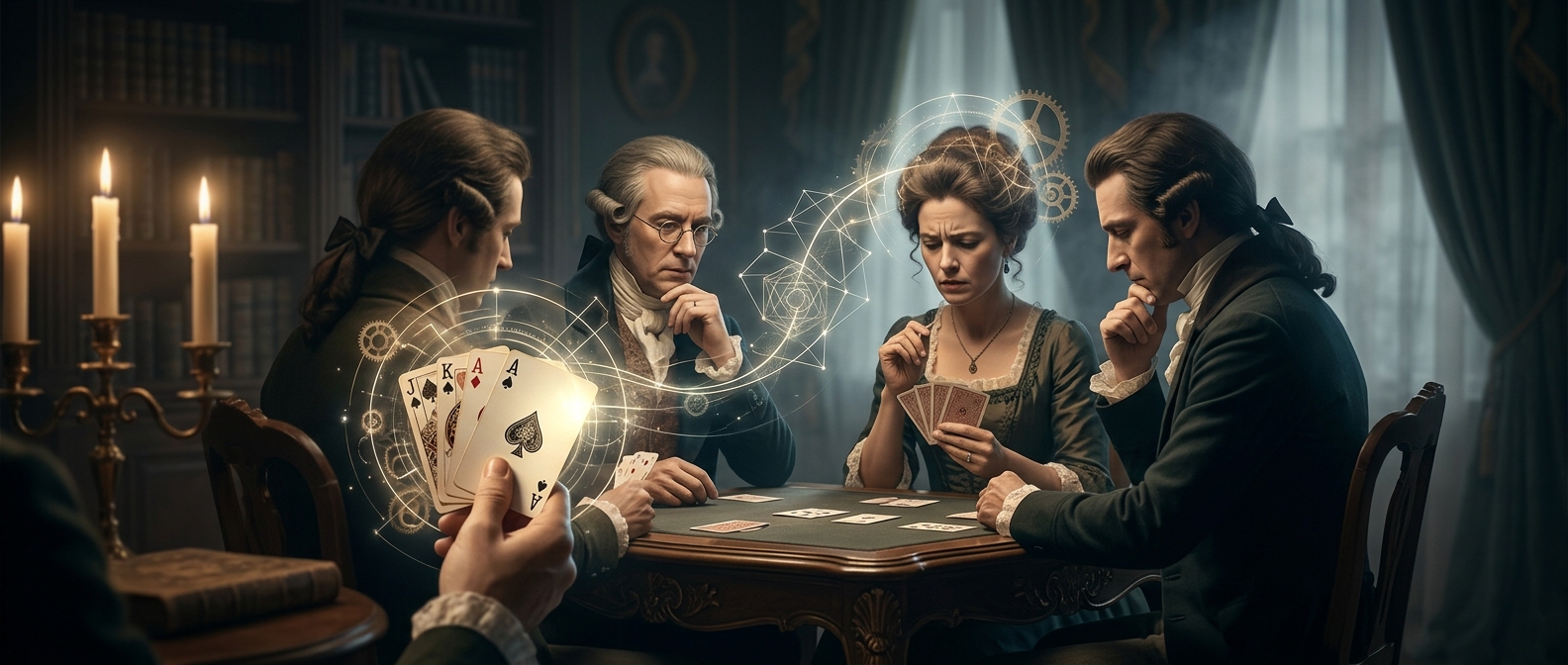
Belote is usually played by four people in two partnerships. Players take turns adding a card to a shared pile, called a trick; the strongest card in that trick wins it for a team. A trump suit—one that outranks the other suits—can change which card is strongest, so players must track what has already been played as well as what they hold.
That creates a problem partners have to solve without seeing each other’s hands. A player may need to signal strength, protect a teammate’s likely winner, or avoid wasting a valuable card. The formal rules govern which cards can be played, while a glance, a pause, or a frustrated sound can carry social meaning around the table. Such cues are part of the human interaction, not a substitute for the cards.
Why it suits a bar table
Belote’s rhythm makes it easy to play alongside conversation: each hand unfolds in a series of brief decisions, with natural pauses between tricks. Yet the partnership makes those decisions personal. A card that seems sensible in isolation may undermine a teammate’s plan, and the mistake is immediately visible to everyone watching the same trick.
The result is a game that turns a small table into a shared drama: players can joke, argue, and read one another while the cards keep moving. Even a glare has a specific cause—the partner’s play has changed what the team can win next.