A card built for Euchre’s top trump
Euchre is a trick-taking game: players take turns laying down cards, and the highest card in a trick usually wins it. A trump suit is a suit that can beat cards from the others, giving players a way to seize a trick even when they cannot follow its suit.
Euchre’s ranking already gave two cards in the trump suit unusual power. The jack of trump was the “right bower,” and the jack of the same color was the “left bower.” Players who wanted one more card above those top jacks needed a new card, not a rearrangement of the ordinary ranks. The added card served as the game’s highest trump.
From game piece to deck fixture
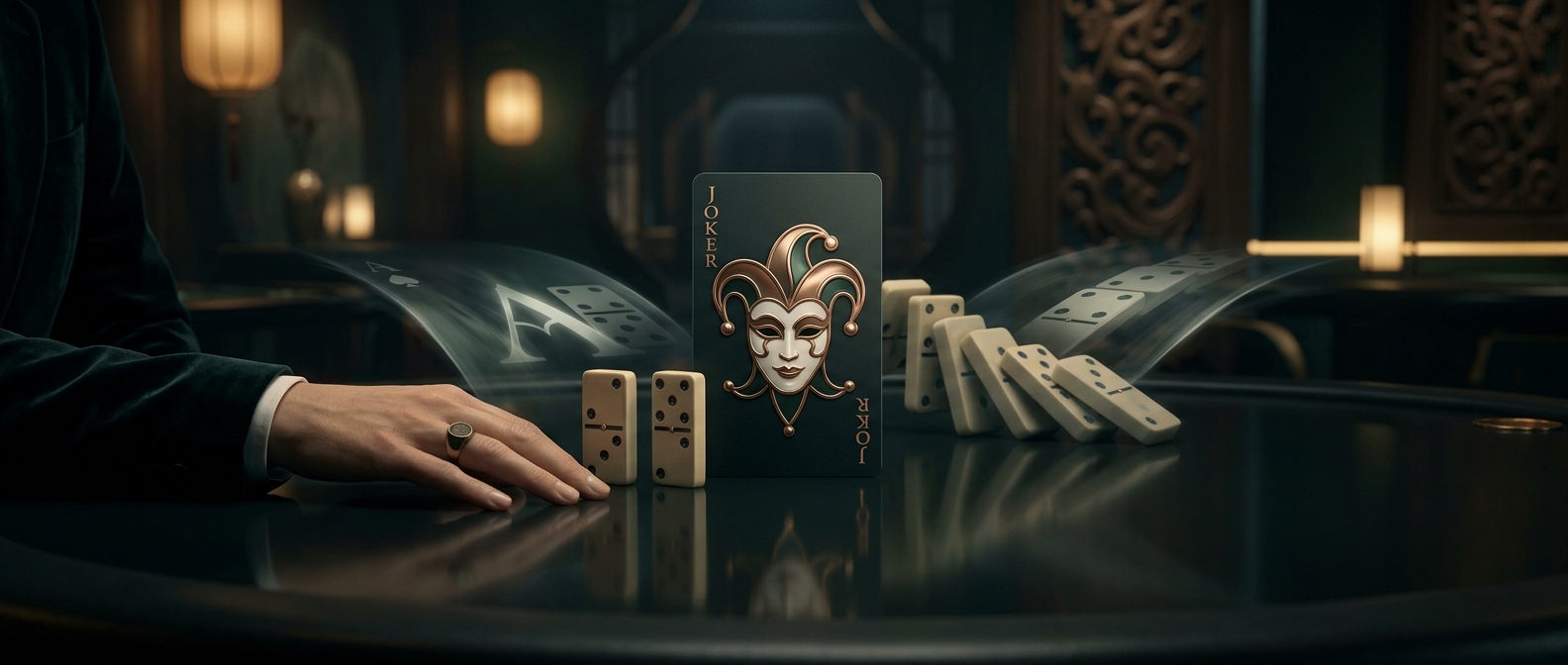
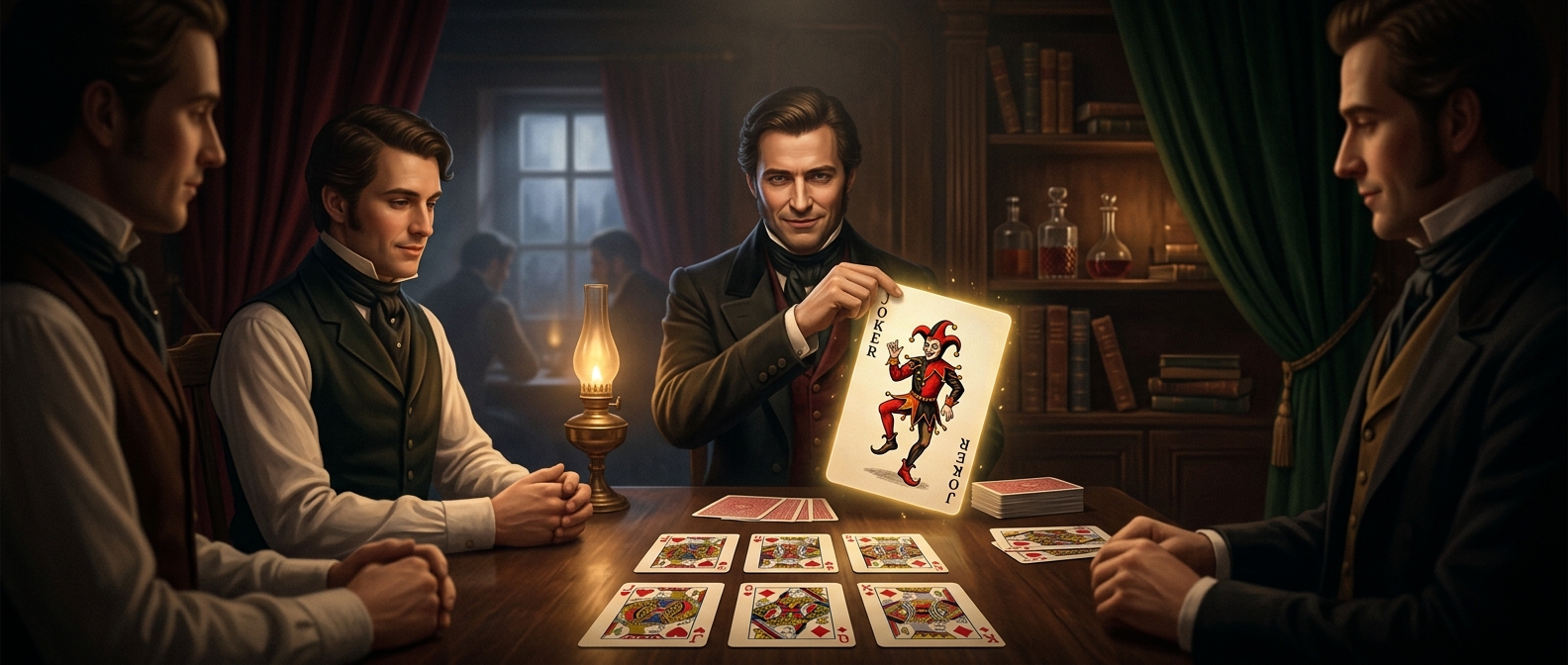
That practical demand helps explain why the Joker entered American card decks in the 1860s. It was not originally a wild card with the broad, flexible role many players know today. Its first job was narrower: to supply Euchre with an extra trump.
Once printers included the card in decks, its use could travel beyond the game that prompted it. Later rules made the Joker wild in some games, while others assigned it a specific rank or left it out altogether. The card’s changing roles reflect a useful feature of a spare card: games can give it new powers without changing the familiar four suits.
So the Joker’s odd status—neither one of the numbered ranks nor a member of any suit—began as a solution to a very concrete problem at the card table: Euchre needed one more card that could beat the rest.