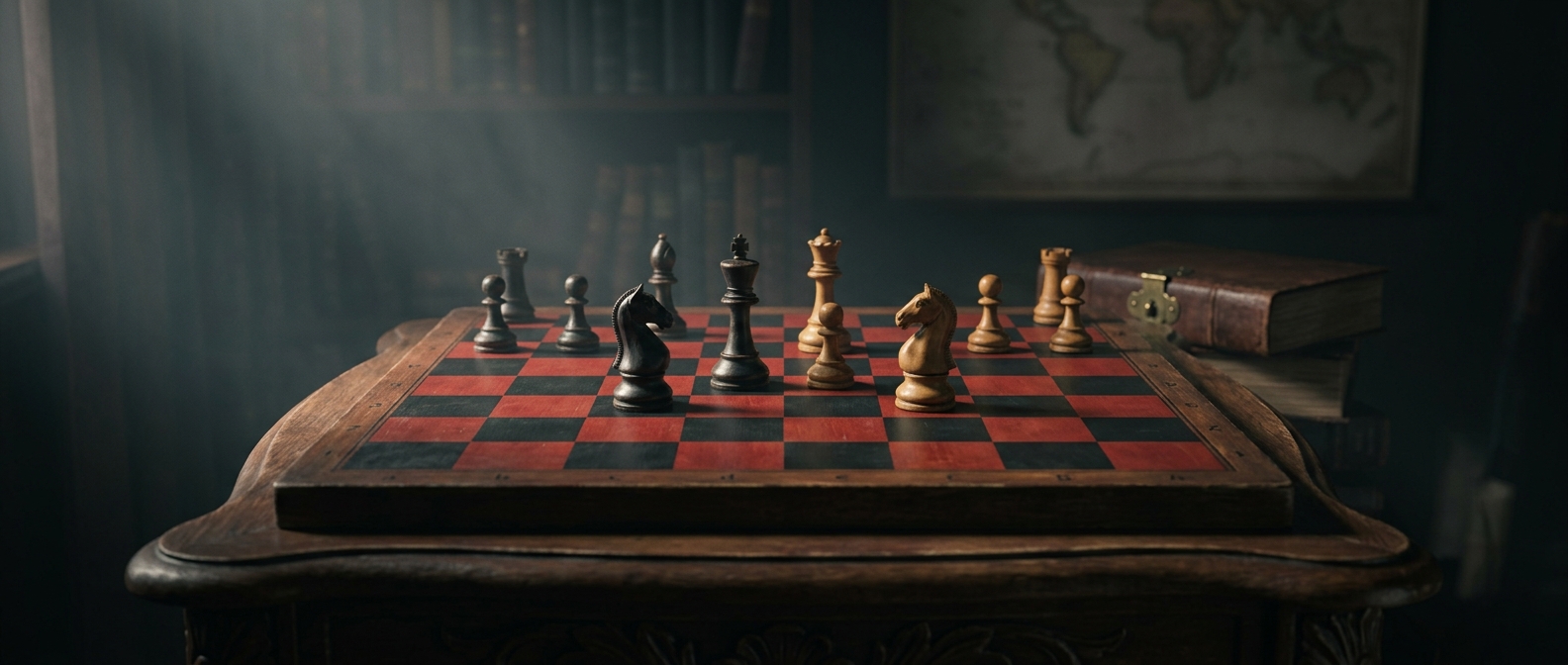
Before “light and dark” meant white and black
A chessboard needs alternating squares to make its grid easy to read; the colors themselves do not affect how pieces move. Some early boards used red and black rather than the now-familiar white and black. The contrast made neighboring squares distinct, while the choice of colors could reflect what was practical to make.
Color followed the materials
A board’s appearance depended on the surface and coloring materials available to its maker. White could be harder or more costly to produce than red or black, which may help explain why some boards used those darker colors instead. That explanation is a possibility, not a rule: early boards were not all made alike, and color choices could vary with materials and local craft traditions.
The shift to white-and-black imagery was not a change to chess itself. It is a reminder that a familiar game detail—the pale square—was a design choice, not a requirement of the rules.