Wargaming’s tools shaped early roleplaying
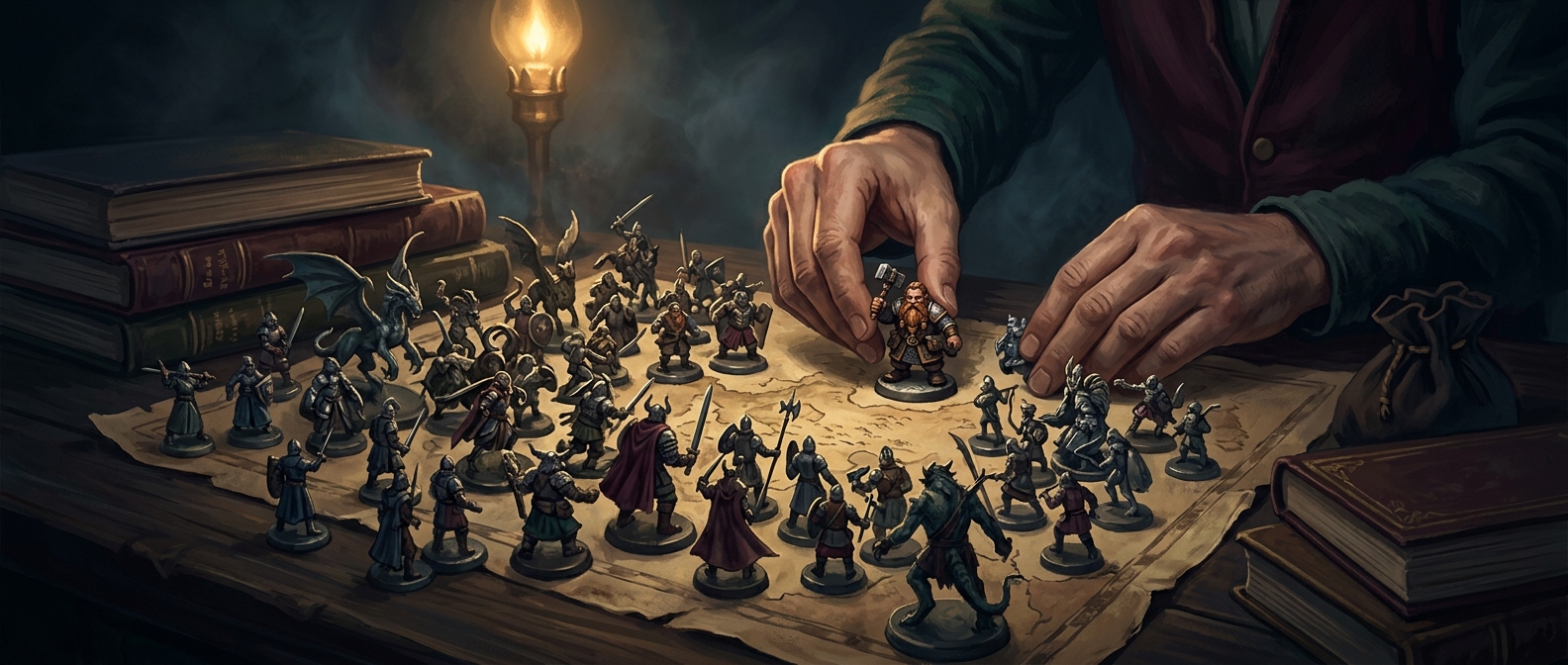
The first fantasy roleplaying games grew out of tabletop miniature wargaming, where players moved figures across a measured battlefield and rules decided what could happen next. That inheritance made miniatures and maps useful for more than atmosphere: they gave the group a shared picture of where characters stood and how far they could travel or attack.
A ruler turned distance into a game decision. If a creature was too far away, a weapon or spell might not reach; if a spell affected an area, the map helped players see who was inside it. Figures also made positioning legible when several characters and opponents crowded into the same fight. Instead of relying entirely on memory or argument, players could point to the board and work through the situation together.
A visible battlefield, but not the whole game
Those tools also reflected a design challenge: roleplaying asked players to imagine a world, while combat rules needed a consistent way to settle movement and consequences. A map made the tactical side concrete, especially for groups already familiar with miniature battles. But the figures represented characters in a larger imagined story; they were not the story itself.
That blend left an enduring mark on tabletop roleplaying. A spell’s reach or a risky dash could become a spatial puzzle the whole table could inspect, turning an abstract rule into a miniature scene unfolding before everyone.