A simple move creates a lasting boundary
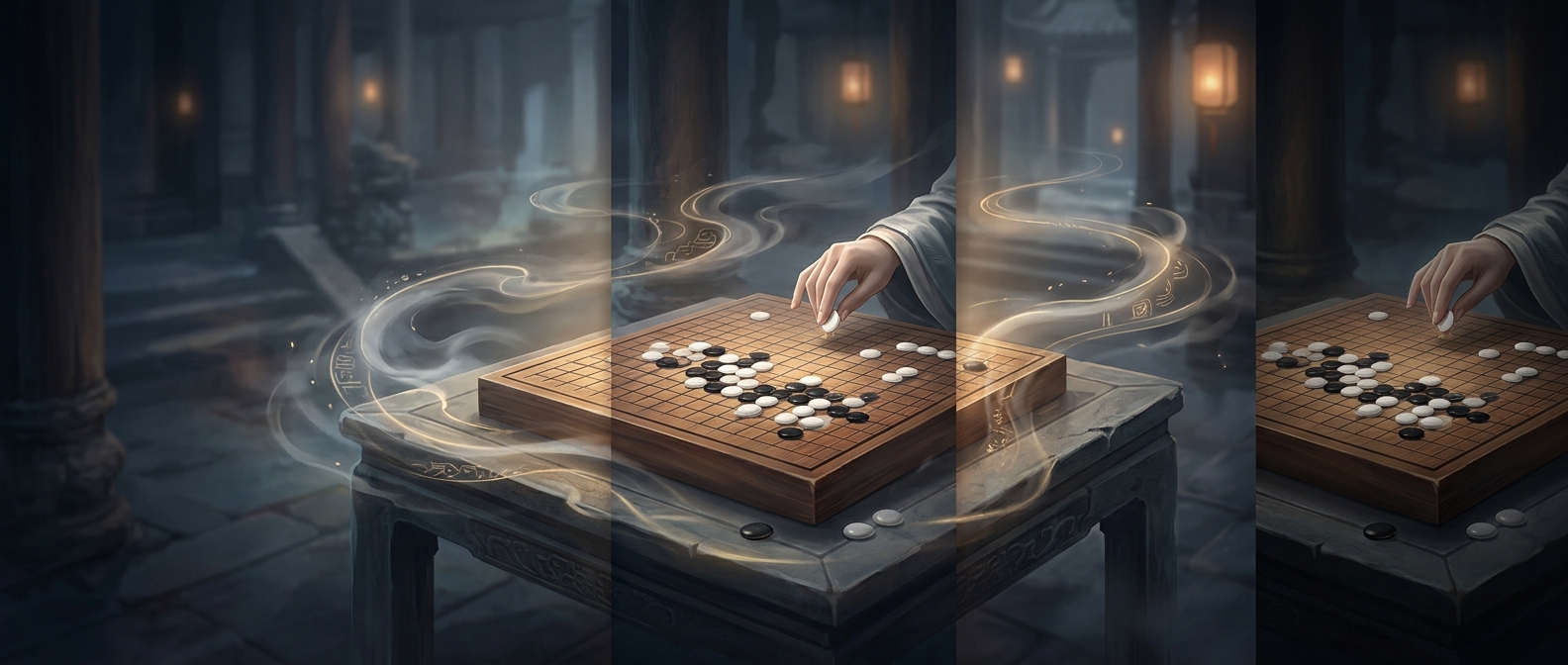
Go begins with an empty grid and two players taking turns placing black and white stones on its intersections. A stone stays where it is put; unlike chess pieces, it does not travel across the board. Instead, each move changes the shape of the surrounding groups and the space they may eventually control.
A group survives while it has at least one open neighboring point, called a liberty. If the opponent occupies every liberty around a group, those stones are captured and removed. Players therefore build connected groups, defend their openings, and try to enclose open areas before the other player can do the same.
Why the rules keep producing new problems
The basic aim is to claim territory, but a move can matter in several places at once. A stone might strengthen a vulnerable group, threaten a capture, or extend a boundary across a distant part of the board. Local fights can reshape the value of territory elsewhere, so players must weigh immediate safety against opportunities that may pay off later.
That combination makes Go easy to begin but difficult to master. The rules are compact; the possible patterns of influence and response are not. No single piece has a fixed role, and the value of a position depends on how its groups relate to the rest of the board.
A game that could travel across centuries
Go’s long, continuous history rests in part on that durable design: the same stones and grid can support a quick contest or a demanding strategic one without requiring elaborate equipment or a large rulebook. The game was played long before Rome became an empire, yet its central challenge remains immediately legible: place a stone, and the board’s balance changes.
That is why a move in Go is more than a step toward enclosing a patch of ground. It can alter the safety, reach, and future options of groups spread across the whole board.