A name delivered by the board
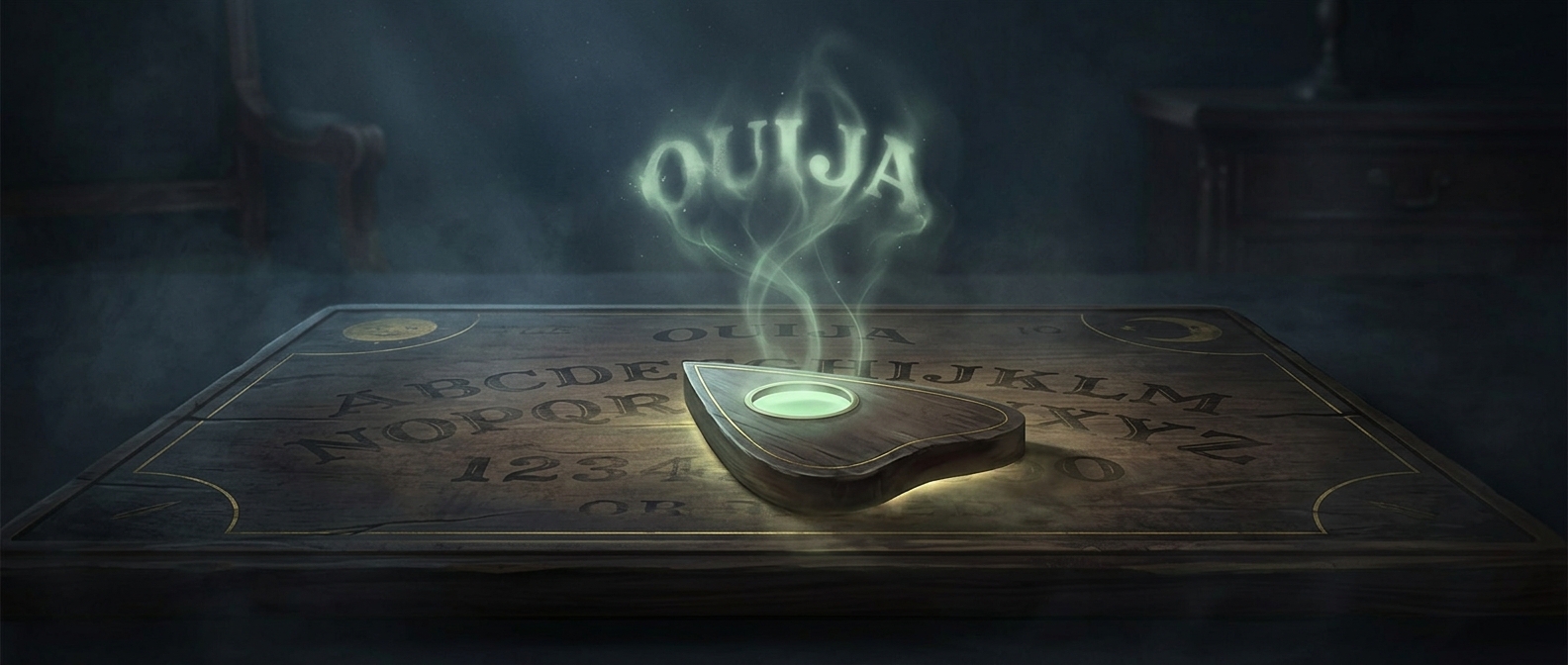
The Ouija’s origin story made its name part of the experience. According to the patent holders, they placed the question of what to call the board to the board itself. Its moving pointer spelled “Ouija,” then gave the name a mysterious gloss: “good luck” in ancient Egyptian.
That answer did more than label a new product. It gave buyers a compact story to repeat—one in which the game seemed to introduce itself and supply its own explanation. The exotic-sounding meaning added an air of age and mystery, even as the board was being sold as a novelty.
How the story fit the game
A Ouija board turns letters into a shared route for a message: participants rest their hands on a small pointer, or planchette, which moves across the board to spell an answer. Because the result appears letter by letter, the group can experience a response as something that arrives rather than something anyone deliberately composes. A dramatic naming question was therefore a natural demonstration of the product’s central attraction.
The “good luck” explanation belongs to that reported episode; it should not be confused with a proven linguistic history of the word. Its commercial usefulness is clearer: it made the board’s name sound like another message from beyond the table. The product could arrive with its own origin tale already built into the way people played it.