A Game Model as a Record of the Building
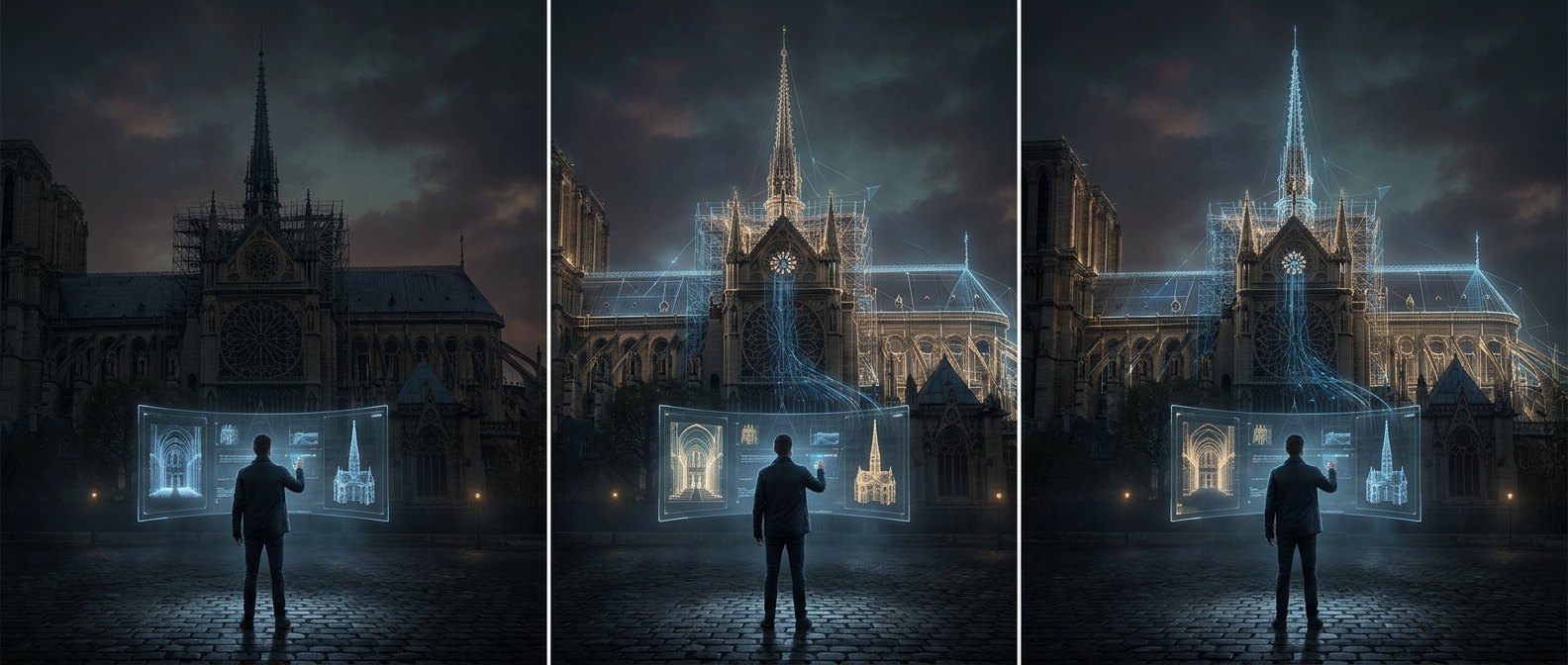
When fire damaged Notre-Dame in 2019, architects faced an urgent question: what had the cathedral looked like before the flames? Photographs and surviving drawings could help, but a detailed digital reconstruction offered another way to inspect its shape. Material made for Assassin’s Creed Unity, set in Paris, was offered to architects as a visual reference.
A game model can bring together measurements, images, and historical research in a form that can be viewed from many angles. That makes it useful for examining how architectural features fit together, especially where a single photograph shows only one side. It can help people picture a lost or damaged space as a whole.
Reference, Not a Building Plan
The model’s value was in the information it could help recover or visualize—not in serving as instructions for construction. A video-game environment is designed to look convincing on screen; it is not automatically a certified record of every stone, joint, or structural detail. Architects still need reliable surveys and technical evidence to make decisions about materials, stability, and repairs.
That distinction explains why game assets can matter after a disaster without replacing professional documentation. A reconstruction created for play may preserve useful visual detail, and offering it gives specialists another reference to compare with other records. In this case, a virtual Paris landmark became more than scenery: it could help people reason about what the real cathedral had been like before the fire.**